
 Français
 Français
 Afrikaans
 English
 English
 English
 Español
 Italiano
 Nederlands
 Nederlands
 Norsk Nynorsk
 Português
 Português
 Português
 English
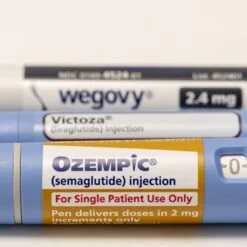
OZEMPIC® Semaglutide Injection 0.25 – 0.5 mg/dose, Prefilled Pen 3 mL, Each
Original price was: $850.00.$645.00Current price is: $645.00.
Buy Ozempic® (Semaglutide Injection) 0.25–0.5mg prefilled pen 3mL by Novo Nordisk. FDA-approved GLP-1 for type 2 diabetes blood sugar control, cardiovascular protection & weight loss. Available for sale with fast shipping to USA, Canada, Germany, France & worldwide. Order now.
Buy Ozempic® Semaglutide Injection 0.25–0.5mg | Prefilled Pen 3mL (Novo Nordisk) For Sale
In 2023 alone, Novo Nordisk’s Ozempic® crossed $13.9 billion in global sales — making it one of the fastest-growing prescription medicines in pharmaceutical history. Patients in the USA, Canada, Germany, France, and across the world aren’t just talking about it. They’re buying it, using it, and transforming their lives with it.
If you or someone you love is managing type 2 diabetes, living with cardiovascular risk, or struggling with weight that won’t budge despite diet and exercise — you already know the name. Ozempic® (semaglutide injection 0.25–0.5mg) isn’t a trend. It’s a clinically proven, FDA-approved, once-weekly injectable that is reshaping the way medicine treats metabolic disease. And right now, it’s available for sale.
So what makes this small prefilled pen such a big deal? Let’s break it all down.
What Is Ozempic® Semaglutide Injection 0.25–0.5mg?
Ozempic® (semaglutide injection) is a medication used to treat type 2 diabetes. It belongs to a class of drugs known as GLP-1 receptor agonists, which work by increasing insulin production and reducing the release of glucose from the liver. Ozempic® is injected once a week and has been shown to help lower blood sugar levels, promote weight loss, and reduce the risk of cardiovascular events in people with type 2 diabetes.
The 0.25mg/0.5mg prefilled pen formulation is a user-friendly, pre-filled pen designed for simplicity and ease of use, ensuring patients can efficiently administer their medication with minimal effort. Each pen contains 3mL of solution and is available in dosages of 0.25mg and 0.5mg per injection.
Ozempic® increases the levels of incretins — hormones naturally produced by the stomach when you eat. It works by helping your body produce more insulin when needed, reduces the amount of glucose produced by the liver, and slows down how quickly food is digested. This all helps to lower blood sugar levels and HbA1c — and this drug can also reduce the risk of heart disease and stroke.
Think of it as a once-weekly reset for your metabolic system. One injection, seven days of active protection.
Ozempic® 0.25–0.5mg Prefilled Pen — Full Product Specification
| Property | Detail |
|---|---|
| Brand Name | Ozempic® |
| Active Ingredient | Semaglutide |
| Manufacturer | Novo Nordisk |
| NDC | 00169-4181-13 |
| Pen Label Color | Red |
| Concentration | 2mg / 3mL (0.68mg/mL) |
| Volume Per Pen | 3mL |
| Available Doses Per Pen | 4 doses of 0.25mg OR 4 doses of 0.5mg |
| Administration | Once-weekly subcutaneous injection |
| Injection Sites | Abdomen, Thigh, Upper Arm |
| Drug Class | GLP-1 Receptor Agonist |
| FDA Approval | Yes — Type 2 Diabetes & CV Risk Reduction |
| Storage | Refrigerated (2°C–8°C / 36°F–46°F); Room temp up to 56 days after first use |
| Included | 1 Pen + 6 NovoFine® Plus Needles |
| Pen Type | Single-patient use, prefilled, disposable |
Clinically Proven Benefits of Ozempic® Semaglutide
This is where the science speaks. Loudly.
Blood Sugar Control — Proven HbA1c Reduction
In patients with type 2 diabetes mellitus, Ozempic® produced clinically relevant reductions from baseline in HbA1c compared with placebo. Monotherapy with Ozempic® 0.5mg once weekly for 30 weeks resulted in a statistically significant reduction in HbA1c compared with placebo — with mean body weight reductions of -3.8kg at 0.5mg versus just -1.2kg for placebo at week 30.
The SUSTAIN clinical trials demonstrated the non-inferiority of semaglutide as treatment for type 2 diabetes, consistently reducing HbA1c levels and body weight with superior results compared to other standard therapies, with significant cardiovascular benefits confirmed in SUSTAIN 6.
Cardiovascular Protection — Life-Saving Evidence
This is the part that changes conversations with cardiologists.
In the landmark SELECT cardiovascular outcomes trial, semaglutide showed a 20% reduction in major adverse cardiovascular events (MACE) in 17,604 adults with preexisting cardiovascular disease, overweight or obesity, without diabetes.
A study led by University College London (UCL), published in The Lancet and funded by Novo Nordisk, analyzed data from 17,604 adults and found that semaglutide may help prevent heart attacks and other major cardiovascular events regardless of how much weight a person loses while taking it — pointing to direct cardiovascular protection beyond weight loss alone.
GLP-1 drugs may improve cardiovascular health by enhancing the function of blood vessel linings, reducing inflammation, improving blood pressure regulation, and lowering cholesterol and other fats in the bloodstream.
Sustained Weight Loss
In patients treated with semaglutide, weight loss continued over 65 weeks and was sustained for up to 4 years. At 208 weeks, semaglutide was associated with a mean weight reduction of -10.2%, waist circumference reduction of -7.7cm, and waist-to-height ratio improvement of -6.9% versus placebo (P < 0.0001 for all comparisons). Clinically meaningful weight loss occurred in both sexes and all races, body sizes, and regions.
Kidney Disease Protection
In June 2024, Novo Nordisk’s Phase 3 FLOW trial showed Ozempic® (semaglutide 1mg) reduced kidney disease-related events by 24% in type 2 diabetes patients with chronic kidney disease (CKD) — another landmark validation of semaglutide’s multi-organ protective capability.
Ozempic® Clinical Benefits At a Glance
| Benefit | Clinical Evidence | Source |
|---|---|---|
| HbA1c Reduction | Significant vs placebo at 30 weeks | SUSTAIN Trials |
| Weight Loss | −10.2% body weight over 4 years | SELECT Trial, Nature Medicine 2024 |
| CV Event Reduction | 20% reduction in MACE | SELECT Trial, NEJM 2023 |
| Heart Failure Improvement | Improved symptoms & function | STEP-HFpEF Trial |
| Kidney Disease Protection | 24% reduction in CKD-related events | FLOW Trial 2024 |
| Blood Pressure Reduction | Significant improvement | SUSTAIN 6 |
| Cholesterol Improvement | Reduced LDL and triglycerides | SELECT Trial, The Lancet 2025 |
How to Use Ozempic® 0.25–0.5mg Prefilled Pen
This is a once-weekly injection that you can self-administer at home. It’s simpler than most people expect — and getting it right makes all the difference.
How to Start Ozempic® — Dosage Titration Schedule
The red-label pen contains 2mg of Ozempic® and delivers only the starting dose of 0.25mg and a maintenance dose of 0.5mg.
The 0.25mg dose is a starter dose to let your body adjust to semaglutide — it is not a treatment dose. You then increase to 0.5mg weekly starting week 5, with the option to step up to 1.0mg or 2.0mg every 4 weeks if your HbA1c is not at goal.
| Week | Dose | Purpose |
|---|---|---|
| Weeks 1–4 | 0.25mg once weekly | Starter / Tolerability Phase |
| Weeks 5+ | 0.5mg once weekly | Maintenance / Treatment Dose |
| Weeks 9+ (if needed) | 1.0mg once weekly | Escalation (different pen) |
| Weeks 13+ (if needed) | 2.0mg once weekly | Maximum dose (different pen) |
⚠️ Never exceed the prescribed dose. Always follow your healthcare provider’s titration plan.
How to Inject Ozempic® Step-by-Step
No matter if a patient is initiating, maintaining, or escalating their Ozempic® pen dose, always follow these steps for proper administration. Use a new needle for each injection and never share pens to avoid contamination or infection.
Step 1 — Prepare Your Pen
Check the name and colored label on the pen and ensure the Ozempic® medicine is clear and colorless. Take a new needle and push onto the pen, then turn to tighten. Always use a new needle with each injection — never reuse or share needles.
Step 2 — Prime the Pen
Turn the dose selector until the flow check symbol lines up. Hold the pen with the needle pointing upward and press the dose button until 0 is shown, confirming the pen is ready and primed.
Step 3 — Select Your Injection Site
Choose one of three approved sites: the abdomen (at least 2 inches from the navel), the front of the thigh, or the outer upper arm. Rotate injection sites — do not inject in the same spot every week. Rotate between the stomach, thigh, and upper arm to reduce the risk of skin irritation or lipodystrophy (lumps under the skin).
Step 4 — Inject
Insert the needle at a 90° angle into clean, dry skin. Press the dose button until it clicks and hold for 6 seconds to ensure the full dose is delivered. Withdraw the needle.
Step 5 — Dispose Safely
Remove the needle from the pen using a needle removal device or cap. Dispose in a puncture-resistant sharps container. Never recap a used needle with both hands.
Step 6 — Store Correctly
See the storage table below. This product is shipped on ice — store immediately upon receipt.
How to Store Your Ozempic® Prefilled Pen
| Status | Storage Condition | Duration |
|---|---|---|
| Unopened Pen | Refrigerator (2°C–8°C / 36°F–46°F) | Until expiration date |
| In-Use / After First Injection | Room temperature (below 30°C/86°F) OR refrigerator | Up to 56 days |
| Do NOT | Freeze or expose to direct sunlight | — |
| Do NOT | Store with needle attached | — |
How to Choose the Right Ozempic® Pen for Your Stage
| Pen Label Color | Doses Available | Total Content | Use Stage |
|---|---|---|---|
| Red | 0.25mg / 0.5mg | 2mg / 3mL | Initiation & early maintenance |
| Blue | 1mg | 4mg / 3mL | Standard maintenance |
| Yellow | 2mg | 8mg / 3mL | High-dose maintenance |
This product listing covers the Red Label Pen (0.25mg / 0.5mg, 3mL).
Who Is Ozempic® 0.25–0.5mg For?
Ozempic® (semaglutide injection) 0.5mg, 1mg, or 2mg is an injectable prescription medicine for adults with type 2 diabetes used along with diet and exercise to improve blood sugar (glucose). It also lowers the risk of major cardiovascular events such as stroke, heart attack, or death in adults with type 2 diabetes who also have heart disease, and lowers the risk of worsening kidney disease, kidney failure (end-stage kidney disease), and death due to cardiovascular disease in adults with type 2 diabetes who also have chronic kidney disease.
| Patient Profile | Ozempic® Benefit |
|---|---|
| Adults with Type 2 Diabetes | Blood sugar control + HbA1c reduction |
| Patients with T2D + Heart Disease | Reduced risk of heart attack, stroke, CV death |
| Patients with T2D + Chronic Kidney Disease | 24% reduction in kidney disease events |
| Overweight Adults on Diet & Exercise | Clinically significant, sustained weight loss |
| Patients switching from other GLP-1s | Superior efficacy profile in SUSTAIN head-to-heads |
Ozempic® Market & Demand Statistics — 2023 to 2026
The numbers are not subtle. The world is buying Ozempic® semaglutide at a pace that is rewriting pharmaceutical history:
- In 2023, the sales of Novo Nordisk’s Ozempic® crossed $13.9 billion globally — confirming its dominance as the top-selling GLP-1 receptor agonist on the market. Towards Healthcare
- The global Ozempic market was valued at $19.22 billion in 2025, projected to grow from $20.75 billion in 2026 to $32.44 billion by 2034 at a CAGR of 5.74%. North America alone commanded 68.99% of global Ozempic revenue in 2025. Fortune Business Insights
- The global semaglutide market across all formulations was estimated at $28.43 billion in 2024 and is projected to reach $93.6 billion by 2035 at a CAGR of 10.5%. Grand View Research
- The broader GLP-1 receptor agonist market was valued at $66.4 billion in 2025 and is expected to hit $185.3 billion by 2033 at 12.4% CAGR. Semaglutide (Ozempic, Wegovy, Rybelsus) led the space with a 52.8% revenue share in 2025. Grand View Research
- USA telehealth prescriptions for Ozempic and related GLP-1 medications rose 3.4× between 2021 and 2024 — reflecting both rising demand and growing ease of access through digital health platforms. Future Market Insights
Possible Side Effects — Full Transparency
Your healthcare provider is your first point of call. Here’s what the clinical data shows:
Common Side Effects (≥5% of patients)
The most common adverse reactions reported in ≥5% of patients taking Ozempic® are nausea, vomiting, diarrhea, abdominal pain, and constipation. Decreased appetite was also reported in ≥5% of patients.
| Side Effect | Frequency | Notes |
|---|---|---|
| Nausea | Very Common | Most pronounced at initiation or dose escalation; typically subsides |
| Vomiting | Common | Usually mild; improves over time |
| Diarrhea | Common | Transient; manage with hydration |
| Abdominal Pain | Common | Typically mild to moderate |
| Constipation | Common | Dietary fiber and hydration help |
| Injection Site Reactions | Occasional | Redness, mild discomfort; rotate sites |
| Decreased Appetite | Common | Often a desired secondary effect |
Serious Risks — Know Before You Buy
You should not use Ozempic® if you have multiple endocrine neoplasia type 2 (MEN 2) or a personal or family history of medullary thyroid carcinoma (MTC). Tell your doctor if you have severe stomach problems such as slowed gastric emptying (gastroparesis) or problems digesting food. Stop use at least 2 months before planned pregnancy.
⚠️ Ozempic® is a prescription-only medication. It must only be used under the supervision of a licensed healthcare provider. This product listing is for licensed medical distributors, healthcare facilities, and patients with a valid prescription only.
Verified Scientific References
| # | Study / Source | Key Finding |
|---|---|---|
| 1 | SELECT Trial — NEJM 2023 (PubMed) | 20% reduction in MACE in 17,604 patients |
| 2 | SELECT Trial — Nature Medicine 2024 | −10.2% body weight sustained over 4 years |
| 3 | SELECT Trial — The Lancet 2025 | CV benefits maintained regardless of adiposity changes |
| 4 | UCL / The Lancet 2025 | Semaglutide prevents heart attacks independent of weight loss |
| 5 | FLOW Trial — Novo Nordisk / 2024 | 24% reduction in kidney disease events |
| 6 | SUSTAIN Trials — Novo Nordisk | Consistent HbA1c reduction; CV benefit confirmed in SUSTAIN 6 |
| 7 | Grand View Research 2025 | Ozempic semaglutide market valued at $23.83B in 2025 |
FAQs About Ozempic® Semaglutide Injection 0.25–0.5mg for sale
1. What is Ozempic® semaglutide injection used for?
Ozempic® is an injectable prescription medicine for adults with type 2 diabetes used along with diet and exercise to improve blood sugar (glucose). It also lowers the risk of major cardiovascular events such as stroke, heart attack, or death in adults with type 2 diabetes who also have heart disease, and lowers the risk of worsening kidney disease, kidney failure, and cardiovascular death in adults with type 2 diabetes who also have chronic kidney disease.
2. How does Ozempic® semaglutide work in the body?
Ozempic® increases the levels of incretins — hormones naturally produced by the stomach when you eat. It works by helping your body to produce more insulin when needed, reduces the amount of glucose produced by the liver, and slows down how quickly food is digested. This all helps to lower blood sugar levels and HbA1c, and can also reduce the risk of heart disease and stroke.
3. What is the starting dose of Ozempic® and how do I titrate?
The starting dose is 0.25mg once weekly for 4 weeks — this is a tolerability dose, not a treatment dose. Increase to 0.5mg weekly starting week 5, with the option to step up to 1.0mg or 2.0mg every 4 weeks if HbA1c is not at goal.
4. How much weight loss can I expect with Ozempic®?
In the SELECT trial at 208 weeks (4 years), semaglutide was associated with a mean body weight reduction of −10.2%, a waist circumference reduction of −7.7cm, and a waist-to-height ratio improvement of −6.9% versus placebo. Weight loss was clinically meaningful across both sexes, all races, body sizes, and regions worldwide.
5. Can Ozempic® reduce the risk of heart attack and stroke?
Yes. A weekly dose of semaglutide significantly reduced the risk of major adverse cardiovascular events (MACEs) in people who are overweight or obese with cardiovascular disease — regardless of blood sugar level — representing a 20% reduction in MACE versus placebo in a 8,803-patient clinical trial.
6. What are the most common side effects of Ozempic®?
Common side effects include nausea and vomiting (more pronounced when first starting or increasing the dose, though the body typically adjusts over time), injection site reactions such as redness, swelling, or discomfort (usually mild), and blood sugar changes (essential to monitor, especially if also taking insulin or other diabetes medications).
7. How do I store the Ozempic® prefilled pen?
Store unused pens in the refrigerator between 2°C–8°C (36°F–46°F) until the expiry date. After first use, the pen can be kept at room temperature below 30°C for up to 56 days — do not freeze, and do not store with the needle attached.
8. Can Ozempic® be used for weight loss without type 2 diabetes?
Ozempic® injection is approved by the FDA for certain uses in people with type 2 diabetes. It can be prescribed off-label to help with weight loss, but it is not officially approved for this use. Wegovy® (semaglutide 2.4mg) is the FDA-approved semaglutide formulation specifically indicated for chronic weight management in adults without diabetes.
9. How long does Ozempic® take to start working?
Blood sugar improvements can begin within the first week of treatment, though the full clinical benefit builds over weeks of consistent dosing. The 0.25mg starter phase lasts 4 weeks to build tolerability, with measurable HbA1c reduction typically observable from week 5 at the 0.5mg maintenance dose and beyond. Full cardiovascular and weight-loss benefits, as seen in the SELECT trial, sustained and expanded over months to years of use.
10. Can I change the day I take my weekly Ozempic® injection?
Yes — the day of weekly administration can be changed if necessary, as long as the time between 2 doses is at least 2 days (>48 hours). This flexibility makes it easier to build the injection into your weekly routine without disrupting your schedule.
11. Who should NOT use Ozempic®?
You should not use Ozempic® if you are allergic to semaglutide or any other ingredients in this medicine, or if you have: multiple endocrine neoplasia type 2 (MEN 2); or a personal or family history of medullary thyroid carcinoma (a type of thyroid cancer). Always disclose your full medical history to your prescribing physician before starting.
12. Does Ozempic® protect the kidneys in type 2 diabetes?
Yes. Novo Nordisk’s Phase 3 FLOW trial showed Ozempic® (semaglutide 1mg) reduced kidney disease-related events by 24% in type 2 diabetes patients with chronic kidney disease — a landmark result that extended Ozempic’s prescribing indications to include kidney protection in this population
Only logged in customers who have purchased this product may leave a review.
Related products

Reviews
There are no reviews yet.