
 Français
 Français
 Afrikaans
 English
 English
 English
 Español
 Italiano
 Nederlands
 Nederlands
 Norsk Nynorsk
 Português
 Português
 Português
 English
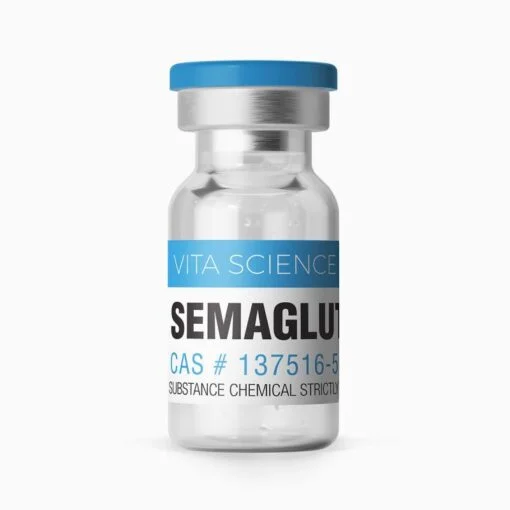
SEMAGLUTIDE (OZEMPIC) (5MG)
Original price was: $150.00.$110.00Current price is: $110.00.
Buy Semaglutide (Ozempic) 5mg — the world’s most proven GLP-1 receptor agonist peptide. ≥99% purity, HPLC-verified, lyophilized, fast shipping USA, Canada, Germany, France & worldwide. Order now.
Buy Semaglutide (Ozempic) 5mg — The Gold Standard GLP-1 Peptide, Backed by More Clinical Evidence Than Any Compound in Its Class
The global Semaglutide market was valued at $28.43 billion in 2024. By 2035, analysts project it will reach $93.6 billion — growing at a CAGR of 10.5%. No other metabolic research compound on the planet carries that kind of commercial momentum, and for good reason. Over 17,000 participants across the SELECT trial alone. Cardiovascular events reduced by 20%. Kidney disease events cut by 24%. And a weight loss track record that rewrote the standards for what GLP-1 therapy can do.
Semaglutide (Ozempic) is not a new entrant chasing early adoption. It is the most extensively studied, most widely adopted, and most clinically validated GLP-1 receptor agonist in medical history. When you buy Semaglutide 5mg, you are accessing that entire body of evidence in a precisely dosed, high-purity, research-grade lyophilized format — built for serious protocols and demanding research standards.
What Is Semaglutide (Ozempic) 5mg?
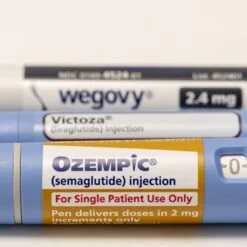
Semaglutide (also commercially known as Ozempic and Wegovy) is a synthetic, long-acting glucagon-like peptide-1 (GLP-1) receptor agonist developed by Novo Nordisk. It is a 31-amino-acid polypeptide — a lipopeptide — structurally modified from native GLP-1 to resist enzymatic degradation and extend its plasma half-life to approximately 7 days. That 7-day half-life is what enables once-weekly dosing, delivering stable, sustained receptor activation throughout the entire week from a single injection.
Originally developed and approved for type 2 diabetes management under the Ozempic brand, Semaglutide has since received FDA approval for chronic weight management (Wegovy), cardiovascular risk reduction in adults with established heart disease, and renal protection in type 2 diabetes patients with chronic kidney disease. It is available in injectable and oral formats commercially — and as a high-purity lyophilized research peptide in the 5mg vial format you are looking at now.
The 5mg vial is the standard starting format — the right size for researchers establishing protocols, building titration tolerance, and running the foundational phases of GLP-1 receptor research.
Semaglutide (Ozempic) 5mg — Product Specifications
| Feature | Details |
|---|---|
| Active Compound | Semaglutide (GLP-1 receptor agonist) |
| Also Known As | Ozempic, Wegovy, NN9535 |
| Form | Lyophilized powder (white to off-white) |
| Quantity Per Vial | 5mg |
| Purity | ≥99% (HPLC and Mass Spectrometry verified) |
| Receptor Target | GLP-1 receptor (GLP-1R) |
| Half-Life | Approximately 7 days |
| Reconstitution | Bacteriostatic water required |
| Storage — Unreconstituted | ≤-20°C long-term; 2–8°C short-term, protected from light |
| Storage — Reconstituted | 2–8°C, up to 28–30 days |
| Testing | Third-party COA per batch |
| Dosing Frequency | Once weekly subcutaneous injection |
| Shipping | USA, Canada, Germany, France, UK, Australia & International |
| Classification | Research peptide — lyophilized format |
The Science Behind Semaglutide — How GLP-1 Receptor Activation Works
To truly understand why Semaglutide has become the defining compound of modern metabolic medicine, you need to understand what the GLP-1 receptor does — and what happens when it is activated consistently by a long-acting agonist.
GLP-1 (glucagon-like peptide-1) is a naturally occurring gut-derived hormone released after meals. It triggers insulin secretion from the pancreas in response to rising blood glucose, suppresses glucagon (the hormone that raises blood sugar), slows gastric emptying so you feel fuller longer, and signals the hypothalamus to reduce appetite and food intake. The problem with endogenous GLP-1 is that it degrades within minutes — too fast to have sustained therapeutic effect.
Semaglutide solves that entirely. Its structural modifications — including a C-18 fatty acid chain attached via a linker to the amino acid backbone — give it a 7-day half-life while preserving the full GLP-1 receptor binding profile. What your body produces for 2 minutes, Semaglutide delivers for 7 days. That is the pharmacological core of why it works so powerfully and consistently in research protocols.
Research Benefits of Semaglutide 5mg — Complete Profile
| Research Area | What the Evidence Shows |
|---|---|
| Weight Reduction | 14.85–20.7% body weight loss depending on dose and duration |
| Appetite Regulation | Potent suppression of caloric intake via hypothalamic GLP-1 signaling |
| Blood Glucose Control | Glucose-dependent insulin secretion enhancement, glucagon suppression |
| Cardiovascular Protection | 20–26% reduction in major adverse cardiovascular events across trials |
| Kidney Protection | 22–24% reduction in major kidney disease events (FLOW + SELECT) |
| Brain / Dementia Risk | 40–70% reduced Alzheimer’s risk vs insulin/other diabetes drugs (Wang et al., 2024) |
| Liver Health | Improves liver enzyme levels, reduces steatosis and liver stiffness |
| Blood Pressure | Meaningful reductions in systolic blood pressure |
| Lipid Profile | Improvements in triglycerides and non-HDL cholesterol |
| PCOS Management | Promising results in managing PCOS-related obesity and insulin resistance |
| Waist Circumference | Significant reductions across all STEP trial dose groups |
Semaglutide vs. Tirzepatide vs. Retatrutide — Where Does It Stand?
You deserve an honest answer on this one:
| Compound | Mechanism | Peak Trial Weight Loss | Cardiovascular Data | FDA Approval | Availability |
|---|---|---|---|---|---|
| Semaglutide (Ozempic) | GLP-1 only | 20.7% at 72 weeks (STEP UP 7.2mg) | Yes — 20% MACE reduction (SELECT) | Yes | Widely available |
| Tirzepatide (Mounjaro) | GLP-1 + GIP | 22.5% at 72 weeks | Promising (ongoing) | Yes | Widely available |
| Retatrutide (LY3437943) | GLP-1 + GIP + Glucagon | 28.7% at 68 weeks | Under study (TRIUMPH-CVOT) | No (Phase 3) | Research only |
Semaglutide may have a lower weight loss ceiling than the newer dual and triple agonists. But it has something neither tirzepatide nor retatrutide have yet: the deepest, longest, most validated safety and efficacy dataset in GLP-1 medicine. 17,604 patients in SELECT alone. Years of real-world cardiovascular data. FDA-approved cardiovascular and renal indications. When breadth and depth of evidence matter in your research — nothing comes close.
How to Use Semaglutide 5mg — Complete Step-by-Step Guide
Semaglutide 5mg is supplied as a lyophilized (freeze-dried) powder. It must be reconstituted with bacteriostatic water before use in any research protocol. Follow every step carefully — peptide integrity, dose accuracy, and research reproducibility all depend on it.
How to Reconstitute Semaglutide 5mg
The volume of bacteriostatic water you use determines your concentration. For a Semaglutide 5mg vial, the two most practical reconstitution options are:
| BAC Water Volume | Resulting Concentration | Volume per 0.25mg Dose | Volume per 0.5mg Dose | Volume per 1mg Dose |
|---|---|---|---|---|
| 1.0mL | 5mg/mL | 5 units (0.05mL) | 10 units (0.1mL) | 20 units (0.2mL) |
| 2.0mL | 2.5mg/mL | 10 units (0.1mL) | 20 units (0.2mL) | 40 units (0.4mL) |
The best practice for a Semaglutide 5mg vial is 1.0mL of bacteriostatic water — yielding 5mg/mL. This keeps injection volumes small and comfortable at all dose levels from 0.25mg through 2.4mg, keeping everything under 0.5mL per injection on a standard U-100 insulin syringe.
Step-by-Step Reconstitution for Semaglutide 5mg
Step 1 — Bring the vial to room temperature. Remove your Semaglutide 5mg vial from cold storage and allow it to reach room temperature for 20–30 minutes before reconstitution. Cold peptide powder dissolves poorly and can precipitate unpredictably when cold solvent is introduced.
Step 2 — Set up a clean workspace. Wash your hands thoroughly with warm soap and water for at least 20 seconds. Work on a clean, flat, dry surface. Contamination at this stage risks the entire vial — this is not a step to rush.
Step 3 — Swab both vial stoppers. Using fresh alcohol swabs, clean the rubber stopper of both the Semaglutide vial and your bacteriostatic water vial. Allow both to air dry for approximately 10 seconds. Do not blow on the stoppers — breath introduces bacteria. Two swabs, two dry surfaces. Move on only when fully dry.
Step 4 — Draw your bacteriostatic water. Using a sterile syringe, pull the plunger back slowly to your chosen volume — 1.0mL for 5mg/mL concentration, or 2.0mL for 2.5mg/mL. Check for air bubbles. Remove them by tapping the barrel and gently pushing the plunger before proceeding. The volume you draw here is the volume that defines every dose you will measure for the life of this vial.
Step 5 — Inject water slowly along the inner vial wall. Insert the needle into the Semaglutide 5mg vial through the rubber stopper. Angle the needle so the tip touches the inner glass wall. Inject the bacteriostatic water slowly, letting it run gently down the glass and onto the powder. Do not squirt it directly onto the lyophilized cake — mechanical force can break the peptide’s amino acid chain structure. Slow. Steady. Wall-directed only.
Step 6 — Swirl gently until dissolved. Never shake. Once the water is fully in, gently swirl the vial in slow circular motions. The powder should dissolve within 30 seconds to 2 minutes into a clear, colorless solution with no particles or cloudiness. Shaking introduces air bubbles and mechanical stress that degrades the peptide — do not do it under any circumstances.
Step 7 — Inspect, label, and refrigerate immediately. Hold the vial to the light and confirm the solution is clear and particulate-free. Write the reconstitution date on the vial. Store at 2–8°C. Use within 28–30 days. Never freeze a reconstituted vial.
Reconstitution Quick-Reference — Semaglutide 5mg
| BAC Water | Concentration | 0.25mg Dose | 0.5mg Dose | 1.0mg Dose | 2.4mg Dose |
|---|---|---|---|---|---|
| 1.0mL | 5mg/mL | 5 units | 10 units | 20 units | 48 units |
| 2.0mL | 2.5mg/mL | 10 units | 20 units | 40 units | 96 units |
Units = markings on a standard U-100 insulin syringe where 100 units = 1.0mL.
How to Store Semaglutide 5mg
| Condition | Storage Method | Duration |
|---|---|---|
| Unreconstituted (long-term) | ≤-20°C, sealed, dry, protected from light | Up to 24 months from manufacture |
| Unreconstituted (short-term) | 2–8°C, sealed, protected from light and moisture | Several months |
| Reconstituted with BAC water | Refrigerated at 2–8°C | 28–30 days |
| Reconstituted — avoid | Freezing after reconstitution | Degrades peptide — never freeze |
| Avoid throughout | Repeated freeze-thaw cycles | Reduces stability and purity |
Label every reconstituted vial with the date. Track your 28-day window. If the solution becomes cloudy or changes color, discard immediately — do not use compromised peptide in any protocol.
Semaglutide Dosage Guide — Research Protocol Titration
Published clinical protocols for Semaglutide use a structured once-weekly subcutaneous escalation. Gradual titration is mandatory — jumping to higher doses without building tolerance dramatically increases gastrointestinal side effects and impacts protocol adherence.
| Protocol Phase | Weekly Dose | Notes |
|---|---|---|
| Weeks 1–4 | 0.25mg | Initiation — tolerance building only |
| Weeks 5–8 | 0.5mg | First escalation step |
| Weeks 9–12 | 1.0mg | Active escalation phase |
| Weeks 13–16 | 1.7mg | Approaching maintenance |
| Weeks 17+ | 2.4mg | Maintenance dose (STEP trials) |
At 5mg/mL concentration (1.0mL BAC water in a Semaglutide 5mg vial):
- 0.25mg = 5 units on U-100 syringe
- 0.5mg = 10 units
- 1.0mg = 20 units
- 2.4mg = 48 units
A single Semaglutide 5mg vial at this concentration contains 20 doses at 0.25mg, 10 doses at 0.5mg, or 5 doses at 1mg — covering the entire initiation and first escalation phases from one vial at the recommended starting tier.
How to Inject Semaglutide 5mg — Subcutaneous Injection Guide
Step 1 — Select your injection site. Use one of three standard subcutaneous sites: the abdomen (at least 2 inches from the navel), the outer upper thigh, or the outer upper arm. Rotate injection sites each week to prevent local lipohypertrophy (tissue thickening at repeated injection sites).
Step 2 — Clean the site. Wipe the chosen skin area with a fresh alcohol swab. Allow it to air dry for 5–10 seconds. Do not inject into wet or recently swabbed skin that has not dried.
Step 3 — Draw and check your dose. Using a fresh sterile U-100 insulin syringe, insert the needle into the reconstituted Semaglutide 5mg vial and draw the calculated dose volume. Remove any air bubbles. Verify the volume against your reconstitution reference before proceeding.
Step 4 — Pinch, insert, and inject. Gently pinch a fold of skin at the cleaned injection site. Insert the needle at a 45–90 degree angle (45° for leaner individuals, 90° for those with more subcutaneous tissue). Slowly and steadily inject the full dose.
Step 5 — Withdraw and dispose safely. Remove the needle smoothly. Apply gentle pressure with a clean cotton pad if needed. Dispose of the needle immediately in a sharps container. Never recap, reuse, or share needles.
Step 6 — Document the injection. Record the date, dose, and injection site. Consistent weekly timing — same day, similar time — maintains the steadiest plasma concentration and the most reproducible research conditions. Semaglutide‘s 7-day half-life allows a generous timing window, but consistency produces the best data.
What to Do If You Miss a Weekly Dose
Semaglutide‘s 7-day half-life provides meaningful buffer. If a dose is missed and remembered within 5 days, administer it as soon as possible and resume the regular weekly schedule. If more than 5 days have passed, skip the missed dose entirely and continue on the next scheduled date. Never double-dose. The prolonged half-life means plasma levels drop slowly — a single missed dose does not collapse your research protocol, but double-dosing significantly increases GI adverse event risk.
Why Buy Semaglutide 5mg Here
The research peptide market has vendors who cut corners on what matters most. Purity. Documentation. Batch consistency. Here is what makes this product the right choice:
| Quality Standard | What You Receive |
|---|---|
| Purity | ≥99% verified by HPLC and Mass Spectrometry |
| Certificate of Analysis | Independent third-party COA per batch |
| Peptide Sequence Verification | Confirmed via analytical identification |
| Manufacturing | GMP-compliant lyophilization |
| Vial Integrity | Induction-sealed, tamper-evident, light-protected |
| Batch Traceability | Unique lot coding, full documentation trail |
| Shipping | Tracked dispatch to USA, Canada, Germany, France, UK, Australia & International |
| Format | Stable lyophilized powder optimized for shipping and multi-week storage |
When you buy Semaglutide 5mg here, the documentation exists before your order ships to confirm exactly what is in the vial. That is not optional in credible research. It is the only standard that matters.
FAQs About Semaglutide (Ozempic) 5mg
Q1: What is Semaglutide (Ozempic) and how does it work? Semaglutide is a synthetic long-acting GLP-1 receptor agonist — a 31-amino-acid lipopeptide that mimics and amplifies the actions of the naturally occurring gut hormone GLP-1. After administration, it binds to GLP-1 receptors throughout the body — in the pancreas (triggering glucose-dependent insulin secretion and glucagon suppression), in the stomach (slowing gastric emptying), and in the hypothalamus (reducing appetite and caloric intake). Its structural modifications give it a half-life of approximately 7 days, enabling once-weekly dosing and sustained receptor activation that native GLP-1 cannot achieve. Commercially it is marketed as Ozempic (for type 2 diabetes) and Wegovy (for weight management).
Q2: How much weight loss does Semaglutide produce? In the pivotal STEP 1 trial (NEJM, 2021, Wilding et al.), participants on 2.4mg weekly Semaglutide lost an average of 14.85% of body weight over 68 weeks, compared to 2.41% with placebo. The 2025 STEP UP trial (The Lancet) showed that a higher 7.2mg weekly dose produced 20.7% weight loss over 72 weeks — superior to 2.4mg and a significant step toward the efficacy of newer compounds. A meta-analysis of 8 RCTs with 4,567 patients (Gao et al., Front Pharmacol, 2022) confirmed a mean 10.09% body weight reduction versus placebo across multiple study designs.
Q3: How much bacteriostatic water do I add to a Semaglutide 5mg vial? The recommended reconstitution for a Semaglutide 5mg vial is 1.0mL of bacteriostatic water, yielding a concentration of 5mg/mL. On a U-100 insulin syringe, this means 10 units = 0.5mg, 20 units = 1.0mg, and 48 units = 2.4mg. If you prefer a more diluted solution for precision at very low initiating doses, 2.0mL yields 2.5mg/mL (20 units per 0.5mg). Always inject the water slowly down the inner glass wall — never directly onto the powder.
Q4: Does Semaglutide protect against heart disease? Yes, with strong clinical evidence. The SELECT trial — the largest cardiovascular outcomes study ever conducted in adults with obesity without diabetes — enrolled 17,604 participants and ran for approximately 40 months. Semaglutide produced a 20% reduction in major adverse cardiovascular events (MACE) versus placebo. The SUSTAIN-6 trial in high-risk type 2 diabetes patients demonstrated a 26% MACE reduction (HR 0.74). In March 2024, the FDA approved a cardiovascular risk reduction indication for Wegovy specifically based on these outcomes. (Source: Nature Medicine 2024
Q5: Can Semaglutide protect kidney function? Yes. The FLOW trial (NEJM, June 2024) showed Semaglutide 1mg weekly reduced major kidney disease events by 24% (HR 0.76) in type 2 diabetes patients with chronic kidney disease. A secondary analysis of the SELECT trial found a 22% reduction in kidney outcomes in patients with obesity and cardiovascular disease — without diabetes. In January 2025, the FDA expanded Ozempic’s label to include a renal protection indication based on the FLOW data.
Q6: What are the most common side effects of Semaglutide? The most commonly reported side effects are gastrointestinal: nausea, vomiting, diarrhea, constipation, and reduced appetite. These are most pronounced during dose escalation and typically diminish as the body adjusts over several weeks. This is precisely why the structured titration protocol — starting at 0.25mg and escalating gradually every 4 weeks — exists and is followed in every major clinical trial. In the STEP 1 trial, approximately 4.5% of participants discontinued due to GI adverse events. Less common but noted side effects include injection site reactions, fatigue, and in rare cases, gallbladder-related events.
Q7: How does Semaglutide affect the brain and dementia risk? This is one of the most exciting emerging research areas for Semaglutide. GLP-1 receptors are expressed in the brain, and GLP-1 agonism appears to have neuroprotective effects. A real-world study using electronic health records (Wang et al., 2024) found that people with type 2 diabetes using Semaglutide reduced their Alzheimer’s disease risk by 40–70% compared to those using insulin or other diabetes drugs. A post-hoc analysis of three large cardiovascular trials found a 53% reduction in dementia risk (Nørgaard et al., 2022). Multiple Phase 3 trials specifically investigating Semaglutide in Alzheimer’s disease are currently ongoing.
Q8: What is the half-life of Semaglutide and how often should it be dosed? Semaglutide has a plasma half-life of approximately 7 days. This is what enables once-weekly subcutaneous dosing and what makes it uniquely practical among GLP-1 peptides. The C-18 fatty acid chain attached to the peptide backbone binds reversibly to albumin in plasma, protecting it from enzymatic degradation and enabling this extended duration of action. No other approved GLP-1 agonist in its class achieves this half-life without the use of long-acting depot formulations.
Q9: How long is reconstituted Semaglutide 5mg stable? When reconstituted with bacteriostatic water and stored at 2–8°C, Semaglutide solution remains stable for 28–30 days. Bacteriostatic water — which contains 0.9% benzyl alcohol as a preservative — maintains microbial stability across the full 28-day window. Never freeze a reconstituted vial — ice crystal formation physically damages the peptide chains and compromises both potency and research validity. If reconstituted with plain sterile water (no preservative), use within 24–48 hours maximum.
Q10: Is Semaglutide the same thing as Ozempic? Yes. Semaglutide is the active compound — Ozempic is the Novo Nordisk brand name for the injectable formulation approved for type 2 diabetes management, while Wegovy is the brand name for the higher-dose (2.4mg) injectable formulation approved for chronic weight management. Rybelsus is the oral tablet formulation. The research-grade Semaglutide 5mg vial you are purchasing contains the same active peptide sequence as the Ozempic/Wegovy formulations — produced to ≥99% purity, lyophilized for stability, and supplied for research use.
Q11: How does the new STEP UP 7.2mg data change what we know about Semaglutide? The STEP UP trial, published in The Lancet Diabetes & Endocrinology in 2025 (NCT05646706), enrolled 1,407 participants across three arms — 7.2mg, 2.4mg, and placebo. At 72 weeks, 7.2mg Semaglutide produced 20.7% weight loss, significantly outperforming both 2.4mg (17.5%) and placebo. This confirms that higher-dose Semaglutide can close meaningful distance toward the efficacy of tirzepatide — and it demonstrates that the dose-response curve has not plateaued at the existing approved 2.4mg maintenance dose. Novo Nordisk is expected to pursue regulatory submissions for the 7.2mg dose.
Q12: Can Semaglutide be stacked or used alongside other peptides? In research settings, Semaglutide is studied both in isolation and in comparative protocols against other GLP-1 compounds. Researchers investigating multi-pathway metabolic modulation often use Semaglutide as a baseline reference compound against which newer dual agonists (tirzepatide) and triple agonists (retatrutide) are compared in head-to-head designs. Its well-characterized receptor binding, pharmacokinetics, and 7-day half-life make it the most reliable reference anchor for GLP-1 receptor biology research.
Only logged in customers who have purchased this product may leave a review.
Related products


Reviews
There are no reviews yet.