
 Français
 Français
 Afrikaans
 English
 English
 English
 Español
 Italiano
 Nederlands
 Nederlands
 Norsk Nynorsk
 Português
 Português
 Português
 English
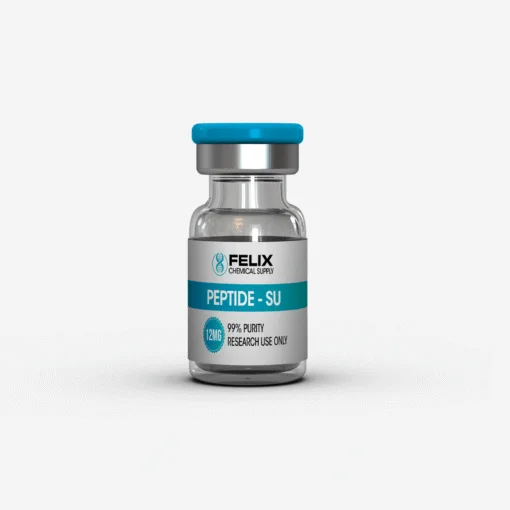
Peptide-SU 12mg
Original price was: $199.00.$169.00Current price is: $169.00.
Buy Peptide-SU 12mg (Semaglutide / GLP-1 Receptor Agonist) — premium research-grade lyophilized peptide for sale. ≥99% purity, lab-verified. Used to study glucose regulation, metabolic function, insulin secretion & weight management. Fast shipping USA, Canada, Germany, France & worldwide. Order now.
Buy Peptide-SU 12mg (Semaglutide) £ The GLP-1 Research Peptide | Research-Grade Metabolic Peptide For Sale
In the STEP clinical trial program, nearly two-thirds of participants who received semaglutide experienced a body weight reduction of at least 15%. The SUSTAIN-6 trial recorded a 26% reduction in major adverse cardiovascular events. And the FLOW trial showed a 24% reduction in kidney disease progression in type 2 diabetes patients. One peptide. Three organ systems. Decades of research converging into a single molecule — and now available in a precision 12mg research vial for qualified laboratory investigation.
The conversation around semaglutide shifted permanently somewhere between 2017 and 2025. What began as a diabetes management compound quietly evolved into arguably the most consequential peptide in modern metabolic research. Researchers across the globe, and beyond are studying its effects on glucose homeostasis, weight regulation, cardiovascular protection, kidney function, and even liver disease. Peptide-SU 12mg (Semaglutide) is the high-volume research format that gives serious investigators the supply to do that work properly.
What exactly makes this GLP-1 analog such a dominant force? Let’s break it all the way down.
What Is Peptide-SU 12mg (Semaglutide)?
Semaglutide is a synthetic analog of the human GLP-1 hormone — a glucagon-like peptide-1 receptor agonist (GLP-1 RA) — engineered to enhance stability and prolong biological activity. It shares 94% structural homology with native human GLP-1 but is distinguished by three precision molecular modifications that extend its half-life from minutes to approximately 160 hours (≈7 days), making once-weekly dosing clinically feasible.
Semaglutide is a potent and selective GLP-1 analogue. Its mechanism of action mirrors that of endogenous GLP-1 — stimulating insulin secretion, slowing gastric emptying, and reducing postprandial glucagon secretion in a glucose-dependent fashion. These three modifications together achieve a half-life of approximately 165 hours, making it the longest-acting GLP-1 RA in the class.
The 12mg vial format of Peptide-SU delivers a premium lyophilized supply purpose-built for extended multi-week or multi-subject research protocols — providing batch-consistent, independently verified semaglutide at the volume serious research demands.
Peptide-SU 12mg — Full Technical Specification
| Property | Detail |
|---|---|
| Product Name | Peptide-SU 12mg |
| Active Compound | Semaglutide (GLP-1 Receptor Agonist) |
| Vial Size | 12mg |
| Form | Lyophilized powder (for reconstitution) |
| Chemical Formula | C₁₈₇H₂₉₁N₄₅O₅₉ |
| Molecular Mass | 4,113.6 g/mol |
| CAS Number | 910463-68-2 |
| Structural Homology | 94% with human GLP-1 |
| Half-Life | ~155–183 hours (~7 days) |
| Drug Class | GLP-1 Receptor Agonist |
| Mechanism | GLP-1R activation → insulin ↑, glucagon ↓, gastric emptying ↓ |
| Reconstitution | Bacteriostatic water (BAC water) |
| Storage (Lyophilized) | Cool, dry, protected from light — up to 2 years |
| Storage (Reconstituted) | 2–8°C refrigerated — use within 28–45 days |
| Purity Standard | ≥99% (third-party HPLC & Mass Spec verified) |
| Intended Use | Research / Laboratory purposes only |
The Molecular Engineering Behind Peptide-SU (Semaglutide)
This is where semaglutide separates itself from every other GLP-1 analog in research. The half-life extension isn’t magic — it’s precision chemistry.
Semaglutide shares 94% structural homology with native GLP-1 and is distinguished by three specific molecular modifications:
1) Amino-acid substitution at position 8 (alanine to α-aminoisobutyric acid / Aib) — impairs DPP-4 enzymatic degradation, dramatically extending plasma stability.
2) Amino acid substitution at position 34 (lysine to arginine) — concentrates acylation at a single lysine site.
3) Acylation of lysine at position 26 via a spacer consisting of two ADO moieties, a glutamic acid linker, and a C18 fatty diacid side chain — confers high albumin-binding affinity, slows renal clearance, and delays subcutaneous absorption.
These three modifications collectively extend the half-life of semaglutide to approximately 1 week (165 hours) — making it uniquely suitable for once-weekly subcutaneous administration and sustained receptor activation in GLP-1 pathway research.
The result? A compound that activates GLP-1 receptors continuously for 7 days from a single injection. No other peptide in this class achieves that pharmacokinetic profile with this level of receptor selectivity.
Semaglutide vs. Other GLP-1 Receptor Agonists
| Compound | Half-Life | Dosing Frequency | HbA1c Reduction | Weight Loss | CV Evidence |
|---|---|---|---|---|---|
| Semaglutide (Peptide-SU) | ~165 hours | Once weekly | −1.20% to −1.80% | Up to −15%+ | ✅ SUSTAIN-6: 26% MACE reduction |
| Liraglutide | ~13 hours | Once daily | −1.0% to −1.5% | −5–8% | ✅ LEADER Trial |
| Exenatide (Extended Release) | ~2 weeks (microspheres) | Once weekly | −1.0% to −1.4% | −3–4% | ✅ EXSCEL Trial |
| Dulaglutide | ~5 days | Once weekly | −0.7% to −1.4% | −3–5% | ✅ REWIND Trial |
| Albiglutide | ~5 days | Once weekly | −0.7% to −0.9% | Minimal | ✅ Harmony Trial |
| Tirzepatide (GIP+GLP-1) | ~5 days | Once weekly | −2.0%+ | −20%+ | ✅ SURMOUNT Trial |
Through strategic molecular modifications — amino-acid substitutions and the addition of a C18 fatty-diacid side chain to enhance albumin binding — the half-life of semaglutide was extended to approximately 160 hours, allowing for once-weekly dosing. Phase I and II trials confirmed predictable pharmacokinetics, dose-proportional efficacy, and a manageable tolerability profile. Core Peptides
8 Key Research Areas of Peptide-SU 12mg (Semaglutide)
1. Glucose Regulation & HbA1c Reduction
In the SUSTAIN 1, 2, 4, and 5 trials, participants receiving once-weekly semaglutide 0.5mg achieved HbA1c reductions of −1.20% to −1.45%, while those receiving 1.0mg experienced reductions of −1.50% to −1.80% — consistently outperforming comparators including DPP-4 inhibitors, SGLT2 inhibitors, and insulin glargine.
2. Body Weight & Obesity Research
The STEP trials expanded semaglutide research into chronic weight management, revealing that nearly two-thirds of patients experienced body weight reduction of at least 15%. Semaglutide administered at 2.4mg weekly led to a mean weight loss of 14.9% compared to 2.4% in placebo groups — a mean difference of −12.4 percentage points (P < 0.001)
3. Cardiovascular Protection
The SUSTAIN-6 trial demonstrated a 26% reduction in major adverse cardiovascular events (MACE) in high cardiovascular-risk patients with type 2 diabetes using semaglutide (0.5 or 1.0mg weekly) — HR 0.74; 95% CI: 0.58–0.95; p = 0.02. This cardioprotective effect has been confirmed across multiple subsequent trials.
4. Kidney Disease Research
The FLOW trial showed a 24% reduction in major kidney disease-related events in type 2 diabetes patients with chronic kidney disease (CKD) — establishing semaglutide as one of the very few compounds demonstrating multi-organ cardiorenal metabolic protection.
5. Insulin Secretion & Pancreatic Beta-Cell Research
Semaglutide activates GLP-1 receptors, leading to increased insulin secretion from pancreatic beta cells in a glucose-dependent manner. Critically, this glucose-dependency means insulin release is amplified only when blood glucose is elevated — significantly reducing hypoglycemia risk compared to non-glucose-dependent insulin secretagogues.
6. Gastric Emptying & Appetite Suppression
Semaglutide slows gastric emptying and regulates energy balance, supporting more stable glucose utilization and reducing fluctuations in energy intake. This dual action — both appetite suppression via central GLP-1 receptor activation in the brain and delayed gastric emptying — creates a compounding satiety effect that is central to its weight management research applications.
7. Liver Disease (MASH/MASLD) Research
Ongoing research focuses on metabolic dysfunction-associated steatohepatitis (MASH) — now recognized as the leading cause of liver transplantation worldwide. Semaglutide’s trajectory from diabetes to obesity to cardiovascular to renal and now hepatic research “exemplifies how intentional peptide design, iterative translational research, and outcome-driven clinical trial design can lead to groundbreaking therapies for complex metabolic disorders.” — PMC, 2025 comprehensive review
8. Glucagon Suppression
Semaglutide works by mimicking the action of GLP-1, a hormone that stimulates the release of insulin from the pancreas, reduces glucagon secretion, slows gastric emptying, and promotes a sense of fullness. The glucagon-suppression pathway is particularly important in research models studying post-meal glucose spikes and hepatic glucose output in type 2 metabolic dysfunction.
Research Benefits Summary Table
| Research Application | Mechanism | Key Clinical Evidence |
|---|---|---|
| HbA1c Reduction | GLP-1R → Glucose-dependent insulin release | −1.2% to −1.8% (SUSTAIN 1, 2, 4, 5) |
| Weight Loss | Appetite suppression + gastric emptying delay | −14.9% mean (STEP 1 trial) |
| Cardiovascular Protection | Inflammation ↓ + vasculature improvement | 26% MACE reduction (SUSTAIN-6) |
| Kidney Protection | CKD progression deceleration | 24% reduction (FLOW trial) |
| Beta-Cell Preservation | Glucose-dependent insulin stimulation | Confirmed in rodent + human models |
| Glucagon Inhibition | Direct GLP-1R signaling | Confirmed across PIONEER / SUSTAIN |
| Liver Disease Research | MASH pathway modulation | Active Phase 2/3 trials (2024–2026) |
| Neuroprotective Potential | Central GLP-1R activation in brain | Emerging Parkinson’s/neurodegeneration research |
How to Use Peptide-SU 12mg — Step-by-Step Procedure
How to Reconstitute Peptide-SU 12mg (Semaglutide)
Semaglutide shipped in freeze-dried powder form must be reconstituted with bacteriostatic water. Reconstitute by extracting the correct amount of bacteriostatic water and inserting the solvent into the semaglutide vial, allowing the water to slowly enter and then swirling the solution until completely dissolved.
Step 1 — Gather Supplies
You need: Peptide-SU 12mg vial, bacteriostatic water (BAC water), sterile 1mL insulin syringe, alcohol swabs, sterile preparation surface, and a dedicated sharps disposal container.
Step 2 — Calculate Concentration
Choose your research concentration based on protocol design:
| BAC Water Volume Added | Resulting Concentration | Dose Volume (per 0.25mg dose) |
|---|---|---|
| 1.2mL | 10mg/mL | 0.025mL (2.5 units on insulin syringe) |
| 2.4mL | 5mg/mL | 0.05mL (5 units) |
| 4.8mL | 2.5mg/mL | 0.1mL (10 units) |
| 12mL | 1mg/mL | 0.25mL (25 units) |
Step 3 — Add BAC Water Gently
Swab both vial stoppers. Draw the calculated BAC water volume and inject slowly down the inner wall of the Peptide-SU vial — never directly onto the lyophilized powder cake. This prevents foaming and peptide bond stress.
Step 4 — Swirl, Never Shake
Gently swirl the vial in a circular motion until the powder fully dissolves. The reconstituted solution should be clear and colorless with no visible particles. Shaking introduces air bubbles and degrades peptide structure.
Step 5 — Label and Store Immediately
In lyophilized form, the peptide is stable for up to 2 years — protect from light. Once reconstituted, refrigerate at 2–8°C and use within 28–45 days. Always label the vial with the reconstitution date and concentration.
Research Dosage Protocol for Peptide-SU (Semaglutide)
Semaglutide should be administered at a low dose and gradually increased over time. Phase II trials identified 0.5mg and 1.0mg once weekly as the most effective doses in clinical research models.
Standard Research Titration Schedule:
| Week | Dose | Purpose |
|---|---|---|
| Weeks 1–4 | 0.25mg once weekly | Starter / Tolerability — not a full research dose |
| Weeks 5–8 | 0.5mg once weekly | Initial maintenance / metabolic study baseline |
| Weeks 9+ (escalation) | 1.0mg once weekly | Standard research maintenance dose |
| Advanced protocols | 2.0mg once weekly | High-dose metabolic / weight management research |
How the 12mg Vial Maps to a Research Protocol:
At 0.5mg/week maintenance = 24 weekly research doses from one 12mg vial
At 1.0mg/week = 12 weekly doses
At 2.0mg/week = 6 weekly doses
This makes the Peptide-SU 12mg the ideal bulk format for sustained single-subject protocols or concurrent multi-subject titration studies.
How to Administer Peptide-SU (Semaglutide) in Research
Step 1 — Fasting Requirement
Unlike repair or GH peptides, semaglutide research protocols do not require strict fasting — though consistent timing relative to meals provides cleaner data. For gastric emptying studies, pre-meal injection provides better observational windows.
Step 2 — Choose Injection Site
Subcutaneous injection only. Approved sites: the abdomen (at least 5cm from the navel), the front of the thigh, or the outer upper arm. The abdomen is standard in most research protocols.
Step 3 — Prep and Inject
Swab the site with alcohol. Allow to dry. Pinch the skin. Insert a fresh insulin needle at a 45–90° angle. Depress the plunger slowly over 5–6 seconds. Hold for 5 seconds before withdrawing.
Step 4 — Rotate Sites
Rotate injection sites to reduce the risk of skin irritation or lipodystrophy. Do not reuse needles.
Step 5 — Once-Weekly Consistency
The day of weekly injection can be changed if necessary, as long as at least 48 hours separate two consecutive doses. Consistent weekly timing produces the most interpretable data.
How to Stack / Combine Peptide-SU in Multi-Compound Research
| Stack | Research Purpose | Mechanistic Rationale |
|---|---|---|
| Peptide-SU + Peptide-C (CJC-1295) | Metabolic + GH axis dual study | GLP-1 metabolic regulation + GH secretagogue axis |
| Peptide-SU + Tirzepatide (GIP/GLP-1) | Dual vs. mono receptor study | Comparative receptor agonism research |
| Peptide-SU + NAD+ | Longevity + metabolic health | Cellular energy + glucose regulation synergy |
| Peptide-SU + MOTS-C | Mitochondrial + metabolic research | Insulin sensitization + mitochondrial function |
| Peptide-SU + GHK-Cu | Multi-system wellness research | Metabolic + skin/tissue regeneration protocols |
Possible Side Effects Observed in Research Models
Full transparency is non-negotiable. Here is the complete side effect profile documented across preclinical and clinical research:
Common (≥5% in clinical trials)
| Side Effect | Frequency | Research Notes |
|---|---|---|
| Nausea | Very Common | Most pronounced at initiation or dose escalation; subsides with time |
| Vomiting | Common | Primarily early-phase; reduced by slow titration |
| Diarrhea | Common | Transient; hydration management recommended |
| Abdominal Pain | Common | Typically mild to moderate |
| Constipation | Common | Dietary fiber adjustments helpful |
| Decreased Appetite | Common | Often a desired secondary observation in weight research |
Serious Risks (Rare — for research reference)
| Risk | Notes |
|---|---|
| Thyroid C-cell changes | Observed in rodent models; human clinical relevance undetermined |
| Pancreatitis | Rare; monitor amylase/lipase in long-term models |
| Hypoglycemia | Risk elevated when combined with insulin or sulfonylureas in models |
| Gallbladder events | Slightly elevated vs. placebo in long-duration trials |
⚠️ Peptide-SU 12mg (Semaglutide) is sold strictly for research use only. All research involving this compound should be conducted under qualified professional oversight and in full compliance with applicable regulatory frameworks.
FAQs About Peptide-SU 12mg (Semaglutide / GLP-1 Research Peptide)
1. What is Peptide-SU 12mg (Semaglutide) and what is it researched for?
Semaglutide is a GLP-1 receptor agonist that promotes weight loss, helps with the management of type 2 diabetes research models, and works to reduce cardiovascular risk in metabolic disease research. It is primarily used in laboratory investigation of glucose regulation, insulin secretion, appetite suppression, weight management, and cardiovascular-kidney-metabolic pathway interactions.
2. What makes semaglutide different from other GLP-1 peptides in the class?
By modifying the peptide’s molecular structure — through amino acid substitution at position 8 and fatty acid conjugation at position 26 — the half-life was extended from minutes to approximately 7 days (165 hours). This is significantly longer than liraglutide (~13 hours) or exenatide (~2 hours) — making semaglutide uniquely suited for once-weekly administration and sustained receptor study without re-dosing.
3. How do you reconstitute Peptide-SU 12mg (Semaglutide)?
Semaglutide reconstitution requires bacteriostatic water. Draw the calculated BAC water volume, inject slowly down the inner wall of the vial, swirl gently until fully dissolved, and refrigerate at 2–8°C immediately. Use within 28–45 days of reconstitution. For a 1mg/mL working concentration, add 12mL of BAC water to the full 12mg vial.
4. What were the key clinical research findings on semaglutide?
The SUSTAIN program validated significant HbA1c reductions and weight loss compared to other treatments and a 26% decrease in relative risk of major adverse cardiovascular events (SUSTAIN-6). The STEP trials revealed that nearly two-thirds of participants experienced ≥15% body weight reduction. The FLOW trial confirmed 24% kidney disease reduction in CKD + T2D subjects.
5. What is the half-life of semaglutide?
The half-life of semaglutide is approximately 155–183 hours — achieved through albumin binding via the C18 fatty diacid side chain at position 26, combined with DPP-4 resistance from the Aib substitution at position 8. Slowed plasma degradation, decreased renal clearance, and delayed subcutaneous absorption all contribute to this extended pharmacokinetic profile.
6. What dose of semaglutide is used in research?
Phase II clinical trials identified 0.5mg and 1.0mg once weekly as the most effective research doses for glycemic and weight outcomes. Research protocols typically begin at 0.25mg once weekly as a tolerability starter, then escalate to 0.5mg at week 5, and 1.0mg at week 9. Advanced weight management protocols use 2.0mg once weekly.
7. Can semaglutide research peptide protect the cardiovascular system?
Yes — this is among the most important research findings in the compound’s history. The SUSTAIN-6 trial demonstrated a 26% MACE reduction in high CV-risk type 2 diabetes patients (HR 0.74; 95% CI 0.58–0.95; p = 0.02). The SELECT trial confirmed this protective effect extends to non-diabetic patients with obesity and cardiovascular disease, with a 20% MACE reduction versus placebo.
8. Does semaglutide research show kidney protection?
Yes. The FLOW trial showed a 24% reduction in major kidney disease-related events in type 2 diabetes patients with chronic kidney disease — a landmark finding that expanded semaglutide research indications into nephrology and cardiorenal metabolic syndrome.
9. What are the most common side effects observed in semaglutide research?
The most common adverse reactions observed in clinical trials are nausea, vomiting, diarrhea, abdominal pain, and constipation — all most pronounced during the initiation phase or at dose escalation, typically subsiding as subjects acclimate to the compound.
10. How should Peptide-SU 12mg be stored?
In lyophilized form, semaglutide is stable for up to 2 years when stored in a cool, dry environment protected from direct light. Once reconstituted, refrigerate at 2–8°C and use within 28–45 days. Never freeze reconstituted solution. Store away from temperature extremes and UV exposure.
11. What is the molecular formula and structure of Peptide-SU (Semaglutide)?
Semaglutide has the molecular formula C₁₈₇H₂₉₁N₄₅O₅₉, molecular mass 4,113.6 g/mol, and CAS number 910463-68-2. It is supplied as a lyophilized powder with ≥99% purity, verified by HPLC and Mass Spectrometry.
12. Why choose the 12mg bulk vial format for semaglutide research?
The Peptide-SU 12mg vial delivers the most cost-efficient per-milligram value available and supports extended research timelines without batch variation mid-protocol. At a standard 1.0mg/week research dose, one 12mg vial provides 12 complete weekly doses — covering a full 12-week protocol from a single, independently verified, batch-consistent source. For multi-subject or titration studies, the 12mg format dramatically reduces procurement overhead and eliminates inter-batch inconsistency that can compromise data integrity.
Only logged in customers who have purchased this product may leave a review.
Related products
Reviews
There are no reviews yet.