
 Français
 Français
 Afrikaans
 English
 English
 English
 Español
 Italiano
 Nederlands
 Nederlands
 Norsk Nynorsk
 Português
 Português
 Português
 English
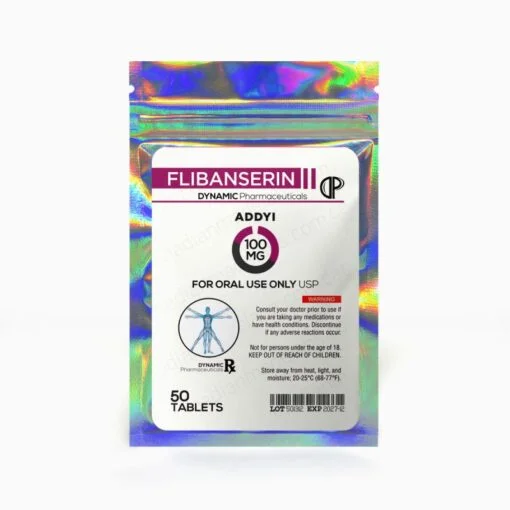
FLIBANSERIN (100MG) (50 TABLETS)
Original price was: $90.00.$79.00Current price is: $79.00.
Buy Flibanserin 100mg (50 Tablets) — FDA-approved active ingredient (Addyi generic) for Hypoactive Sexual Desire Disorder (HSDD) in women. Non-hormonal, once-daily bedtime tablet. Clinically proven to increase satisfying sexual events and reduce distress. Fast shipping USA, Canada, Germany, France, UK & worldwide. Order no
Buy Flibanserin 100mg (50 Tablets) | The Only FDA-Approved Non-Hormonal Treatment for Women’s Low Sexual Desire
In December 2025, the FDA expanded approval of Flibanserin (Addyi) to include postmenopausal women under 65 — making it the first and only FDA-approved oral treatment for HSDD in both pre- and postmenopausal women. The expansion was supported by Phase III trial data showing statistically significant improvements in sexual desire scores, reduced distress, and increased satisfying sexual events versus placebo (P <.025 for satisfying events; P <.0001 for FSFI Desire score). A decade of advocacy. One historic ruling. A decade of women now finally included.
Hypoactive Sexual Desire Disorder (HSDD) is not simply a matter of “not being in the mood.” It’s a recognized, diagnosed medical condition — characterized by a persistent, distressing reduction in sexual desire that causes genuine interpersonal and psychological harm. HSDD affects approximately 10% of all premenopausal women in the United States — roughly 6 million women — with prevalence peaking in the 45–64 age group due to hormonal changes, menopause-related symptoms, and psychosocial factors. And until 2015, there was no FDA-approved pharmacological option for any of them.
Flibanserin 100mg (Addyi) changed that. Developed by Sprout Pharmaceuticals and backed by clinical data from trials involving over 8,000 women across multiple Phase III studies, Flibanserin became the first-ever FDA-approved non-hormonal treatment for HSDD — addressing the condition through the brain’s neurotransmitter system rather than hormonal replacement. Women across the USA, Canada, Germany, France, and the UK who have been living with the distress, shame, and relationship strain that HSDD creates — they now have a clinically validated, physician-approved solution backed by a decade of real-world evidence.
What Is Flibanserin 100mg (Addyi)?
Flibanserin (brand name Addyi) is a centrally acting, non-hormonal medication — the first and only FDA-approved oral treatment for acquired, generalized Hypoactive Sexual Desire Disorder (HSDD) in premenopausal women — now expanded to postmenopausal women under 65 as of December 15, 2025. It targets brain neurotransmitters involved in sexual desire rather than working through hormones or blood flow.
Flibanserin is indicated to treat acquired, generalized HSDD as characterized by low sexual desire that causes marked distress or interpersonal difficulty — and is not due to a co-existing medical or psychiatric condition, problems within the relationship, or the effects of a medication or other substance.
Think of it this way: just as antidepressants address a neurochemical imbalance in the brain — not a character flaw — Flibanserin addresses the neurochemical imbalance at the root of HSDD. It’s not about desire being “all in your head” as a dismissal. It’s recognizing that desire begins in the brain, and when the brain’s chemistry is out of balance, so is desire.
Flibanserin 100mg — Full Product Specification
| Property | Detail |
|---|---|
| Active Ingredient | Flibanserin |
| Brand Name | Addyi® (Sprout Pharmaceuticals) |
| Strength per Tablet | 100mg |
| Pack Size | 50 Tablets |
| Total Content | 5,000mg Flibanserin per pack |
| Form | Oral tablet |
| Drug Class | Serotonin receptor agonist/antagonist; non-hormonal CNS agent |
| Mechanism | 5-HT1A agonist / 5-HT2A antagonist; dopamine/norepinephrine modulation |
| FDA Approval (Original) | August 18, 2015 — Premenopausal women with HSDD |
| FDA Approval (Expanded) | December 15, 2025 — Postmenopausal women <65 with HSDD |
| Recommended Dose | 100mg once daily at bedtime |
| Administration | Oral — bedtime only |
| Clinical Trial Patients | 8,000+ women across multiple Phase III trials |
| Storage | Room temperature, protected from moisture and light |
| Intended Use | Treatment of acquired, generalized HSDD in women |
What Is HSDD And Why Does It Deserve Medical Treatment?
Hypoactive Sexual Desire Disorder (HSDD) refers to a persistent or recurring loss of desire for sexual activity that contributes to personal or interpersonal distress. Key criteria include a noticeable decline from a previously satisfying level of desire that results in personal distress — not just a partner’s distress — and a desire to see improvement. HSDD is estimated to affect 1 in 10 US women.
HSDD is the most prevalent type of sexual dysfunction in adult females — a condition in which there is a lack of desire in sex for a period of six months or longer. HSDD is particularly common across adult age groups, peaking in the 45–64 age group, likely due to hormonal changes, menopause-related symptoms, and psychosocial factors.
It’s worth being direct about this: HSDD is not a woman “being difficult” or “just stressed.” It’s a diagnosable medical condition with a recognized neurobiological basis, validated diagnostic criteria (DSM-5), measurable clinical endpoints (FSFI Desire score, Satisfying Sexual Events), and — as of 2015/2025 — FDA-approved pharmacological treatment. “So many of my postmenopausal patients have carried the weight of frustrating low sexual desire with no FDA-approved option to turn to. Today’s decision finally includes them. It’s a critical acknowledgment that their pleasure, their wellbeing, and their quality of life matter.” — Dr. Rachel S. Rubin, MD, Urologist and Sexual Medicine Specialist, December 2025.
How Does Flibanserin 100mg Work? The Central Mechanism
Unlike testosterone patches or hormonal therapies — which address the hormonal dimensions of sexual function — Flibanserin works entirely within the brain’s neurotransmitter system. This is what makes it genuinely novel.
Addyi helps balance neurotransmitters like dopamine, serotonin, and norepinephrine to support sexual desire. Flibanserin selectively targets central serotonin postsynaptic receptors, exhibiting both agonistic and antagonistic effects — it acts as a 5-HT1A agonist (increasing dopamine and norepinephrine) and a 5-HT2A antagonist (reducing the inhibitory effect of serotonin on sexual desire). The exact mechanism is complex, but the net result is a rebalancing of the excitatory (dopamine, norepinephrine) vs. inhibitory (serotonin) neurotransmitters involved in sexual interest.
In practical terms:
- Dopamine ↑ — the reward and motivation neurotransmitter associated with anticipation of pleasure
- Norepinephrine ↑ — the alertness and engagement neurotransmitter
- Serotonin ↓ (inhibitory effect) — reducing the serotonergic brake on sexual desire
Because it works through brain chemistry rather than hormones, Flibanserin is considered a non-hormonal treatment for low libido in women — making it appropriate for women who cannot or choose not to use hormonal therapies, including those with hormone-sensitive conditions.
Flibanserin 100mg — Neurotransmitter Mechanism at a Glance
| Receptor / Neurotransmitter | Effect | Impact on Desire |
|---|---|---|
| 5-HT1A (Serotonin) | Agonist | Stimulates — reduces inhibitory serotonin tone |
| 5-HT2A (Serotonin) | Antagonist | Blocks — reduces sexual desire suppression |
| Dopamine | Indirect increase | Boosts reward/motivation pathway |
| Norepinephrine | Indirect increase | Increases alertness/engagement |
| Net Effect | Excitatory > Inhibitory | Improved sexual desire |
Who Is Flibanserin 100mg (Addyi) For?
Flibanserin is indicated for women who:
- Have not experienced issues with low sexual desire in the past (acquired, not lifelong)
- Experience low sexual desire regardless of the type of activity, partner, or situation (generalized, not situational)
- Find their low desire troubling and distressing (the distress criterion is essential to diagnosis)
| Patient Profile | Appropriate? |
|---|---|
| Premenopausal women with acquired, generalized HSDD | ✅ FDA-approved (2015) |
| Postmenopausal women <65 with acquired, generalized HSDD | ✅ FDA-approved (December 15, 2025) |
| Women whose HSDD is caused by relationship problems | ❌ Not appropriate |
| Women whose low desire is due to medications (e.g. SSRIs) | ❌ Needs medication review first |
| Women with HSDD from a medical/psychiatric condition | ❌ Treat underlying condition first |
| Postmenopausal women 65 or older | ❌ Not currently studied/approved |
| Men | ❌ Not approved or studied for men |
| Women who consume alcohol regularly | ⚠️ Serious alcohol interaction — see warnings |
How to Use Flibanserin 100mg — Complete Dosing Guide
Standard Dose and Administration
Addyi is supplied as a 100mg tablet. The recommended dosage is 100mg taken once daily at bedtime. Administration during waking hours may increase the risk of hypotension, syncope, accidental injury, and central nervous system depression.
This is the one non-negotiable: bedtime only. Flibanserin’s CNS effects — drowsiness, dizziness, potential blood pressure lowering — are manageable when you’re in bed. These same effects become dangerous if you’re awake, driving, or operating machinery.
| Dosing Parameter | Specification |
|---|---|
| Dose | 100mg (1 tablet) |
| Frequency | Once daily |
| Timing | At bedtime — always |
| With or without food | Either (consistency preferred) |
| With alcohol | Never — serious interaction |
| Missed dose | Skip and take next scheduled bedtime dose |
| Never double-dose | If you miss a dose, do not take extra |
| Starting effects | Noticeable improvement after 4 weeks |
| Peak effects | 8 weeks |
| Discontinuation if no improvement | After 8 weeks — discuss with prescriber |
How to Take Flibanserin 100mg — Step by Step
Step 1 — Take at Bedtime Only
Swallow the tablet whole with water at bedtime. Do not take in the morning, afternoon, or evening before social activities. The sedating and blood-pressure-lowering effects must occur during sleep.
Step 2 — Be Consistent
Daily use is mandatory — noticeable effects begin after four weeks, peaking at eight weeks. Skipping days resets the neurochemical rebalancing effect. This is not an “as-needed” medication — it is a daily neurological treatment, like an antidepressant.
Step 3 — Wait and Track
Use a simple journal to track sexual desire, satisfying sexual events, and personal distress levels weekly. This gives you and your prescriber meaningful data to evaluate whether the treatment is working by the 8-week assessment point.
Step 4 — Discuss at 8 Weeks
Patients should discontinue treatment after 8 weeks if no improvement is seen. If meaningful improvement has occurred, continue with regular prescriber follow-up every 3 months.
The Alcohol Warning — What You Absolutely Must Know
This is the most critical safety consideration for Flibanserin — and it deserves its own section.
Flibanserin tablets can cause CNS depression (somnolence, sedation). The interaction between Flibanserin and alcohol dramatically amplifies this risk. In clinical studies, the combination caused severe hypotension (abnormally low blood pressure) and syncope (fainting) — in some cases requiring medical intervention.
- Do not drink alcohol while taking Flibanserin — full stop
- Even a small amount of alcohol can trigger dangerous blood pressure drops
- Syncope and hypotension occur significantly more often when Flibanserin is taken with alcohol — alcohol is the primary driver of the most serious adverse events documented in clinical trials
- Women who drink alcohol regularly should discuss this carefully with their prescriber before starting Flibanserin
This is not a “drink in moderation” caveat. It is a genuine pharmacological interaction that produces serious, dose-independent adverse events. Prescribers and patients must both be aware before initiating treatment.
Possible Side Effects of Flibanserin 100mg
Flibanserin’s side-effect profile is well-characterized across its 8,000+ patient clinical trial safety database and a decade of real-world use.
Common Side Effects (≥5% of patients)
In five 24-week, randomized, placebo-controlled, double-blind trials in premenopausal women with HSDD, the incidence of somnolence, sedation, or fatigue was 21% in Flibanserin-treated patients vs. 8% in placebo.
| Side Effect | Frequency | Notes |
|---|---|---|
| Dizziness | Very Common | Most common; occurs 3–4x more than placebo |
| Somnolence / Sedation | Very Common | 21% vs 8% placebo; bedtime dosing mitigates this |
| Nausea | Common | Occurs 3–4x more than placebo; typically mild |
| Fatigue | Common | Related to CNS depressant activity |
| Insomnia | Common (postmenopausal) | Reported more in expanded indication group |
| Dry Mouth | Common (postmenopausal) | Mild; typically manageable |
| Anxiety | Occasional (postmenopausal) | Monitor; discuss with prescriber |
Serious Safety Concerns
| Risk | Detail |
|---|---|
| Hypotension & Syncope | Risk present even without alcohol; significantly amplified with alcohol — Boxed Warning |
| CNS Depression | Additive with alcohol, CNS depressants, sedatives |
| Hepatic Impairment | Contraindicated with hepatic impairment — significantly elevated plasma concentrations |
| Drug Interactions | Serious interactions with CYP3A4 inhibitors (fluconazole, ketoconazole, certain HIV medications) |
| Pregnancy | Safety not fully established — discuss with prescriber |
| Breastfeeding | May pass into breast milk — avoid or discuss |
Contraindications — Do NOT Use Flibanserin If:
Women who have gone through menopause were not approved to receive Flibanserin under the original 2015 indication — this changed December 15, 2025. Additionally, men should not use Flibanserin. Women should not use this medicine to improve sexual performance (it treats desire, not arousal or performance).
| Contraindication | Reason |
|---|---|
| Hepatic impairment (any severity) | Dramatically increased drug exposure; syncope risk |
| Regular alcohol use | Serious hypotension and syncope risk |
| Use of strong CYP3A4 inhibitors | Dangerous plasma level elevation |
| Pregnancy | Safety unknown |
| Age 65+ | Not studied in this population |
| Men | Not approved or studied |
Flibanserin 100mg vs. Other HSDD Treatments
| Treatment | Mechanism | FDA Approved | Route | Hormonal? | Timing |
|---|---|---|---|---|---|
| Flibanserin (Addyi) | CNS neurotransmitter rebalancing | ✅ Yes (Pre + Post <65, 2015/2025) | Oral daily | ❌ No | Daily bedtime |
| Bremelanotide (Vyleesi) | Melanocortin receptor agonist | ✅ Yes (Premenopausal) | SubQ injection | ❌ No | As-needed (45 min before) |
| Testosterone (off-label) | Androgen replacement | ⚠️ Off-label for women | Topical/injection | ✅ Yes | Daily/weekly |
| Hormone Replacement Therapy (HRT) | Estrogen/progesterone | ✅ Menopause symptoms | Oral/patch/gel | ✅ Yes | Daily |
| Ospemifene | SERM (estrogen agonist) | ✅ Dyspareunia | Oral daily | Partial | Daily |
HSDD emerges as the dominant segment in the female sexual dysfunction treatment market, commanding approximately 45% of the market share in 2024. The oral route commands approximately 58% of market share — directly reflecting Flibanserin’s dominant position as the preferred administration route among healthcare providers and patients.
FAQs About Flibanserin 100mg (50 Tablets / Addyi Generic)
1. What is Flibanserin 100mg and what is it used for?
Flibanserin (brand name Addyi) is a prescription medication developed to treat Hypoactive Sexual Desire Disorder (HSDD) — a condition characterized by persistent low sexual desire that causes personal distress. It is non-hormonal, works on the central nervous system by targeting neurotransmitters involved in sexual desire, and is now FDA-approved for both premenopausal women and postmenopausal women under 65 with acquired, generalized HSDD.
2. What was the December 2025 FDA approval expansion for Flibanserin?
On December 15, 2025, the FDA expanded approval of Addyi (Flibanserin) to include postmenopausal women younger than 65 years with acquired, generalized HSDD — making it the first and only FDA-approved oral treatment for HSDD across both pre- and postmenopausal women. This was based on a Phase 3 randomized controlled trial of 447 postmenopausal women showing statistically significant improvements in satisfying sexual events and FSFI Desire scores versus placebo.
3. How does Flibanserin 100mg work?
Addyi helps balance neurotransmitters like dopamine, serotonin, and norepinephrine to support sexual desire. Specifically, Flibanserin acts as a 5-HT1A agonist and a 5-HT2A antagonist — increasing excitatory dopamine and norepinephrine while reducing the inhibitory effect of serotonin on sexual desire pathways. The net result is a rebalancing of the brain’s approach-vs-avoidance signals for sexual interest.
4. When and how should Flibanserin 100mg be taken?
The recommended dosage is 100mg taken once daily at bedtime. Administration during waking hours may increase the risk of hypotension, syncope, accidental injury, and CNS depression. It should be taken at the same time each night. Consistency is critical — this is a daily neurological medication, not an as-needed treatment. Noticeable effects begin after four weeks, peaking at eight weeks of daily use.
5. Can Flibanserin 100mg be taken with alcohol?
No — alcohol must be avoided during Flibanserin treatment. The combination causes severe hypotension and syncope — abnormally low blood pressure and fainting — in a significant proportion of users. This is one of Flibanserin’s Boxed Warnings and is the primary driver of its most serious clinical adverse events. Women who drink regularly should discuss this interaction with their prescriber before starting treatment.
6. What clinical results has Flibanserin produced?
In premenopausal Phase III trials: Flibanserin increases the number of satisfying sexual events per month by about one-half over placebo from a starting point of approximately 2–3 per month. In the postmenopausal Phase 3 expansion trial: satisfying sexual events improved by 0.9 vs 0.6 (P <.025) and the FSFI Desire score improved by 0.7 vs 0.4 (P <.0001) versus placebo — with meaningful distress reduction across all endpoints.
7. How long does it take for Flibanserin 100mg to work?
Daily use produces noticeable effects beginning after four weeks, with effects peaking at eight weeks. Sexual desire varies greatly among women — what matters is a meaningful, personally significant change from the baseline distress level over this treatment window. If no improvement is observed after 8 weeks of consistent bedtime dosing, discontinue and discuss with your prescriber.
8. Who should NOT use Flibanserin 100mg?
Women with hepatic impairment (liver disease), regular alcohol use, or use of strong CYP3A4 inhibitor medications should not use Flibanserin. This medicine should only be used by women who have a low sexual desire that is troubling to them and is not caused by a medical or mental problem, problems in the relationship, or medicine or other drug use. Men and women 65 or older are currently outside the approved indication.
9. What are the most common side effects of Flibanserin 100mg?
The most common adverse reactions include dizziness, somnolence, nausea, fatigue, insomnia, dry mouth, and anxiety. The incidence of somnolence, sedation, or fatigue was 21% in Flibanserin-treated patients versus 8% in placebo groups — approximately three to four times more often than placebo for dizziness and nausea. These effects are substantially mitigated by strict bedtime administration.
10. Is Flibanserin 100mg hormonal?
No — Flibanserin is a non-hormonal treatment for low libido in women. It works entirely through the central nervous system’s neurotransmitter pathways rather than through estrogen, progesterone, or testosterone. This makes it appropriate for women who cannot or choose not to use hormonal therapies — including those with hormone-sensitive conditions or those who simply prefer a non-hormonal pharmacological option.
11. What is the difference between Flibanserin (generic) and Addyi (brand)?
A generic drug is a copy of the brand-name drug with the same dosage, safety, strength, quality, administration route, performance, and intended use. Generic manufacturers must prove the drug has the same active ingredient as the brand-name and works the same way in the body in the same amount of time. Generics are less expensive because generic manufacturers don’t invest in initial drug development costs. Flibanserin 100mg contains the same active ingredient as Addyi 100mg at the same strength and equivalent pharmacological profile.
12. How prevalent is HSDD and why does it matter?
HSDD affects approximately 10% of all premenopausal women in the United States — roughly 6 million women — with the condition peaking in the 45–64 age group. It is the most prevalent type of sexual dysfunction in adult females and can be defined as a lack of desire in sex persisting for six months or longer that causes distress. The impact on self-esteem, relationships, quality of life, and mental health is clinically significant — and the existence of an FDA-approved treatment makes it essential that women with this condition know that clinical help exists
Only logged in customers who have purchased this product may leave a review.
Related products

Reviews
There are no reviews yet.