
 Français
 Français
 Afrikaans
 English
 English
 English
 Español
 Italiano
 Nederlands
 Nederlands
 Norsk Nynorsk
 Português
 Português
 Português
 English
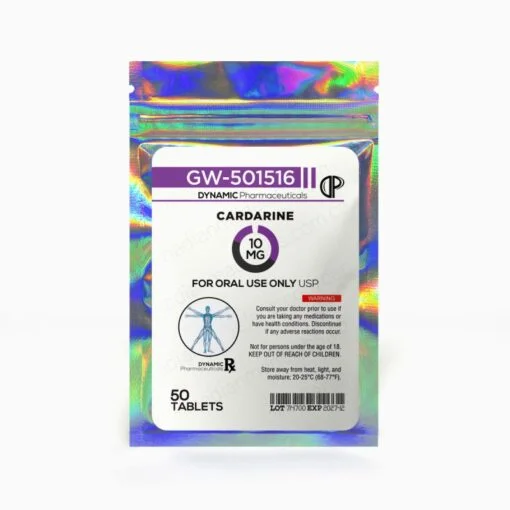
GW-501516 (10MG) (50 TABLETS)
Original price was: $90.00.$79.00Current price is: $79.00.
Buy GW-501516 (Cardarine) 10mg — 50 tablets of the most studied PPARδ agonist research compound. Investigated for fat oxidation, endurance, lipid metabolism & metabolic syndrome. ≥99% purity, lab-verified. Full transparency on research profile. Fast shipping USA, Canada, Germany, France & worldwide. Order now.
Buy GW-501516 (Cardarine) 10mg (50 Tablets) Online
In moderately obese men, treatment with GW-501516 reduced LDL cholesterol by 23% and raised HDL cholesterol significantly — in a randomized controlled trial. In sedentary mice, Cardarine administration improved running endurance by preserving blood sugar. In skeletal muscle cells, PPARδ activation shifted gene expression toward fatty acid oxidation, producing a metabolic profile that researchers described as resembling “the effects of exercise.” These are real findings. They are also the same compound that was abandoned in 2007 when animal studies revealed rapid tumor development across multiple organs. This is GW-501516 — the most metabolically fascinating, and most safety-complex, research compound in the PPARδ space.
No product description for GW-501516 (Cardarine) should obscure this duality. The compound’s research profile is genuinely remarkable on metabolic parameters — and genuinely concerning on long-duration oncological parameters. Both bodies of evidence are real, peer-reviewed, and equally important for any researcher approaching this compound. Across the USA, Canada, Germany, France, and the UK, GW-501516 10mg tablets continue to be purchased by qualified researchers for PPARδ pathway investigation — not because the safety concerns have been resolved, but because the mechanistic science driving those investigations is compelling enough to justify controlled laboratory study under appropriate oversight.
GW1516 is a metabolic modulator that increases fat metabolism and improves exercise adaptation. In 2009, it was added to the WADA Prohibited List under section S4 Hormone and Metabolic Modulators. In 2023, there were 54 occurrences of Adverse Analytical Findings (AAFs) related to GW1516 — accounting for 17% of all AAFs within section S4 — confirming its measurable performance-relevant biological activity and its continued presence in the detection landscape.
This listing presents the complete research picture. No cherry-picking. No hiding the cancer data. No performance hype without safety context. Researchers deserve the full profile.
What Is GW-501516 (Cardarine / Endurobol)?
GW501516 (also known as GW-501516, GW1516, GSK-516, Cardarine, and Endurobol) is a PPARδ receptor agonist invented in a collaboration between Ligand Pharmaceuticals and GlaxoSmithKline in the 1990s. It entered clinical development as a drug candidate for metabolic and cardiovascular diseases but was abandoned in 2007 because animal testing showed that the drug caused cancer to develop rapidly in several organs.
Cardarine is not a SARM. It has zero activity at the androgen receptor. It belongs to a class of compounds called PPARδ agonists — meaning it activates peroxisome proliferator-activated receptor delta, a nuclear receptor that acts as a transcription factor. Once a molecule binds to PPARδ, the receptor-ligand complex binds to DNA sequences and directly controls gene expression — specifically genes governing energy metabolism, fatty acid oxidation, and lipid handling
PPARδ receptors help regulate genes involved in metabolism and cardiovascular health. When Cardarine activates PPARδ receptors, it triggers protein expression that leads to increased fatty acid oxidation — allowing the body to burn fat for energy more efficiently. The activation of PPARδ has anti-inflammatory effects and mimics the effects of exercise by producing similar gene expression changes in muscle tissue.
The research that followed this mechanism through preclinical and early clinical investigation produced some of the most striking metabolic data of any discontinued compound in modern pharmacology. The reason it was discontinued — rapidly accelerated cancer in animal models — is equally striking, and must be weighed with the same scientific seriousness.
GW-501516 (Cardarine) 10mg — Full Technical Specification
| Property | Detail |
|---|---|
| Chemical Name | {2-methyl-4-[({4-methyl-2-[4-(trifluoromethyl)phenyl]-1,3-thiazol-5-yl}methyl)sulfanyl]phenoxy}acetic acid |
| Common Names | GW-501516 / GW1516 / GSK-516 / Cardarine / Endurobol |
| CAS Number | 317318-70-0 |
| Molecular Formula | C₂₁H₁₈F₃NO₃S₂ |
| Molecular Weight | 453.49 g/mol |
| Drug Class | PPARδ (Peroxisome Proliferator-Activated Receptor Delta) Agonist |
| Receptor Target | PPARδ (EC₅₀ = 1nM; 1000× selectivity over PPARα and PPARγ) |
| Form | Oral tablet — 10mg per tablet |
| Pack Size | 50 Tablets |
| Total Content | 500mg GW-501516 per pack |
| Half-Life | ~16–24 hours |
| Storage | Protect from light; store at 2–8°C |
| Solubility | DMSO: up to 20mg/mL; insoluble in water |
| Purity Standard | ≥99% (third-party HPLC & Mass Spec verified) |
| Developed By | GlaxoSmithKline + Ligand Pharmaceuticals (1990s) |
| Clinical Status | Abandoned 2007 — cancer risk in long-duration animal models |
| WADA Status | Prohibited at all times — S4.4 Metabolic Modulators |
| FDA Status | Not approved for any medical use |
| Intended Use | Research / Laboratory purposes only |
The PPARδ Mechanism — How GW-501516 Works at the Cellular Level
GW-501516 is a potent and highly selective PPARβ/δ agonist, with EC₅₀ of 1nM and 1000-fold selectivity over hPPARα and hPPARγ. This extreme receptor selectivity is what makes it such a precise research tool for PPARδ pathway investigation — unlike non-selective PPAR activators, GW-501516 isolates δ-receptor activity with a precision that allows clean mechanistic attribution of observed effects.
When GW-501516 activates PPARδ receptors, it triggers protein expression that leads to: increased fatty acid oxidation in skeletal muscle cells (shifting energy substrate use from glucose toward fat); upregulation of mitochondrial biogenesis (more mitochondria = more fat-burning capacity); upregulation of lipid catabolic processes (breaking down stored triglycerides for fuel); and anti-inflammatory gene expression changes through NF-κB pathway modulation.
One of the most striking research findings is that PPARδ activation mimics the effects of exercise — producing gene expression changes in muscle tissue that are similar to those observed following aerobic training. This “exercise in a pill” quality is what drove early clinical development and continues to make it one of the most researched receptor pathways in metabolic science.
What Early Research Found — GW-501516’s Metabolic Data
Fat Oxidation & Energy Metabolism
In skeletal muscle cells, activation of PPARδ by GW-501516 regulated the expression of genes involved in fatty acid oxidation and lipid utilization. These studies report increased activity of pathways linked to β-oxidation and energy metabolism — suggesting that the compound plays a role in shifting cellular energy use toward fatty acids rather than glucose. These findings highlight its relevance in metabolic pathway research, particularly in understanding lipid homeostasis and energy regulation.
Cardarine improves fatty acid oxidation in 2.5mg and 10mg doses when administered daily for 2 weeks in a randomized controlled trial — one of the few human dosing parameters confirmed in published clinical research.
Endurance Enhancement
In sedentary mice, cardarine administration improved running endurance by preserving blood sugar. The improvement in running endurance was seen even in untrained mice after just one week — the result of an increase in fatty acid utilization after cardarine was given. Blood glucose levels of mice treated with GW501516 were also higher after exercise, with the improvement significant in trained mice and unexpectedly higher in untrained mice.
Cholesterol & Cardiovascular Lipid Profile
In moderately obese men, treatment with Cardarine reduced low-density lipoprotein (LDL) cholesterol by 23%. It was also found to increase HDL (good) cholesterol while lowering LDL and triglycerides — and was shown to prevent diet-induced obesity in mice by increasing fatty acid metabolism.
Metabolic Syndrome Research
A clinical study published in Russsky Meditsinskiy Zhurnal (2024) examining GW-501516 effects on metabolic syndrome found that at baseline, only 2 patients (9.52%) had normal homocysteine levels. Post-therapy, 19 patients demonstrated normalization of homocysteine levels. Fasting glucose levels decreased from 7.8±0.81 to 7.38±0.76 mmol/l after 3 months. All patients exhibited weight loss during the study period.
Research Dosage Reference — GW-501516 10mg Tablets
These are reference doses from published research and clinical observations — not therapeutic recommendations.
Kintz et al. (2020) reported Cardarine dosages commonly ranging from 10 to 20mg/day among bodybuilders. In clinical studies, researchers have administered up to 10mg/day to participants. The general consensus among researchers suggests a daily dosage of 10–20mg is the reference range studied.
| Protocol Parameter | Reference Range | Notes |
|---|---|---|
| Dose | 10–20mg/day | 10mg = 1 tablet (this product) |
| Administration | Oral, once daily | 24-hour half-life allows once-daily dosing |
| Cycle Length | 6–8 weeks (research reference) | Longer cycles substantially increase unknown cancer risk |
| Timing | Morning with or without food | Consistent daily timing preferred |
The 50-Tablet Pack at 10mg/Dose
| Daily Dose | Tablets per Day | Days per Pack | Research Coverage |
|---|---|---|---|
| 10mg/day | 1 tablet | 50 days | ~7-week protocol |
| 20mg/day | 2 tablets | 25 days | ~3.5-week protocol |
How to Use GW-501516 10mg Tablets in Research
Step 1 — Establish Protocol Parameters
Define the specific research objective, duration, dosing protocol, and monitoring parameters before initiating. Given the compound’s safety profile, duration minimization and outcome monitoring are essential design features of any GW-501516 research protocol.
Step 2 — Once-Daily Oral Administration
GW-501516’s ~16–24 hour half-life supports once-daily oral dosing. Take at the same time daily for consistent plasma level maintenance throughout the research period.
Step 3 — With or Without Food
The compound is orally bioavailable with or without food. Consistent meal co-administration timing provides the most stable pharmacokinetic data.
Step 4 — Cycle Duration — Critical
Published research protocols reference 6–12 week cycles. Given the long-duration animal carcinogenicity findings, research protocols should use the shortest duration consistent with the scientific objective. Continuous long-duration exposure without defined endpoints is not appropriate for this compound.
Step 5 — Monitoring
Research protocols should include monitoring of relevant biomarkers: lipid panel, liver enzymes, fasting glucose, and any organ-specific markers relevant to the research question.
GW-501516 vs. Related PPARδ Research Compounds
| Compound | Receptor | EC₅₀ | Cancer Signal | Clinical Status | WADA |
|---|---|---|---|---|---|
| GW-501516 | PPARδ | 1nM | ⚠️ Animal rapid tumors | Abandoned 2007 | Prohibited |
| GW0742 | PPARδ | ~1nM | Less characterized | Early research only | Prohibited |
| SR9009 (Stenabolic) | REV-ERBα/β | — | Limited data | Not developed clinically | Prohibited |
| Bezafibrate | PPARα/δ/γ | Various | No strong signal | Approved (lipids) | Not prohibited |
| Fenofibrate | PPARα (primary) | Various | No strong signal | Approved (lipids) | Not prohibited |
Complete Side Effect & Safety Profile
This section presents the complete, unfiltered safety data for GW-501516 research.
Observed Research Effects (Positive Parameters)
| Parameter | Observed Change | Model |
|---|---|---|
| LDL Cholesterol | −23% | Human (obese subjects) |
| HDL Cholesterol | Significant increase | Human + animal |
| Triglycerides | Reduction | Multiple models |
| Endurance | Increased (even sedentary) | Rodent (1 week) |
| Fatty Acid Oxidation | Upregulated | Cell + rodent models |
| Fasting Glucose | Decreased | Human + rodent |
| Inflammatory Markers | NF-κB modulation | Cell culture |
Serious Risks — Non-Negotiable Transparency
| Risk | Evidence | Severity |
|---|---|---|
| Multi-Organ Rapid Tumor Promotion | 2-year rodent bioassays — reason for abandonment | Critical — reason development was abandoned |
| Unknown Human Long-Term Cancer Risk | No long-duration human data exists | Unknown — not zero |
| WADA Non-Specified Substance Violation | Confirmed via athlete testing (54 AAFs in 2023) | Career-ending for competitive athletes |
| Liver Enzyme Elevations | Reported in some research observations | Monitor ALT/AST |
| Potential Interaction with Existing Cancers | PPARδ may accelerate growth of pre-existing micro-tumors | Contraindicated for anyone with cancer history |
| Hormonal Impact | None documented (non-androgenic) | No HPTA suppression |
| Liver Toxicity | Low — non-hepatotoxic at standard doses | Markedly safer than many oral steroids |
What GW-501516 Does NOT Cause
| Absent Risk | Why |
|---|---|
| Testosterone Suppression | Zero androgen receptor activity |
| Gynecomastia | No estrogenic activity |
| PCT Required | No HPTA involvement |
| Virilization in Women | No androgenic mechanism |
| Acute Liver Toxicity | Non-hepatotoxic at studied doses |
FAQs About GW-501516 (Cardarine) 10mg — 50 Tablets
1. What is GW-501516 (Cardarine) and what is it researched for?
GW-501516 (Cardarine) is a synthetic compound that activates the PPARδ receptor — a nuclear receptor that controls genes involved in energy metabolism, specifically how cells burn fat and use fuel. It was originally developed by GlaxoSmithKline for metabolic and cardiovascular diseases. Despite early clinical promise, it was abandoned in 2007 when 2-year animal carcinogenicity studies revealed rapid tumor development across multiple organs. It remains studied as a research chemical for PPARδ pathway investigation.
2. Is GW-501516 a SARM?
No — Cardarine is not a SARM. It has zero activity at the androgen receptor. It belongs to a completely different compound class — PPARδ agonists — meaning it activates peroxisome proliferator-activated receptor delta, a nuclear receptor involved in metabolic gene expression rather than androgen signaling. Its frequent grouping with SARMs in performance-enhancement discussions is a persistent misclassification.
3. Why was GW-501516 development abandoned by GlaxoSmithKline?
GW-501516 entered clinical development as a drug candidate for metabolic and cardiovascular diseases but was abandoned in 2007 because animal testing showed that the drug caused cancer to develop rapidly in several organs. The cancer development was observed in 2-year rodent bioassays required as part of the regulatory drug approval process. GSK terminated the program rather than proceed to Phase III trials with this carcinogenicity profile.
4. What were the positive metabolic findings in early GW-501516 research?
Early research confirmed: LDL cholesterol reduction of 23% in moderately obese human subjects; significant HDL cholesterol increases; triglyceride reduction; prevention of diet-induced obesity in mice; improved endurance in both trained and sedentary rodents within 1 week; upregulated fatty acid oxidation in skeletal muscle; and improved blood glucose regulation post-exercise. These findings reflect genuine PPARδ-mediated metabolic activity — and are equally genuine alongside the serious cancer findings.
5. What is the cancer risk with GW-501516?
When Cardarine was given to rats and mice for two years, they became prone to developing cancer across a range of organs. The cancer development was characterized as rapid — appearing earlier and more extensively than typically expected in long-duration carcinogenicity bioassays. The proposed mechanism is that PPARδ activation may accelerate proliferation of pre-existing micro-tumor cells rather than initiating new cancers. No long-duration human carcinogenicity data exists — the compound was abandoned before such studies could be conducted.
6. What is the standard research dose for GW-501516 10mg tablets?
Kintz et al. (2020) reported Cardarine dosages commonly ranging from 10–20mg/day. In clinical studies, researchers administered up to 10mg/day to participants. The 10mg tablet format of this product delivers the lower end of the research reference range — one tablet per day — providing precise, consistent dosing for controlled experimental protocols.
7. Does GW-501516 require PCT (Post-Cycle Therapy)?
No. GW-501516 has zero activity at the androgen receptor and does not suppress testosterone, LH, or FSH. It does not interact with the HPTA in any way. Post-cycle therapy is not required after GW-501516 research protocols. This is one of the few areas where its research profile is genuinely clean.
8. Is GW-501516 banned in sport?
Yes — GW1516 is prohibited at all times under WADA’s Prohibited List (S4.4 Metabolic Modulators). It is classified as a non-specified substance — the more serious designation — meaning athletes who test positive face harsher default sanctions than for many other banned substances. Multiple athletes across cycling, track and field, and other endurance sports have received multi-year bans. USADA has issued an urgent warning advising athletes not to use it.
9. What is the half-life of GW-501516 and how is it taken?
GW-501516 has a half-life of approximately 16–24 hours, supporting once-daily oral dosing. The 10mg tablet format at the same time daily maintains relatively stable plasma levels across the research day. Consistent daily administration timing produces the most interpretable experimental data across research timelines.
10. What stacks well with GW-501516 in research?
GW-501516’s PPARδ mechanism is entirely non-androgenic and non-hormonal — making it mechanistically compatible without receptor overlap alongside SARMs (Ostarine MK-2866, RAD-140), GH secretagogues (MK-677, CJC-1295), and metabolic research compounds (SR9009 Stenabolic). The most commonly documented research pairings are GW-501516 + Ostarine (cutting/recomp) and GW-501516 + SR9009 (dual metabolic endurance).
11. What is the legal status of GW-501516 in the USA?
GW-501516 is not approved by the FDA or any other national drug regulatory agency for any medical use. It is not legally sold as a pharmaceutical. In the United States, it is unscheduled (not a DEA controlled substance) but has no authorized medical indication. It is sold as a research chemical for laboratory use only — and this is the only legally defensible use context in the US market.
12. Should competitive athletes or people with cancer history research GW-501516?
No. USADA urgently advises athletes not to use this substance, and WADA classifies it as a non-specified prohibited substance with serious health risk criteria. Athletes testing positive receive significant sanctions. Individuals with any personal or family history of cancer, or any active malignancy, should not use GW-501516 under any circumstances — the theoretical mechanism of PPARδ-driven tumor cell proliferation is directly relevant to these populations. This product is sold for qualified laboratory research use only.
Only logged in customers who have purchased this product may leave a review.
Related products

Reviews
There are no reviews yet.