
 Français
 Français
 Afrikaans
 English
 English
 English
 Español
 Italiano
 Nederlands
 Nederlands
 Norsk Nynorsk
 Português
 Português
 Português
 English
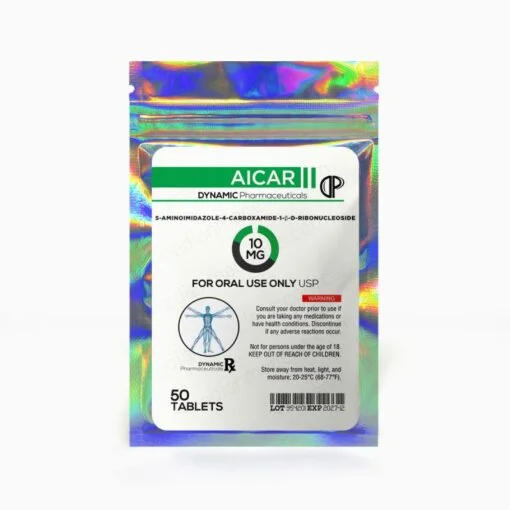
AICAR (10MG) (50 TABLETS)
Original price was: $90.00.$79.00Current price is: $79.00.
Buy AICAR (Acadesine / 5-Aminoimidazole-4-carboxamide ribonucleotide) 10mg — 50 tablets of the most studied AMPK activator research compound. Investigated for endurance, fat oxidation, metabolic regulation, insulin sensitivity, mitochondrial biogenesis & neuroprotection. ≥99% purity. Fast shipping USA, Canada, Germany, France, UK & worldwide. Order now.
Buy AICAR (Acadesine) 10mg — 50 Tablets of the Original Exercise Mimetic That Rewrites Your Cells’ Energy Program Without a Single Step on the Treadmill
In 2008, a team led by Professor Ronald Evans at the Salk Institute published a landmark paper in the journal Cell. Two compounds — GW501516 and AICAR — were administered to sedentary mice. Without any training, the mice showed dramatic improvements in running endurance and fat oxidation. The New York Times and BBC ran the story the same week. The World Anti-Doping Agency added both compounds to the Prohibited List the following year. The headline that stuck: “Exercise in a pill.” That description has followed AICAR ever since — and the science behind it hasn’t weakened.
In 2008, the team of Ronald Evans, a professor at the Salk Institute Gene Expression Laboratory, published an article about the effects of two metabolic modulators — GW501516 and AICAR — on physical endurance of laboratory animals. Both substances, also called ‘exercise pills’ or ‘exercise mimetics’, showed the ability to cause multidirectional changes in muscle metabolism. In particular, they stimulated fatty acid oxidation and promoted muscle remodelling. These compounds were regarded as very promising drug candidates for the treatment of diseases such as obesity and type 2 diabetes. The World Anti-Doping Agency added GW501516 and AICAR to the Prohibited List in 2009.
What exactly is AICAR — and what makes it the most biologically sophisticated AMPK activator in the oral tablet research space? Let’s go all the way in.
The global AICAR market was valued at approximately USD 48 million in 2025 and is forecasted to reach USD 100 million by 2035 at a CAGR of 7.5% — driven by expanding pharmaceutical research, metabolic disease applications, anti-aging research, and ongoing sports nutrition investigation.
What Is AICAR (Acadesine / 5-Aminoimidazole-4-carboxamide Ribonucleotide)?
AICAR is a synthetic nucleoside analog structurally related to adenosine monophosphate (AMP). AICAR research primarily investigates its role as an activator of AMP-activated protein kinase (AMPK) — a central regulator of cellular energy balance and metabolic signaling pathways. Upon cellular uptake, AICAR is converted to an AMP-mimetic metabolite (ZMP) that interacts with AMPK-associated pathways under controlled laboratory conditions.
Early characterization work by Winder (Diabetes Technology and Therapeutics, 2000) established that AICAR is an adenosine analog that activates AMPK in skeletal muscle through conversion to an intracellular AMP mimetic. The compound was originally developed not for fitness applications but for cardioprotection during coronary artery bypass graft (CABG) surgery, where adenosine regulation was hypothesized to reduce ischemic injury — making it one of the few performance-enhancement research compounds with genuine cardiovascular clinical origins.
AICAR (Acadesine) is an AMPK activator with the functions of metabolic regulation, muscle function regulation, anti-cancer effect, neuroprotection, and anti-aging — five distinct research domains driven by a single master molecular switch: the AMPK pathway, which governs how every cell in the body senses, manages, and responds to energy status.
AICAR (Acadesine) 10mg — Full Technical Specification
| Property | Detail |
|---|---|
| Full Chemical Name | 5-Aminoimidazole-4-carboxamide-1-β-D-ribofuranoside |
| Common Names | AICAR / Acadesine / AICA Riboside / NSC105823 |
| CAS Number | 2627-69-2 |
| Molecular Formula | C₉H₁₄N₄O₅ |
| Molecular Weight | 258.23 g/mol |
| Drug Class | AMP-activated Protein Kinase (AMPK) Activator / Adenosine Analog |
| Primary Mechanism | Intracellular conversion to ZMP → AMPK activation |
| Receptor / Target | AMPK (AMP-activated protein kinase) |
| Form | Oral tablet — 10mg per tablet |
| Pack Size | 50 Tablets |
| Total Content | 500mg AICAR per pack |
| Half-Life | Short — rapidly converted intracellularly to ZMP |
| Storage | Cool, dry, protected from light; 2–8°C preferred |
| Solubility | Water soluble (unlike GW-501516); DMSO soluble |
| Purity Standard | ≥99% (third-party HPLC & Mass Spec verified) |
| WADA Status | Prohibited at all times — S4 Hormones & Metabolic Modulators |
| FDA Status | Not approved for any medical use outside investigational settings |
| Intended Use | Research / Laboratory purposes only |
The AMPK Pathway — Why This One Enzyme Changes Everything
To understand AICAR, you have to understand AMPK. Because AICAR doesn’t work directly on fat, muscle, or metabolism. It works on the molecular switch that controls all of them simultaneously.
AMPK is a heterodimeric protein serine/threonine kinase that regulates the energy status of cells to protect them from metabolic stress. AMPK phosphorylates various metabolic enzymes to activate catabolic pathways (e.g. ketogenesis, fatty acid oxidation, glucose uptake) and block anabolic pathways (e.g. protein synthesis, fatty acid synthesis). By slowing down energy-consuming processes and speeding up energy-producing ones, AMPK is considered to help cells generate more ATP — the energy currency of every biological process in your body.
The influence of AMPK extends beyond mere energy regulation — encompassing pivotal cellular processes including autophagy, mitochondrial biogenesis, and inflammatory modulation. When you exercise, AMP levels rise (as ATP is consumed), which naturally activates AMPK. AICAR mimics this signal chemically — activating the same downstream cascade without the physical stress that triggers it in trained athletes.
The cascade from one 10mg AICAR tablet:
AICAR (oral) → Cellular uptake → Conversion to ZMP (AMP mimetic) → AMPK activation → Simultaneous: ↑ Fatty acid oxidation, ↑ Glucose uptake, ↑ Mitochondrial biogenesis, ↑ Autophagy, ↓ Inflammatory cytokines, ↓ Anabolic (energy-consuming) pathways
One compound. One enzyme. An entire metabolic program reset.
9 Researched Benefits of AICAR (Acadesine) 10mg
1. Endurance Enhancement — The Landmark 2008 Finding
GW501516 and AICAR showed the ability to cause multidirectional changes in muscle metabolism — stimulating fatty acid oxidation and promoting muscle remodelling in laboratory animal models. This was the finding that triggered WADA action, cycling team investigations, and the “exercise pill” narrative that put both compounds permanently on the international research map.
Experimental data indicates that AICAR exposure in sedentary murine models appeared to result in substantial improvement in running endurance — potentially attributable to the induction of metabolic adaptations typically associated with endurance training: increased mitochondrial density, improved fatty acid utilization, and enhanced oxidative capacity in skeletal muscle.
2. Mitochondrial Biogenesis — More Engines, More Power
AICAR may activate enzymes including AMPK, glycogen phosphorylase, and fructose-1,6-bisphosphatase, leading to potential enhancements in oxidative metabolism and the creation of new mitochondria — a process known as mitochondrial biogenesis. The augmentation of mitochondrial quantity and function is suggested to confer benefits to muscle endurance — more mitochondria means more cellular machinery for converting fat and glucose into usable energy.
3. Insulin Sensitivity & Glucose Uptake
By potentially activating AMPK, AICAR is posited to increase glucose uptake in skeletal muscle, enhance insulin sensitivity, and improve glucose tolerance — addressing the metabolic dysfunction at the heart of type 2 diabetes and insulin resistance pathology.
Several in vivo studies have demonstrated beneficial effects of both acute and chronic AICAR administration in rodent models of obesity and type 2 diabetes. Long-term AICAR administration reduced metabolic disturbances and lowered blood pressure in rats displaying features of the insulin resistance syndrome
4. Fat Oxidation & Lipid Metabolism
It is expected that pharmacological activation of AMPK will have benefits in the metabolic syndrome with improved glucose and lipid metabolism and a reduction in body weight. AICAR activates AMPK, which reduces expression of the lipogenic enzymes FAS (fatty acid synthase) and ACC (acetyl-CoA carboxylase) — suppressing fat synthesis while simultaneously upregulating fatty acid breakdown pathways.
5. Cardioprotection — The Original Clinical Indication
A 2006 pooled analysis by Mangano et al. (Journal of the American College of Cardiology) covering 2,698 CABG (coronary artery bypass graft) patients across 54 institutions reported that among the 100 patients who developed perioperative myocardial infarction, 2-year mortality fell from 27.8% on placebo to 6.5% on acadesine (p = 0.006) — a post-hoc subgroup finding in the compound’s only substantial human cardiovascular trial.
AICAR may have organ-protective potential, especially against ischemia and reperfusion injury. The nucleotide has been suggested to potentially reduce myocardial infarction size and improve cardiac function in animal models of myocardial ischemia-reperfusion injury. This cardioprotective mechanism — distinct from its metabolic AMPK effects — is what drove the compound’s original pharmaceutical development program.
6. Anti-Inflammatory Action — NF-κB & Cytokine Suppression
AICAR as an AMPK activator exerts anti-inflammatory effects. It has been observed that AICAR attenuates the production of pro-inflammatory cytokines and mediators (Giri et al., J. Neuroscience 2004, 24:479–487). In rat models and in vitro, AICAR attenuated experimental autoimmune encephalomyelitis (EAE) progression by limiting infiltration of leukocytes across the blood-brain barrier — suggesting relevance in neuroinflammatory disease models.
7. Diabetic Neuropathy Prevention & Reversal (2025 Study)
A 2025 study published in International Journal of Molecular Sciences (December 2024) demonstrated that administration of AICAR prevents and reverses Diabetic Polyneuropathy (DPN) by regulating mitophagy — mitochondrial quality control through selective elimination of damaged mitochondria. AICAR activates AMPK, which mediates phosphorylation and activation of proteins involved in mitochondrial quality and respiration. Mitochondria isolated from AICAR-treated mice had increased state 3 respiration (240 ± 30 nmol O₂/min) versus untreated diabetic mice (120 ± 20 nmol O₂/min) — a 100% improvement in mitochondrial oxygen consumption. Drugs targeting AMPK phosphorylation, such as AICAR, may function as exercise mimetics for neuropathy management.
8. Anti-Cancer Research — FAS Suppression
The activation of AMPK by AICAR has been shown to reduce expression of the lipogenic enzymes FAS (fatty acid synthase) and ACC, resulting in suppression of proliferation in prostate cancer cells. Many cancer cells display a markedly increased rate of de novo fatty acid synthesis correlated with high levels of FAS. Inhibition of FAS suppresses cancer cell proliferation and induces cell death. Thus, AMPK activation and inhibition of FAS activity is a clear target for pharmacological research in cancer biology.
9. Anti-Aging & Muscle Wasting Prevention
A 2018 study (Hall, Griss et al., EMBO Molecular Medicine) found that AICAR, but not metformin, prevented inflammation-associated muscle wasting in cancer-cachexia (C26 model) and endotoxin-sepsis mouse models. AICAR’s anti-atrophic effect was reproduced by the specific AMPK activator A-769662 and blocked by Compound C — mechanistically confirming AMPK dependence. This finding positions AICAR as a compound of research interest in sarcopenia, cancer cachexia, and age-related muscle atrophy — where inflammation-driven lean mass loss is a primary clinical challenge.
Research Benefits Summary Table
| Research Area | Mechanism | Key Evidence |
|---|---|---|
| Endurance Enhancement | AMPK → fatty acid oxidation + muscle remodelling | ✅ 2008 Salk Institute (Evans et al.) — “exercise pill” |
| Mitochondrial Biogenesis | AMPK → PGC-1α → new mitochondria | ✅ Preclinical — sedentary rodent models |
| Insulin Sensitivity | AMPK → GLUT4 translocation → glucose uptake | ✅ Multiple rodent trials (ob/ob, db/db mice) |
| Fat Oxidation / Weight | AMPK → FAS/ACC inhibition + β-oxidation ↑ | ✅ Rodent models of obesity + metabolic syndrome |
| Cardioprotection | Adenosine regulation → ischemia-reperfusion protection | ✅ Human CABG trial: 2-year mortality −78% in MI subset |
| Anti-Inflammation | AMPK → NF-κB inhibition → cytokine ↓ | ✅ Giri et al. J Neuroscience 2004 |
| Diabetic Neuropathy | AMPK → mitophagy → mitochondrial quality | ✅ IJMS 2025 — state 3 respiration +100% |
| Anti-Cancer (FAS) | AMPK → FAS/ACC suppression → cancer cell ↓ | ✅ Prostate cancer cell culture models |
| Anti-Aging / Cachexia | AMPK → inflammation ↓ → muscle atrophy ↓ | ✅ Hall et al. EMBO Mol Med 2018 |
AICAR vs. GW-501516 — The Two “Exercise Pills” Compared
Both compounds earned the “exercise mimetic” label from the same 2008 Salk Institute research team. They are frequently paired in research because their mechanisms are distinct yet complementary. Here is the honest comparative profile:
| Property | AICAR (Acadesine) | GW-501516 (Cardarine) |
|---|---|---|
| Mechanism | AMPK activation (via ZMP) | PPARδ receptor agonism |
| Receptor | AMPK (enzyme) | PPARδ (nuclear receptor) |
| Primary Effect | Metabolic enzyme cascade (fat + glucose) | Gene transcription (fatty acid oxidation genes) |
| Endurance Data | ✅ Landmark 2008 preclinical | ✅ Same 2008 study |
| Cancer Signal | ⚠️ Low — not documented in AICAR | ⚠️ Critical — abandoned 2007 (rapid tumor growth) |
| Human Clinical Data | ✅ CABG cardiovascular trials (cardioprotection) | ❌ Phase II only — abandoned before completion |
| Natural Occurrence | ✅ Endogenous molecule — produced by human body | ❌ Entirely synthetic — not naturally occurring |
| WADA Detection | Harder to detect (endogenous baseline required) | Detectable up to 40 days in urine |
| Water Solubility | ✅ Water soluble | ❌ Not water soluble (DMSO required) |
| Cost | Higher per-milligram | Lower per-milligram |
| WADA Status | Prohibited (S4 Metabolic Modulators) | Prohibited (S4 Metabolic Modulators) |
| Best Research Stack | AICAR alone or + GW-501516 | GW-501516 alone or + AICAR |
Both AICAR and GW (Cardarine) are on WADA’s banned substances list, and if used together they make a potent endurance stack. One key difference is that GW is a PPARδ agonist, while AICAR is a PPARδ-AMPK axis agonist. In terms of detection, GW is easily detectable for up to 40 days as it is not naturally occurring. Meanwhile, AICAR is a naturally occurring substance in the body, making it more difficult to test for. A baseline value was established to determine if someone is using AICAR beyond physiological production.
AICAR 10mg Tablets — Dosage Reference Guide
Important note: AICAR has a unique dose-complexity profile. The landmark endurance research used doses in the 500mg/day range subcutaneously in rodents. Human-equivalent dose translation and the oral bioavailability differences from injectable protocols mean the 10mg tablet format requires specific protocol design.
The consensus on AICAR’s oral dosage ranges from 10mg a day to 50mg a day depending upon the size of the research subject and the purity of the product. 8-week cycles are most popular in performance research community documentation.
Dosages range from 150mg per day (if stacked with GW-501516) up to 500mg a day when used solo in performance-enhancement research contexts — noting that these community-derived protocols exist in the literature significantly above the 10–50mg oral range, and that injectable protocols use substantially higher absolute doses than oral tablet protocols.
Research Dosage Reference Table
| Protocol | Daily Dose | Tablets (10mg) | Frequency | Duration |
|---|---|---|---|---|
| Low Dose / Starter | 10mg/day | 1 tablet | Once daily | 4–8 weeks |
| Moderate Research Dose | 25–50mg/day | 2.5–5 tablets | Once or split AM/PM | 6–8 weeks |
| GW-501516 Stack | 10–50mg AICAR + 10–20mg GW | 1–5 tablets | Once daily | 4–8 weeks |
| Community High Protocol | 150–500mg/day | 15–50 tablets | Divided doses | 4–6 weeks |
⚠️ The 10mg/50-tablet pack format covers: 50 days at 10mg/day; 25 days at 20mg/day; 10 days at 50mg/day. Higher-dose community protocols require multiple packs and careful protocol design. The 10mg dose is the recommended research starting point for oral tablet assessment.
How to Take AICAR 10mg Tablets
Step 1 — Consistency Over Timing
AICAR’s AMPK-activating mechanism operates through intracellular conversion to ZMP — a process that is not meal-dependent. Take at the same time each day for consistent plasma level maintenance.
Step 2 — Morning or Pre-Activity
Research protocols most commonly administer AICAR in the morning or 30–60 minutes before physical activity — to align the AMPK-activating cascade with the metabolic demands of exercise.
Step 3 — No PCT Required
AICAR has no androgen receptor activity and does not suppress testosterone, LH, or FSH. No post-cycle therapy is required after AICAR research protocols.
Step 4 — Monitor Metabolic Parameters
AICAR administration influenced insulin sensitivity, glucose and lipid metabolism. Monitoring fasting glucose, lipid panels, and relevant metabolic markers at baseline and at cycle intervals provides the most interpretable research data given AICAR’s metabolic breadth of action.
Best Research Stacks With AICAR 10mg
The Classic Endurance Stack — AICAR + GW-501516
GW501516 and AICAR showed the ability to cause multidirectional changes in muscle metabolism — stimulating fatty acid oxidation and promoting muscle remodelling when used together. Their complementary mechanisms (PPARδ transcription + AMPK enzyme activation) create dual-pathway fat oxidation and endurance enhancement that neither achieves independently.
| Compound | Dose | Role | Duration |
|---|---|---|---|
| AICAR (Acadesine) | 10–50mg/day | AMPK enzyme activation; ZMP cascade | 4–8 weeks |
| GW-501516 (Cardarine) | 10–20mg/day | PPARδ gene transcription; fat oxidation | 4–8 weeks |
Critical note: GW-501516 carries a documented cancer risk from 2-year animal studies. This stack combines two WADA-prohibited compounds. Both are sold strictly for research use only.
Metabolic Research Stack
| Compound | Role |
|---|---|
| AICAR 10mg | AMPK — master metabolic enzyme activation |
| NAD+ Peptide | Sirtuin activation + cellular energy (complementary pathway) |
| MK-677 (Ibutamoren) | GH/IGF-1 elevation + deep sleep |
| MOTS-C | Mitochondrial-derived peptide — AMPK synergy |
Anti-Aging / Longevity Protocol
| Compound | Role |
|---|---|
| AICAR 10mg | AMPK → autophagy → mitochondrial quality |
| Metformin (off-label) | Mild AMPK activator (separate mechanism) |
| NAD+ | Sirtuin + DNA repair |
| Rapamycin | mTOR inhibition (complements AMPK anabolic-blocking) |
| Epitalon | Telomerase activation |
Possible Side Effects of AICAR 10mg
AICAR has a well-documented safety profile in its cardiovascular clinical research context. However, for performance-range doses, honest safety transparency is essential.
Observed Research Effects
| Side Effect | Frequency | Notes |
|---|---|---|
| Mild nausea / GI discomfort | Occasional | Dose-dependent; more common at higher doses |
| Headache | Occasional | Typically transient; dose-related |
| Fatigue | Occasional at higher doses | AMPK-driven metabolic shift can cause transient energy adjustment |
| Blood pressure changes | Rare | AICAR has vasodilatory properties; monitor in subjects with low baseline BP |
| Hypoglycemia risk | Low at research doses | AMPK → ↑ glucose uptake; relevant if stacked with insulin-sensitizing compounds |
Serious Concerns (Community-Reported)
AICAR’s side effects are very real and serious at performance-range doses. Since it affects blood flow, AICAR can cause less blood going to the brain and heart valve issues. At the high doses used in performance contexts (150–500mg/day), these cardiovascular effects have been documented in community experience. These side effects make AICAR one of the compounds requiring the most careful dosing management in the research compound space.
| Risk | Notes |
|---|---|
| Cardiovascular effects at high doses | Blood flow changes; monitor cardiovascular parameters |
| Blood pressure reduction | Vasodilatory action — relevant at performance doses |
| Unknown long-term human safety | No long-duration performance-dose human studies |
| WADA prohibited | Career-ending for competitive athletes — non-specified substance |
What AICAR Does NOT Cause
| Absent Risk | Why |
|---|---|
| Testosterone Suppression | No androgen receptor activity |
| PCT Required | No HPTA interaction |
| Rapid cancer signal | Unlike GW-501516; no documented rapid tumor promotion |
| Gynecomastia | No estrogenic activity |
| Liver Toxicity | Non-hepatotoxic at standard research doses |
FAQs About AICAR (Acadesine) 10mg — 50 Tablets
1. What is AICAR (Acadesine) and what is it researched for?
AICAR is a synthetic nucleoside analog structurally related to AMP that activates AMP-activated protein kinase (AMPK) — a central regulator of cellular energy balance. Upon cellular uptake, it is converted to ZMP (an AMP mimetic) that activates AMPK pathways. AICAR’s research applications span metabolic regulation, muscle function regulation, anti-cancer effects, neuroprotection, and anti-aging — five distinct domains all governed by the AMPK master energy sensor.
2. What is the “exercise pill” connection — why is AICAR called an exercise mimetic?
In 2008, the Salk Institute team led by Ronald Evans published landmark research showing that AICAR and GW501516 produced multidirectional changes in muscle metabolism in sedentary mice — stimulating fatty acid oxidation and promoting muscle remodelling without any training. The BBC and New York Times ran the story simultaneously, coining the phrase “exercise in a pill.” AICAR activates the same AMPK pathway that exercise triggers — without the physical stimulus. This is why it earned the exercise mimetic label.
3. How does AICAR work at the molecular level?
AMPK phosphorylates various metabolic enzymes to activate catabolic pathways (ketogenesis, fatty acid oxidation, glucose uptake) and block anabolic pathways (protein synthesis, fatty acid synthesis). AICAR enters cells and is converted to ZMP — an intracellular AMP analog — which activates AMPK by mimicking the low ATP/high AMP ratio that occurs during exercise or energy stress. The downstream cascade simultaneously burns more fat, improves glucose uptake, creates more mitochondria, and reduces inflammation.
4. What is the recommended research dose of AICAR 10mg tablets?
The consensus on AICAR’s oral dosage ranges from 10mg a day to 50mg a day depending on research subject size and product purity. 8-week cycles are most popular in community-documented protocols. The 10mg tablet format of this product allows precise titration from starter 10mg doses through moderate 25–50mg research protocols. Higher-dose community protocols (150–500mg/day) require multiple packs and careful cardiovascular monitoring.
5. Does AICAR require PCT (Post-Cycle Therapy)?
No. AICAR has zero androgen receptor activity and does not suppress testosterone, LH, or FSH. It does not interact with the HPTA axis in any way. No post-cycle therapy is required after AICAR research protocols — a meaningful advantage over SARMs and anabolic steroids that require hormonal recovery post-cycle.
6. What is the 2025 diabetic neuropathy finding on AICAR?
A study published in International Journal of Molecular Sciences (December 2024/January 2025) found that administration of AICAR prevents and reverses Diabetic Polyneuropathy (DPN) by regulating mitophagy. Mitochondria isolated from AICAR-treated mice had increased state 3 respiration of 240 ± 30 nmol O₂/min versus 120 ± 20 nmol O₂/min in untreated diabetic mice — a 100% improvement in mitochondrial oxygen consumption capacity — through AMPK-mediated mitochondrial quality control.
7. Is AICAR banned in sport?
Yes. The World Anti-Doping Agency added AICAR to the Prohibited List in 2009 following the landmark Salk Institute research demonstrating its performance-enhancing properties. It is listed under S4 Hormones and Metabolic Modulators and is prohibited at all times, both in and out of competition. AICAR is classified as a non-specified substance — the more serious WADA category with harsher default sanctions.
8. How does AICAR differ from GW-501516 (Cardarine)?
GW is a PPARδ agonist, while AICAR is a PPARδ-AMPK axis agonist. Their mechanisms are complementary rather than identical. Key differences: AICAR is a naturally occurring endogenous molecule while GW-501516 is entirely synthetic; AICAR is water-soluble while GW-501516 is not; AICAR has no documented rapid cancer signal while GW-501516 was abandoned in 2007 specifically because of rapid tumor development in 2-year animal studies; and AICAR is significantly harder to detect in anti-doping testing because baselines must be established for an endogenous compound.
9. Does AICAR have any human clinical trial data?
Yes — from cardiovascular medicine, not performance enhancement. A 2006 analysis covering 2,698 CABG patients across 54 institutions found that acadesine reduced 2-year post-MI mortality from 27.8% (placebo) to 6.5% (acadesine) — a statistically significant (p=0.006) post-hoc finding in the MI subgroup. This remains AICAR’s most substantial human dataset and its original clinical rationale.
10. Can AICAR help prevent muscle wasting?
Yes — in preclinical research. A 2018 EMBO Molecular Medicine study found that AICAR, but not metformin, prevented inflammation-associated muscle wasting in cancer-cachexia and endotoxin-sepsis mouse models. AICAR’s anti-atrophic effect was AMPK-dependent — reproduced by another specific AMPK activator and blocked by AMPK inhibition. This positions AICAR as a research compound of interest in sarcopenia, cancer cachexia, and age-related muscle atrophy research.
11. What is the best stack for AICAR 10mg in research?
The most potent research combination is AICAR + GW-501516 — complementary AMPK and PPARδ mechanisms creating dual-pathway fat oxidation and endurance enhancement that neither achieves independently. This is also the combination that originally earned the “exercise pill” label in 2008 Salk research. For anti-aging protocols: AICAR + NAD+ + Epitalon addresses multiple longevity pathways simultaneously. For metabolic research: AICAR + MOTS-C provides dual mitochondrial targeting through AMPK and mitochondrial-derived peptide mechanisms.
12. Is AICAR naturally produced by the human body?
Only logged in customers who have purchased this product may leave a review.
Related products
Reviews
There are no reviews yet.