
 Français
 Français
 Afrikaans
 English
 English
 English
 Español
 Italiano
 Nederlands
 Nederlands
 Norsk Nynorsk
 Português
 Português
 Português
 English

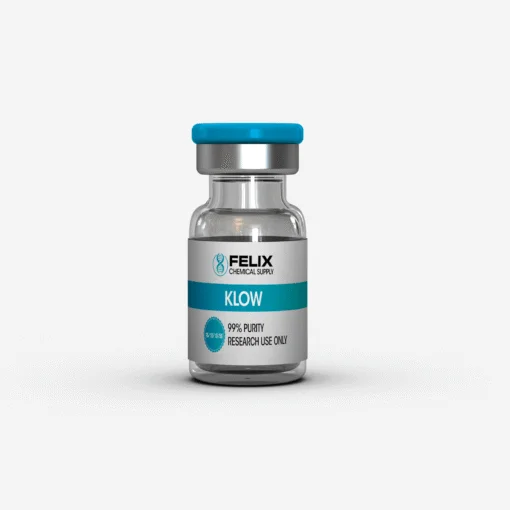
KLOW 10mg/10mg/10mg/50mg
Original price was: $148.00.$136.00Current price is: $136.00.
Buy KLOW 10mg/10mg/10mg/50mg — precision-dosed research-grade four-peptide blend: KPV 10mg + BPC-157 10mg + TB-500 10mg + GHK-Cu 50mg (80mg total). Tissue repair, collagen synthesis, NF-κB inflammation control & systemic healing. ≥99% purity. Fast shipping USA, Canada, Germany, France, UK & worldwide. Order now.
KLOW 10mg/10mg/10mg/50mg (KPV / BPC-157 / TB-500 / GHK-Cu) — 80mg Four-Peptide Regenerative Research Blend For Sale
GHK-Cu alone affects 31.2% of the entire human genome — modulating over 4,000 genes, shifting expression patterns from diseased states toward healthy profiles. BPC-157 alone accelerates tendon repair, protects the gut, and stimulates angiogenesis through VEGF and nitric oxide pathways. TB-500 alone circulates systemically, recruiting stem cells to damaged tissue regardless of injection site. And KPV alone directly blocks NF-κB — the master transcriptional switch of inflammation — reducing TNF-α, IL-6, and IL-1β simultaneously. Now imagine all four. In one vial. Precisely dosed. Ready to reconstitute.
That’s the KLOW 10mg/10mg/10mg/50mg. Four compounds. Four distinct biological mechanisms. One unified healing cascade that no single peptide — or two, or three — fully covers.
The KLOW peptide protocol is a four-peptide blend combining GHK-Cu (50mg), KPV (10mg), BPC-157 (10mg), and TB-500 (10mg) into a single 80mg vial. It builds on the three-peptide GLOW protocol by adding KPV for enhanced anti-inflammatory action. Four distinct mechanisms in one injection: collagen synthesis (GHK-Cu), NF-κB inhibition (KPV), growth factor modulation (BPC-157), and cell migration (TB-500)
The world of regenerative peptide research doesn’t get more comprehensive than this. Researchers, physicians, and advanced protocol designers across the USA, Canada, Germany, France, and the UK are reaching for KLOW when one compound isn’t enough — when the clinical question demands simultaneous coverage of inflammation, proliferation, migration, and structural remodeling. That’s what KLOW 10mg/10mg/10mg/50mg delivers.
What Is KLOW 10mg/10mg/10mg/50mg?
KLOW is a sophisticated, multi-component formulation containing four distinct molecules: the tripeptide KPV, the copper complex GHK-Cu, the protein Thymosin Beta-4 fragment (TB-500), and the peptide BPC-157. Supplied as a high-purity lyophilized powder, it is designed for scientists conducting multifaceted in-vitro research on complex cellular processes — providing a unique tool for investigating the intricate and overlapping biochemical pathways of cytoprotection, inflammation modulation, and extracellular matrix remodeling.
KLOW is a four-component peptide blend containing BPC-157 (10mg), a pentadecapeptide originally identified as a partial sequence of a protein found in human gastric juice; TB-500 (10mg), a synthetic version of a 43-amino-acid segment of thymosin beta-4; GHK-Cu (50mg), a tripeptide bound to a copper(II) ion, first isolated from human plasma in 1973 by Dr. Loren Pickart; and KPV (10mg), a tripeptide composed of lysine, proline, and valine, derived from the C-terminal end of alpha-melanocyte-stimulating hormone.
The precise 10mg/10mg/10mg/50mg dosing ratio is not arbitrary. The higher GHK-Cu concentration (50mg) reflects its role as the structural remodeling anchor of the blend — requiring greater mass for sustained collagen synthesis and gene expression work over the remodeling phase. The three supporting compounds at 10mg each deliver their acute signaling effects (inflammation control, cellular migration, proliferation) at research-validated effective doses.
KLOW 10mg/10mg/10mg/50mg — Complete Specification
| Property | Detail |
|---|---|
| Product Name | KLOW |
| Full Formulation | KPV 10mg + BPC-157 10mg + TB-500 10mg + GHK-Cu 50mg |
| Total Content per Vial | 80mg lyophilized blend |
| KPV (Lys-Pro-Val) | 10mg — CAS: 67727-97-3 — MW: 350.42 g/mol — C₁₇H₂₆N₄O₄ |
| BPC-157 | 10mg — CAS: 137525-51-0 — MW: 1419.56 g/mol — C₆₂H₉₈N₁₆O₂₂ |
| TB-500 | 10mg — CAS: 77591-33-4 — MW: 4963.44 g/mol — C₂₁₂H₃₅₀N₅₆O₇₈S |
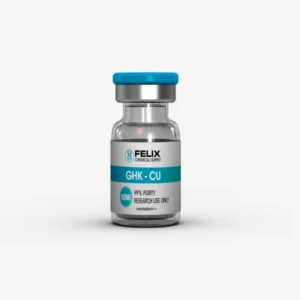
| GHK-Cu | 50mg — CAS: 89030-95-5 — MW: 401.91 g/mol — C₁₄H₂₁N₆O₄Cu |
| Form | Lyophilized powder, filler-free |
| Purity Standard | ≥99% per component (third-party HPLC + Mass Spec) |
| Reconstitution | Bacteriostatic water (BAC water) |
| Storage (Lyophilized) | 2–8°C short-term; −20°C long-term; protect from light; shelf life 24 months |
| Storage (Reconstituted) | 2–8°C; use within 28 days; aliquot to avoid freeze-thaw cycles |
| Administration | Subcutaneous injection (primary) |
| Third-Party Testing | COA provided; independently verified identity, purity, and composition |
| Intended Use | Research / Laboratory purposes only |
The 10mg/10mg/10mg/50mg Formulation — Why These Exact Doses?
The ratio design of KLOW is one of the most deliberate features of this blend. Understanding the dose logic helps researchers understand what each component is contributing at its specific concentration.
Why 50mg GHK-Cu?
GHK-Cu affects 31.2% of the entire human genome, modulating over 4,000 genes. Most of these changes shift expression patterns from diseased states toward healthy profiles. It handles extracellular matrix remodeling and collagen architecture — a structural remodeling process that is both slower and requires greater mass than the signaling functions of the other three peptides. The 50mg formulation reflects GHK-Cu’s role as the long-duration structural architect of the blend.
At 50mg in the KLOW vial, GHK-Cu represents 62.5% of the total blend mass — dominant by design. Collagen synthesis, elastin restoration, gene expression reset, antioxidant enzyme induction, and angiogenic growth factor upregulation all require sustained bioavailability over the full repair timeline, not just the acute inflammatory phase.
Why 10mg Each for KPV, BPC-157 & TB-500?
Each of the three supporting compounds operates through acute signaling pathways rather than sustained structural mass-building:
- KPV 10mg — Exerts its NF-κB inhibition at concentrations well below 10mg; the 10mg dose provides multiple research doses at the standard 200–500mcg injection protocol
- BPC-157 10mg — Effective at microgram doses via VEGF/nitric oxide receptor signaling; 10mg provides ~40 doses at the standard 250mcg dose
- TB-500 10mg — Operates through G-actin binding and cell migration; 10mg provides multiple 2–2.5mg loading doses or 5 maintenance doses at 2mg each
The 10mg dosing of the three acute-signaling peptides is not conservative — it’s research-appropriate. These compounds don’t require mass accumulation to achieve effect; they require receptor engagement at the correct concentration.
The Four Mechanisms — Precision Mapped
Mechanism 1: KPV 10mg — NF-κB Master Switch Off
KPV works by inhibiting nuclear factor kappa B (NF-κB), a master regulator of inflammatory gene expression. By blocking NF-κB activation, KPV prevents the production of pro-inflammatory cytokines like TNF-alpha, IL-6, and IL-1β. This targeted approach reduces inflammation at the source without broadly suppressing the immune system — preserving beneficial immune responses while eliminating destructive inflammatory cascades.
What this means at the cellular level: KPV doesn’t work around inflammation — it works at the transcriptional origin. By blocking NF-κB nuclear translocation, KPV prevents the production of destructive cytokines before they’re synthesized — not after. This upstream approach is what separates KPV from conventional anti-inflammatory compounds that mop up cytokines already in circulation.
KPV vs GLOW: the only structural difference between KLOW and the three-peptide GLOW protocol is the addition of KPV. KPV’s direct NF-κB suppression makes KLOW better suited for conditions involving chronic inflammation, gut issues, or autoimmune responses where dedicated inflammatory phase management is clinically critical.
Mechanism 2: BPC-157 10mg — Local Tissue Repair Signaling
BPC-157 is a pentadecapeptide notable for its systemic effects and extensive study in injury recovery and vascular repair models. It interacts with growth factor pathways including VEGF and FAK-paxillin, enhancing blood vessel formation, fibroblast activity, and tissue granulation. It also modulates nitric oxide signaling and supports gut-brain axis research — making it uniquely versatile across musculoskeletal, gastrointestinal, and neurological repair applications.
BPC-157 delivers pain relief within 3–7 days for most research models — one of the fastest-onset benefits of any component in the KLOW blend, reflecting its acute signaling action through the nitric oxide and VEGF pathways.
Mechanism 3: TB-500 10mg — Systemic Cell Migration
TB-500 is a synthetic version of a 43-amino-acid segment of thymosin beta-4 — a valuable research tool for studying cellular migration and actin regulation. Unlike BPC-157 (which acts primarily at the local injury site), TB-500 enters circulation and finds damaged areas body-wide, directing stem cells and progenitor cells to sites of repair regardless of where the injection occurred.
TB-500’s unique systemic reach is what completes the KLOW blend‘s geographical coverage. BPC-157 handles the local site. TB-500 handles everywhere else. Together, they ensure the entire body’s repair infrastructure is activated — not just the injection neighborhood.
Mechanism 4: GHK-Cu 50mg — Structural Remodeling & Gene Reset
GHK-Cu handles extracellular matrix remodeling and collagen architecture. The 50mg presence in KLOW reflects its role as the remodeling phase anchor — driving sustained collagen synthesis, elastin production, angiogenic growth factor expression, and the gene expression reset that shifts damaged tissue toward healthier biological states. GHK-Cu’s antioxidant activation (SOD, catalase, glutathione) protects the entire healing cascade from oxidative interference throughout all phases.
How the Four Doses Map to the Healing Timeline
This is the week-by-week picture of what researchers observe when studying the KLOW 10mg/10mg/10mg/50mg protocol:
BPC-157 delivers pain relief within 3–7 days. KPV gut relief typically appears within 1–2 weeks. GHK-Cu’s collagen synthesis improvements are documented at 8–12 weeks in clinical dermatology trials. TB-500’s systemic tissue repair benefits are typically measurable at 4–6 weeks of sustained loading.
| Timeline | Primary Activity | Components Active |
|---|---|---|
| Days 1–3 | Inflammation suppression begins | KPV (NF-κB block) + TB-500 (secondary anti-inflammatory) |
| Days 3–7 | Pain signal reduction; local repair signaling | BPC-157 (nitric oxide + VEGF) |
| Days 7–14 | Gut relief; intestinal barrier restoration | KPV + BPC-157 (GI synergy) |
| Weeks 2–4 | New blood vessel formation begins | TB-500 + BPC-157 + GHK-Cu (angiogenesis) |
| Weeks 3–6 | Cell migration peak; stem cell recruitment | TB-500 (systemic) + BPC-157 (local) |
| Weeks 4–8 | Collagen synthesis visibly increasing | GHK-Cu (structural remodeling begins) |
| Weeks 8–12 | Skin elasticity, density, wrinkle reduction | GHK-Cu (−30% wrinkle depth in clinical trials) |
| Weeks 8–16 | Gene expression reset toward youth | GHK-Cu (4,000+ genes; ongoing) |
| Throughout | Antioxidant protection of healing tissue | GHK-Cu (SOD + catalase + glutathione) |
How to Reconstitute KLOW 10mg/10mg/10mg/50mg
Standard reconstitution: add 2mL of bacteriostatic water to the 80mg vial for a 40mg/mL concentration. At this concentration, each component delivers: GHK-Cu 25mg/mL | KPV 5mg/mL | BPC-157 5mg/mL | TB-500 5mg/mL.
Alternatively, add 3–4mL BAC water for a lower concentration that gives more practical syringe volumes per dose:
| BAC Water Added | Blend Concentration | GHK-Cu per mL | Each 10mg Component per mL |
|---|---|---|---|
| 2mL | 40mg/mL | 25mg/mL | 5mg/mL |
| 3mL | 26.7mg/mL | 16.67mg/mL | 3.33mg/mL |
| 4mL | 20mg/mL | 12.5mg/mL | 2.5mg/mL |
| 8mL | 10mg/mL | 6.25mg/mL | 1.25mg/mL |
Step 1 — Gather Supplies
80mg KLOW vial (lyophilized), bacteriostatic water, sterile insulin syringe (1mL), alcohol swabs, sharps container.
Step 2 — Add BAC Water
Swab the vial stopper. Insert the needle and inject BAC water slowly down the inner glass wall — never directly onto the powder. This preserves all four peptides’ structural integrity during dissolution.
Step 3 — Swirl Gently
Roll the vial between your palms. Do not shake. The lyophilized powder dissolves within 1–2 minutes. The solution may show a faint blue tint from the GHK-Cu copper ion — this is normal and confirms the copper peptide is intact and active.
Step 4 — Aliquot for Extended Research
For protocols longer than 28 days, pre-draw individual doses into sterile 1mL syringes immediately after reconstitution and store at −20°C. This prevents repeated freeze-thaw degradation of the blend’s peptide components.
Step 5 — Label and Store
Mark the vial with reconstitution date and concentration. Reconstituted KLOW: refrigerate at 2–8°C, use within 28 days. Lyophilized (unreconstituted): refrigerate at 2–8°C for up to 24 months; −20°C for longer preservation.
KLOW 10mg/10mg/10mg/50mg — Research Dosage Protocol
Standard research dosing: 200–500mcg total blend daily via subcutaneous injection, reconstituted with 3–4mL bacteriostatic water. Typical protocol length: 4–6 weeks on, 2–4 weeks off.
The community-documented protocol: 10 units on an insulin syringe (equaling approximately 4mg total blend: 2.5mg GHK-Cu + 500mcg KPV + 500mcg BPC-157 + 500mcg TB-500) — 5x/week during loading phase, then 3x/week maintenance. Cycle 8–12 weeks on, 4–8 weeks off.
Protocol Reference Table
| Protocol Phase | Total Blend Dose | Injection Volume (at 40mg/mL) | Frequency | Duration |
|---|---|---|---|---|
| Conservative Starter | 200mcg | 0.005mL (0.5u) | Daily | Weeks 1–2 |
| Standard Daily | 500mcg | 0.0125mL (1.25u) | Daily or 5x/week | Weeks 1–6 |
| Loading (Community Protocol) | 4mg | 0.1mL (10u) | 5x/week | Weeks 1–6 |
| Maintenance | 4mg | 0.1mL (10u) | 3x/week | Weeks 7–12 |
| Acute Injury Protocol | 1mg | 0.025mL (2.5u) | Daily | 4–8 weeks |
The range between “standard” (500mcg) and “community” (4mg) doses reflects a genuine gap in published human dosing data. Research dosing decisions should account for individual research goals, subject profile, and monitoring requirements.
Dose Calculator — Per-Injection Component Breakdown
| Total Blend Dose | GHK-Cu per Dose | BPC-157 per Dose | TB-500 per Dose | KPV per Dose |
|---|---|---|---|---|
| 200mcg | 125mcg | 25mcg | 25mcg | 25mcg |
| 500mcg | 312.5mcg | 62.5mcg | 62.5mcg | 62.5mcg |
| 1mg | 625mcg | 125mcg | 125mcg | 125mcg |
| 2mg | 1.25mg | 250mcg | 250mcg | 250mcg |
| 4mg | 2.5mg | 500mcg | 500mcg | 500mcg |
How to Inject KLOW 10mg/10mg/10mg/50mg
Step 1 — Timing
Evening injection preferred. GHK-Cu’s collagen synthesis and antioxidant activity align best with overnight repair processes. KPV’s inflammation resolution during sleep reduces morning stiffness and pain markers. BPC-157 and TB-500 tissue signaling continues throughout the overnight window.
Step 2 — Site Selection
Subcutaneous fat is the standard route. Options: abdomen (minimum 2 inches from navel), front of thigh, outer upper arm. TB-500 does not require proximity to the injury site — its systemic circulation mechanism finds damaged areas anywhere in the body. Rotate sites with every injection.
Step 3 — Preparation
Swab the injection site with alcohol. Allow to fully dry before inserting the needle. Draw the calculated dose from the reconstituted KLOW vial using a fresh insulin syringe.
Step 4 — Inject Subcutaneously
Pinch skin at the chosen site. Insert needle at 45°. Depress plunger slowly over 10–15 seconds. The GHK-Cu copper ion can produce mild local warmth — slowing the injection rate minimizes this sensation. Hold 3–5 seconds post-injection before withdrawing.
Step 5 — Dispose
Needle directly into sharps container after each injection. Never recap or reuse.
KLOW vs. GLOW — The Critical Distinction
The addition of KPV is what defines KLOW against the established three-peptide GLOW protocol.
| Feature | KLOW (4 Peptides) | GLOW (3 Peptides) |
|---|---|---|
| Compounds | KPV + BPC-157 + TB-500 + GHK-Cu | BPC-157 + TB-500 + GHK-Cu |
| Total Mass | 80mg | 70mg |
| Inflammation Phase Coverage | ✅ KPV — NF-κB dedicated | ⚠️ Secondary only (BPC-157/TB-500) |
| Gut Health / IBD Research | ✅ KPV + BPC-157 (synergistic) | ⚠️ BPC-157 only |
| Chronic Inflammation Models | ✅ Superior — NF-κB block | ⚠️ Limited |
| Skin Inflammation (psoriasis, eczema) | ✅ KPV + GHK-Cu | ⚠️ GHK-Cu only |
| Acute Injury (tendon, ligament) | ✅ Full | ✅ Full |
| Systemic Repair | ✅ Full | ✅ Full |
| Collagen Synthesis | ✅ Full | ✅ Full |
| Best For | Inflammation-heavy + structural repair | Structural repair + anti-aging |
KLOW is better suited for conditions involving chronic inflammation, gut issues, or autoimmune responses. GLOW is sufficient for skin rejuvenation and standard tissue repair where dedicated inflammation phase management is less critical.
Research Applications Specific to the 10mg/10mg/10mg/50mg Formulation
The specific ratio of KLOW has been noted in published research supplier documentation and protocol guides as optimal for:
| Research Area | Why This Ratio Works |
|---|---|
| Post-Surgical Recovery | KPV controls surgical inflammatory cascade; BPC-157 + TB-500 repair incision and connective tissue; GHK-Cu rebuilds structural integrity |
| Inflammatory Bowel Disease Models | KPV (primary gut anti-inflammatory) + BPC-157 (mucosal repair) in synergistic dual-pathway GI coverage |
| Musculoskeletal Injury | BPC-157 (tendon/ligament) + TB-500 (systemic cell recruitment) — standard; KPV reduces painful inflammatory phase duration |
| Wound Healing | All four phases covered: inflammation (KPV), proliferation (BPC-157), migration (TB-500), remodeling (GHK-Cu) |
| Skin Anti-Aging | GHK-Cu at 50mg (dominant) drives sustained collagen architecture; KPV manages dermal inflammation |
| GLP-1 / Weight Loss Tissue Preservation | KLOW addresses the primary concern with rapid weight loss: preserving tissue integrity, supporting skin elasticity, and managing inflammation during aggressive fat reduction |
| Athlete Overtraining / Chronic Damage | KPV prevents inflammatory chronification; TB-500 systemic + BPC-157 local = comprehensive tissue repair |
| Chronic Inflammatory Conditions | NF-κB inhibition from KPV — the mechanism not available in any other GLOW-type protocol |
What to Expect — Week-by-Week KLOW Research Timeline
Protocol standard length: 4–6 weeks on, 2–4 weeks off with cycle reassessment at 8 and 12 weeks.
| Week | Primary Observations | Driving Component |
|---|---|---|
| Week 1 | Pain reduction at injury sites; inflammatory markers beginning to fall | BPC-157 (nitric oxide) + KPV (NF-κB) |
| Week 2 | Gut comfort improvement; systemic inflammation reduction | KPV + BPC-157 (GI) + TB-500 |
| Weeks 3–4 | Improved mobility; new tissue granulation; increased energy | BPC-157 + TB-500 (angiogenesis) |
| Weeks 4–6 | Skin texture improvement; initial collagen density increase | GHK-Cu (early structural remodeling) |
| Weeks 6–8 | Measurable wound closure; joint function improvement | All Four (cascade synergy) |
| Weeks 8–12 | Skin firmness; wrinkle reduction (~30%); hair density improvement | GHK-Cu (remodeling phase dominant) |
| Week 12+ | Sustained gene expression shift; long-term collagen architecture | GHK-Cu (4,000+ gene modulation ongoing) |
Advanced Stack Integrations — KLOW + Other Protocols
KLOW + Retatrutide / GLP-1 Protocol
Combining a GLP-1 compound (Retatrutide, Semaglutide, Tirzepatide) with KLOW creates one of the most comprehensive body recomposition and recovery protocols available. While the GLP-1 delivers significant fat loss, KLOW addresses the primary concern with rapid weight reduction: preserving tissue integrity, supporting skin elasticity, and managing inflammation during aggressive fat reduction. A typical protocol for this combination uses 4–6mg of KLOW daily.
| Component | Role in Stack |
|---|---|
| KLOW (KPV/BPC-157/TB-500/GHK-Cu) | Tissue preservation + skin elasticity + inflammation |
| Semaglutide (Peptide-SU) | Fat loss via GLP-1 |
| Tirzepatide (Peptide-T 60mg) | Superior fat loss via GIP+GLP-1 |
| MK-2866 (Ostarine) | Lean mass preservation during caloric deficit |
KLOW + Anti-Aging Longevity Protocol
| Component | Role |
|---|---|
| KLOW 10mg/10mg/10mg/50mg | Tissue repair + collagen + inflammation |
| NAD+ Peptide | Cellular energy + DNA repair + sirtuin |
| MK-677 (Ibutamoren) | GH/IGF-1 elevation + deep sleep + overnight repair |
| Epitalon | Telomerase activation + pineal regulation |
KLOW + Musculoskeletal Recovery Protocol
| Component | Role |
|---|---|
| KLOW 10mg/10mg/10mg/50mg | Full cascade: inflammation → collagen |
| Peptide-R 50mg (TB-500) | Additional systemic repair (for severe injuries) |
| Ipamorelin + CJC-1295 | GH pulse to accelerate tissue repair |
| Nandrolone Decanoate (therapeutic dose) | Collagen synthesis + joint support |
Possible Side Effects & Contraindications
Side Effect Profile
| Effect | Component | Frequency | Notes |
|---|---|---|---|
| Mild injection site redness/warmth | GHK-Cu (copper) | Occasional | Normal; inject slowly; rotates out |
| Faint blue vial solution | GHK-Cu | Always | Copper ion — confirms peptide active |
| Transient nausea | BPC-157 (rare) | Rare | Reduce total volume per injection |
| Initial fatigue in loading phase | TB-500 | Occasional | First 3–5 days; self-resolving |
| Mild sweating during/post injection | All (rare) | Rare | Reduce dose; passes quickly |
| Gut adjustment in first week | KPV | Occasional | Reflects GI anti-inflammatory activity |
Contraindications
| Contraindication | Component | Action |
|---|---|---|
| Wilson’s Disease | GHK-Cu | Absolute — avoid this blend |
| Active Cancer / Solid Tumors | GHK-Cu (angiogenesis) | Consult oncologist before use |
| Pregnancy / Breastfeeding | All four | Insufficient safety data — avoid |
| Competitive Sport (WADA) | TB-500 | Section S2 prohibited — disqualifying |
| Copper Allergy | GHK-Cu | Patch test topically first |
| Severe Hepatic Impairment | BPC-157 / TB-500 | Monitor with physician oversight |
FAQs About KLOW 10mg/10mg/10mg/50mg
1. What exactly is in KLOW 10mg/10mg/10mg/50mg and what does the ratio mean?
KLOW is a four-component peptide blend containing KPV (10mg), BPC-157 (10mg), TB-500 (10mg), and GHK-Cu (50mg) — totaling 80mg per vial. The ratio represents the mass of each component. GHK-Cu is present at 50mg (62.5% of the blend) because its role in structural remodeling, collagen synthesis, and gene expression reset requires sustained higher-concentration bioavailability over the full repair timeline.
2. What is the difference between KLOW and GLOW?
GLOW contains three peptides (GHK-Cu, BPC-157, TB-500) totaling 70mg. KLOW adds KPV as a fourth component, bringing the total to 80mg. KPV inhibits NF-κB inflammatory signalling, making KLOW better suited for conditions involving chronic inflammation, gut issues, or autoimmune responses. GLOW is sufficient for skin rejuvenation and standard tissue repair. KLOW adds dedicated inflammation cascade management that GLOW simply doesn’t provide.
3. How do you reconstitute KLOW 10mg/10mg/10mg/50mg?
Add 2mL of bacteriostatic water to the 80mg vial for a 40mg/mL concentration. For more manageable syringe volumes at standard research doses, 4mL BAC water gives 20mg/mL. Inject water slowly down the inner vial wall, swirl gently — never shake. The solution may appear faintly blue due to GHK-Cu’s copper ion — this confirms intact activity, not contamination.
4. What is the standard research dosing for KLOW?
Standard dosing: 200–500mcg total blend daily via subcutaneous injection. The community-documented loading protocol uses 4mg total blend (10 units on a U-100 insulin syringe at 40mg/mL) five times per week for loading, then three times per week for maintenance. Cycle length: 4–6 weeks on, 2–4 weeks off, reassessing at 8 and 12 weeks.
5. What does KPV contribute that the other three peptides don’t already cover?
KPV works by inhibiting nuclear factor kappa B (NF-κB), a master regulator of inflammatory gene expression — preventing the production of TNF-alpha, IL-6, and IL-1β at the transcriptional origin. BPC-157 and TB-500 have secondary anti-inflammatory properties but neither performs dedicated upstream NF-κB inhibition. Without KPV, the inflammatory phase is only partially addressed — specifically, the cytokine signaling cascade that can actively interfere with the proliferation and remodeling phases that BPC-157, TB-500, and GHK-Cu drive.
6. Why does GHK-Cu have 5× the mass of the other compounds (50mg vs 10mg)?
GHK-Cu handles extracellular matrix remodeling and collagen architecture — processes that are both slower-building and require greater mass than the acute receptor signaling functions of KPV, BPC-157, and TB-500. GHK-Cu affects 31.2% of the entire human genome, modulating over 4,000 genes — a gene expression program that requires sustained bioavailability over the weeks-long remodeling phase. The 50mg formulation reflects this structural architectural role rather than the acute cytokine/receptor functions of the three 10mg components.
7. Is the KLOW formulation suitable for GLP-1 weight loss research?
Yes — this is one of the most clinically logical KLOW applications in 2025–2026 research. KLOW directly addresses the primary concern with rapid GLP-1-driven weight loss: preserving tissue integrity, supporting skin elasticity, and managing inflammation during aggressive fat reduction. KPV controls the inflammatory response during rapid metabolic change; GHK-Cu maintains skin elasticity and collagen density as adipose tissue reduces; BPC-157 and TB-500 preserve connective tissue structural integrity.
8. How long does a full cycle run with KLOW 10mg/10mg/10mg/50mg?
Standard protocol: 4–6 weeks on, 2–4 weeks off. Extended cycles of 8–12 weeks are also documented in community research protocols, followed by 4–8 weeks off. The GHK-Cu component’s gene expression reset and collagen remodeling benefits are most pronounced at 8–12 weeks — supporting longer cycle lengths for structural repair research objectives.
9. What are the contraindications for KLOW 10mg/10mg/10mg/50mg?
The primary contraindications derive from GHK-Cu’s copper delivery (contraindicated in Wilson’s Disease and copper allergy) and its angiogenic gene expression activity (use with caution in active malignancy — discuss with oncologist). TB-500 is WADA-prohibited under Section S2. All four components are contraindicated during pregnancy and breastfeeding due to insufficient safety data.
10. Why does the reconstituted KLOW solution appear blue?
The faint blue coloration comes from the copper (II) ion in GHK-Cu — a naturally occurring metal ion that forms the active complex with the Glycyl-L-Histidyl-L-Lysine tripeptide. This coloration is normal, confirms the copper peptide is intact, and does not indicate contamination. GHK-Cu has a molecular formula of C₁₄H₂₄CuN₆O₄ and the copper ion is intrinsic to its biological activity as a cofactor for lysyl oxidase and lysyl hydroxylase in the collagen synthesis pathway.
11. How does KLOW compare to running each of the four peptides separately?
Running four separate vials requires four separate reconstitutions, four separate injection calculations, potentially four separate injection sites per session, four separate cold-chain management protocols, and coordination of four individual dose schedules. KLOW’s pre-blended lyophilized formulation eliminates all of that complexity — one reconstitution, one syringe calculation, one injection, one storage location. Beyond convenience, the pre-blended format ensures consistent dose ratios with every injection — something manual mixing cannot guarantee.
12. Can KLOW 10mg/10mg/10mg/50mg be used alongside SARMs or GH peptides?
Yes — the mechanisms of KLOW’s four components are entirely distinct from androgen receptor pathways (SARMs) and the GH/IGF-1 axis (CJC-1295, Ipamorelin, MK-677). There is no pharmacological overlap that would produce additive side effects or receptor competition. KLOW is commonly stacked with MK-2866 (Ostarine) for lean mass preservation, with Peptide-C (CJC-1295) for GH-amplified overnight repair, and with Peptide-R (TB-500 standalone) for additional systemic healing in severe injury protocols.
Only logged in customers who have purchased this product may leave a review.
Related products

Reviews
There are no reviews yet.