
 Français
 Français
 Afrikaans
 English
 English
 English
 Español
 Italiano
 Nederlands
 Nederlands
 Norsk Nynorsk
 Português
 Português
 Português
 English
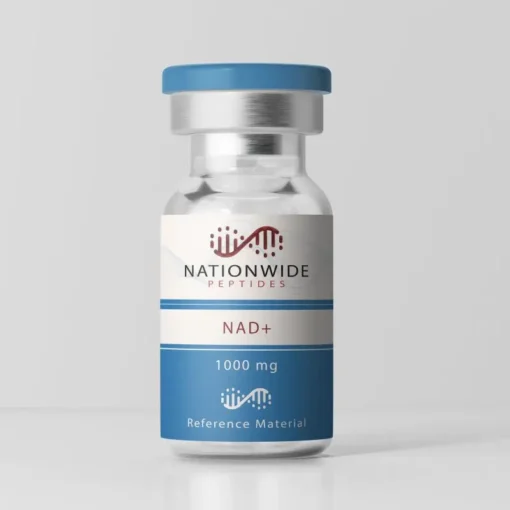
NAD+ Peptide
Original price was: $110.00.$81.00Current price is: $81.00.
Buy NAD+ Peptide (Nicotinamide Adenine Dinucleotide) — research-grade injectable NAD+ for cellular energy restoration, DNA repair, sirtuin activation, mitochondrial optimization & longevity. ≥99% purity. Fast shipping USA, Canada, Germany, France, UK & worldwide. Order now.
Buy Quality NAD+ Peptide (Nicotinamide Adenine Dinucleotide) | The Master Coenzyme of Cellular Energy, DNA Repair & Longevity
Discovered over 100 years ago by Sir Arthur Harden, Nicotinamide Adenine Dinucleotide (NAD+) has proven to be one of the most fundamental molecules in biology. By middle age, your NAD+ levels have fallen to roughly half what they were at 20. By 60, they may be a quarter of peak. This age-related decline has been causally linked to mitochondrial dysfunction, DNA damage accumulation, metabolic disease, neurodegeneration, and accelerated biological aging — in multiple organisms including humans. The global NAD+ products market was valued at $3.45 billion in 2024 and is projected to reach $12.19 billion by 2033 at a CAGR of 15.1%. The science is loud. The market is responding.
If you’ve followed the longevity science conversation over the last decade, you know that NAD+ is not a trending supplement. It’s a foundational molecule — present in every living cell, involved in over 500 enzymatic reactions, and the single most important cofactor for the biological machinery that keeps you healthy, energized, and biologically young. Researchers, clinicians, biohackers, and serious longevity practitioners across the USA, Canada, Germany, France, and the UK who are ready to address NAD+ decline at the root level — not just its symptoms — are reaching for injectable NAD+ Peptide for sale as the most direct, most bioavailable path to cellular restoration available today.
What Is NAD+ Peptide (Nicotinamide Adenine Dinucleotide)?
NAD+ (short for Nicotinamide Adenine Dinucleotide) is a coenzyme found within every living cell with vital roles in various fundamental biological processes — including but not limited to energy metabolism, DNA repair, cellular communication, and enzymatic activation.
NAD+ is a ubiquitous redox coenzyme central to energy production and an essential co-substrate for numerous NAD+-dependent enzymes involved in genomic maintenance, epigenetics, and stress responses. These include sirtuins (SIRT1–7) — a family of deacylase enzymes that regulate metabolism and gene expression — poly(ADP-ribose) polymerases (PARPs) that orchestrate DNA repair — and CD38 and other NADases that modulate calcium signaling and immune cell function. Through these enzymes, NAD+ influences critical cellular processes such as mitochondrial function, DNA damage repair, chromatin remodeling, inflammation, and cell survival pathways.
NAD+ is also an essential cofactor for sirtuins, PARPs, CD38, and other proteins in many signaling pathways — it is the only nicotinamide-derived cofactor that is directly consumed with the concomitant release of nicotinamide and signaling molecules during these reactions. NADH is a protected pool of NAD+ in the cell, stable to processes responsible for the cleavage of the glycosidic bond. .
In the most direct language possible: without NAD+, your cells cannot produce energy, cannot repair DNA, and cannot regulate the gene expression programs that keep them healthy. It is not an optional nutrient. It is a cellular necessity — and as you age, you have progressively less of it.
NAD+ Peptide — Full Technical Specification
| Property | Detail |
|---|---|
| Full Name | Nicotinamide Adenine Dinucleotide (oxidized form) |
| Common Name | NAD+ |
| Molecular Formula | C₂₁H₂₇N₇O₁₄P₂ |
| Molecular Weight | 663.43 g/mol |
| CAS Number | 53-84-9 |
| Classification | Coenzyme / Biological Cofactor |
| Form | Lyophilized powder (for reconstitution) |
| Administration Routes | Subcutaneous injection / Intramuscular / IV (clinical) |
| Purity Standard | ≥99% (third-party HPLC verified) |
| Reconstitution | Bacteriostatic water (BAC water) or sterile saline |
| Storage (Lyophilized) | Refrigerate 2–8°C; freeze at −20°C for long-term |
| Storage (Reconstituted) | 2–8°C — use within 28 days |
| Primary Biological Roles | Redox reactions, ATP production, DNA repair, sirtuin activation |
| Key Enzyme Targets | SIRT1–7 (Sirtuins), PARPs, CD38, Complex I/III (ETC) |
| Intended Use | Research / Laboratory purposes only |
The Science of NAD+ Decline — Why This Molecule Matters More With Every Birthday
NAD+ is a vital molecule in cellular metabolism and signaling whose levels decline with aging in multiple organisms, including humans. This age-related NAD+ depletion has been causally linked to physiological declines and numerous age-associated diseases. Conversely, restoring NAD+ levels is one of the most studied and most promising longevity interventions in modern aging biology research.
The numbers are stark:
- By age 40: NAD+ levels approximately 50% of peak youth levels
- By age 60: NAD+ levels may be as low as 25% of peak
- By age 80: NAD+ depletion may approach 80–90% below youthful concentrations
Many studies show that NAD+ levels fall considerably with aging — with NAD+ regeneration in aging animals increasing longevity and enhancing health. Supplementation with NAD+ intermediates NMN and NR has been shown to raise NAD+ levels during aging, and both have become leading subjects of clinical investigation in longevity research.
Rising adoption of NAD+ boosters as a longevity strategy is evidenced by 55% of clinical trials now targeting cellular repair and longevity enhancement across multiple regions — with NAD+ occupying a central position in the longevity drug and supplement space globally.
This isn’t theoretical. Every clinically relevant aging mechanism — from mitochondrial dysfunction to DNA damage accumulation to sirtuin silencing — runs through NAD+. Restoring it isn’t just supplementation. It’s addressing the molecular foundation of aging itself.
How NAD+ Works — The Four Master Pathways
Pathway 1 — Cellular Energy Production (ATP Synthesis)
NAD+ is a key coenzyme in cellular energy metabolism, driving ATP production through oxidation-reduction (redox) reactions that support catabolic pathways including glycolysis, the tricarboxylic acid cycle (TCA/Krebs cycle), oxidative phosphorylation, and beta-oxidation. All paths to produce ATP require NAD+ and its reduced counterpart NADH — and the NAD+/NADH ratio is a common point of control that links hundreds of reactions throughout a cell.
Pathway 2 — Sirtuin Activation (The Longevity Enzymes)
Sirtuins (SIRT1–7) are a family of enzymes whose lifespan-extending abilities were first discovered in yeast in the 1990s — when the SIR2 gene was shown to increase replicative lifespan when upregulated. Sir2 has histone deacetylase activity that requires NAD+, and the mammalian sirtuins (SIRT1–7) were subsequently identified. Human clinical trials testing agents that activate SIRT1 or boost NAD+ levels are in progress and show promise in their ability to improve the health of cardiovascular and metabolic disease patients.
Pathway 3 — DNA Repair (PARP Activation)
Under conditions of oxidative stress, oxidative DNA damage may accumulate — resulting from increased attacks by reactive oxygen species (ROS) on DNA and a decline in the cell’s DNA repair capabilities. The buildup of DNA lesions activates PARP-1, which requires NAD+ as a substrate to execute DNA repair. Directly replenishing NAD+ may restore nuclear DNA repair activities by mitigating the decline in base excision repair (BER) activities — a key mechanism mediating NAD+’s neuroprotective actions.
Pathway 4 — Mitochondrial Function & Quality Control
NAD+ is essential for the electron transport chain (ETC) — driving mitochondrial oxygen consumption and ATP synthesis. Scientists consider mitochondrial dysfunction to lead to various functional limitations in the electron transport chain and ATP synthesis, possibly resulting in various neurodegenerative diseases. NAD+ supplementation has been studied to reverse mitochondrial respiratory decline in aged nerve and brain cells — with fluorescent NMN studies demonstrating restored mitochondrial oxygen consumption rates.
9 Researched Benefits of NAD+ Peptide
1. Mitochondrial Energy Restoration
Higher NAD+ levels improve mitochondrial efficiency, leading to better energy production. Studies in middle-aged and older adults taking NMN or NR have reported improved fatigue scores and better physical endurance — reflecting the downstream impact of restored cellular energy metabolism on real-world functional performance.
2. DNA Repair — The Fountain of Cellular Youth
NAD+ is an essential cofactor for PARPs (poly-ADP-ribose polymerases) — the enzymes that orchestrate DNA damage repair. PARP-1 activation requires NAD+ as its substrate for DNA repair enzyme function. In neuronal cell cultures subjected to oxygen-glucose deprivation (OGD), directly adding NAD+ appeared to reduce cell death and decrease DNA damage — with the protective action depending on NAD+ concentration and timing of administration.
3. Sirtuin Activation — Epigenetic Longevity Control
Sirtuins (SIRT1–7) require NAD+ as an essential co-substrate for their deacylase activity — and regulate metabolism, gene expression, mitochondrial function, inflammation, and cell survival pathways. Each of these processes has been implicated in the biology of aging — making NAD+-dependent sirtuin activation a master-level longevity intervention that no downstream supplement can substitute.
4. Neuroprotection & Cognitive Function
There has been a strong push to test NAD+ in clinical trials of neurodegenerative disease. In both cases — neurodegeneration and chronic type 2 diabetes — the simple cofactor holds a great deal of promise for, at the very least, slowing the progression of these devastating diseases. There is even hope that NAD+ can, by itself or in combination with other therapies, reverse certain disease processes or even regulate the aging process itself.
5. Anti-Aging — Reversing Biological Age Markers
A randomized, double-blind, placebo-controlled study on NAD+ supplementation increased NAD+ levels, improved well-being, and alleviated aging symptoms. NAD+/NADH is a key coenzyme in cellular energy metabolism, driving ATP production and serving as a cofactor for sirtuins, PARPs, and CD38 — all involved in energy regulation, inflammation and immunity, mitochondrial function, and DNA repair.
6. Metabolic Health — Glucose Homeostasis & Liver Function
Research with NAD+ peptide in experimental models suggested the compound exhibited positive potential in preventing obesity and alcoholic hepatitis while improving glucose homeostasis and overall liver function. This metabolic dimension of NAD+ research positions it as a compound of significant interest in the increasingly important space of cardiometabolic longevity medicine.
7. Cardiovascular Protection
Sirtuins activated by NAD+ play significant protective roles in cardiovascular health — and human clinical trials testing NAD+ level boosters show promise in their ability to improve the health of cardiovascular and metabolic disease patients. Atherosclerosis incidence increases with age, and the NAD+–sirtuin axis represents one of the most mechanistically compelling targets for cardiovascular aging research.
8. Inflammation Reduction
Through CD38 and related NADases, NAD+ modulates calcium signaling and immune cell function — with downstream anti-inflammatory effects that have been documented across autoimmune, neurological, and metabolic disease research. NAD+ depletion is associated with chronic low-grade inflammation (inflammaging) — the persistent subclinical inflammatory state that underlies most age-related disease.
9. Synergistic Potentiation With Other Compounds
Because NAD+ is a naturally occurring molecule, it is easy to combine with other supplements to obtain synergistic effects: CoQ10 may work synergistically with NAD+ to improve neurological function and protect the central nervous system against oxidative stress. Resveratrol and NAD+ may work together to reduce oxidative damage, lower inflammation, and protect against diabetes and neurodegenerative disease. Vitamins B1, B2, and B6 help boost NAD+ salvage pathways — when combined with NAD+ supplementation, they may help improve overall NAD+ levels.
Research Benefits Summary Table
| Benefit | Key Mechanism | Evidence Level |
|---|---|---|
| Cellular Energy (ATP) | ETC + glycolysis cofactor | ✅ Foundational biochemistry |
| DNA Repair | PARP-1 NAD+ substrate | ✅ Multiple clinical studies |
| Sirtuin Activation | SIRT1–7 require NAD+ | ✅ Strong — lifespan extension in animals |
| Neuroprotection | DNA repair + mitochondrial rescue | ✅ Clinical trials ongoing |
| Anti-Aging / Longevity | NAD+ restoration → multiple aging pathways | ✅ Preclinical + early clinical |
| Metabolic Health | Glucose homeostasis + liver function | ✅ Animal + early human models |
| Cardiovascular Protection | Sirtuin + inflammation pathways | ✅ Human clinical trial interest |
| Anti-Inflammation | CD38 + immune regulation | ✅ Mechanistically confirmed |
| Cognitive Function | Neuronal NAD+ restoration | ✅ Active Phase 2/3 trial pipeline |
NAD+ Peptide Dosage Guide — Routes, Doses & Protocols
There are three distinct delivery routes for NAD+ research, each with different absorption profiles, dose ranges, and research applications.
Route 1 — Subcutaneous Injection (Most Common Research Protocol)
Subcutaneous NAD+ injections are absorbed gradually through tissue beneath the skin. Typical doses range from 50mg to 150mg per injection, with the most common protocols landing around 100mg. Most providers cap subcutaneous injections at 500mg — above this threshold, side effect frequency increases substantially without clear evidence of proportionally better results.
For subcutaneous research dosing: start at 50mg to assess tolerance, then escalate toward 100–250mg maintenance doses. Loading phases use 2–3 injections per week for 4–8 weeks; maintenance drops to 1–2 per week ongoing.
| Protocol Phase | Dose per Injection | Frequency | Duration |
|---|---|---|---|
| Starter / Tolerance | 25–50mg | 3x/week | 1–2 weeks |
| Loading Phase | 50–100mg | 3x/week | 4–8 weeks |
| Maintenance | 100–250mg | 1–2x/week | Ongoing |
| Intensive Protocol | 250–500mg | 2x/week | 4–8 weeks |
Route 2 — Intravenous (IV) Infusion (Clinical Setting)
IV NAD+ therapy achieves near 100% bioavailability — bypassing all digestive limitation for rapid cellular delivery. Clinic IV drips typically run 250–500mg per session, administered over 2–4 hours to prevent flushing, nausea, and chest tightness that occur with rapid infusion. Most people start with 100–200mg IV NAD+ once per week, combined with subcutaneous top-up doses between sessions.
| IV Protocol | Dose per Session | Administration | Frequency |
|---|---|---|---|
| Beginner IV | 250mg | Over 2–3 hours | Weekly |
| Standard IV | 500mg | Over 3–4 hours | Weekly or bi-weekly |
| Intensive IV | 750–1,000mg | Over 4+ hours (clinic only) | Monthly |
Route 3 — Oral Precursors (NMN / NR — Daily Maintenance)
Oral NAD+ therapy uses precursors (NR or NMN) that the body converts into NAD+ after absorption. Beginners should start with 100–200mg of NR or 150–250mg of NMN daily for 2–3 weeks. Most people achieve anti-aging benefits with 250–400mg daily of quality NAD+ precursors. Some individuals require up to 500mg daily, particularly those over 50 or with demanding lifestyles.
| Goal | Daily Oral Dose | Form | Notes |
|---|---|---|---|
| Maintenance / Prevention | 250–300mg/day | NMN or NR capsule | Take in morning |
| Anti-Aging Active Protocol | 400–500mg/day | NMN or NR | Split AM/PM |
| Post-50 / High Demand | 500–750mg/day | NMN + NR combined | Monitor tolerance |
| Clinical / GLP-1 Stack | 600–1000mg/day | NMN or NR | With medical oversight |
How to Reconstitute and Use NAD+ Peptide (Injectable)
How to Reconstitute
Step 1 — Gather Supplies
Sterile insulin syringe (for SubQ), bacteriostatic water or sterile saline, alcohol swabs, NAD+ lyophilized vial, sharps container.
Step 2 — Add Diluent
For a 100mg/mL working concentration: add 1mL BAC water per 100mg NAD+. Inject the diluent slowly down the inner wall of the vial. NAD+ dissolves easily — typically within 30–60 seconds of gentle swirling.
Step 3 — Reconstitution Concentration Reference
| Vial Size | BAC Water Added | Concentration | Dose Volume (100mg) |
|---|---|---|---|
| 100mg | 1mL | 100mg/mL | 1.0mL |
| 250mg | 2.5mL | 100mg/mL | 1.0mL |
| 500mg | 5mL | 100mg/mL | 1.0mL |
Step 4 — Store Correctly
Reconstituted NAD+ should be stored refrigerated at 2–8°C and used within 28 days (with bacteriostatic water). Lyophilized powder is stable in a freezer for extended periods.
How to Inject Subcutaneous NAD+
Step 1 — Timing Recommendation
Morning injection is recommended — NAD+ plays a role in circadian rhythm regulation, and taking it too late in the day can cause wakefulness or disrupted sleep for some users.
Step 2 — Site Selection
Inject into subcutaneous fat: abdomen (2 inches from navel), front of thigh, or outer upper arm. Rotate sites with every injection.
Step 3 — Prepare Site and Draw Dose
Swab injection site and allow to dry. Draw calculated dose volume from reconstituted vial with a fresh insulin syringe.
Step 4 — The Stinging Effect — What to Expect
SubQ NAD+ stings. Unlike most peptide injections, subcutaneous NAD+ commonly causes a stinging or burning sensation at the injection site that can last several minutes. This is normal and not a sign of a problem. Injecting slowly, using a smaller volume (higher concentration), and icing the area beforehand can reduce discomfort. The stinging diminishes for most users after the first few injections.
Step 5 — Inject Slowly
Pinch the skin at a 45° angle. Insert the needle. Depress the plunger very slowly — over 15–30 seconds. The slower the injection rate, the less intense the stinging response.
Best Research Stacks With NAD+ Peptide
NAD+ is one of the most stackable longevity compounds available — it complements virtually every other cellular health and performance compound through non-overlapping mechanisms.
| Stack | Research Purpose | Rationale |
|---|---|---|
| NAD+ + NMN/NR (oral) | Full NAD+ axis coverage | Direct + precursor pathway dual approach |
| NAD+ + Resveratrol | Sirtuin activation synergy | Resveratrol and NAD+ may work together to reduce oxidative damage, lower inflammation, and protect against diabetes and neurodegeneration |
| NAD+ + CoQ10 | Neurological protection | CoQ10 may work synergistically with NAD+ to improve neurological function and protect the CNS against oxidative stress |
| NAD+ + MK-677 (Ibutamoren) | Longevity + GH axis | NAD+-driven cellular repair + GH-IGF-1 overnight tissue restoration |
| NAD+ + Peptide-C (CJC-1295) | Multi-system longevity | GH secretagogue + cellular energy axis |
| NAD+ + Epitalon | Telomere + NAD+ longevity | Telomerase activation + sirtuin/DNA repair |
| NAD+ + Metformin | Metabolic longevity | AMPK activation + NAD+-sirtuin axis |
| NAD+ + Peptide-SU (Semaglutide) | Cardiometabolic protection | GLP-1 metabolic + NAD+ cellular energy |
| NAD+ + BPC-157 | Tissue repair + cellular energy | Local repair + systemic NAD+ restoration |
| NAD+ + Vitamins B1, B2, B6 | NAD+ salvage amplification | B vitamins help boost NAD+ salvage — combined with NAD+ supplementation, they may help improve overall NAD+ levels |
NAD+ vs. NAD+ Precursors — Choosing the Right Approach
This is the most important question for any NAD+ research protocol — and the answer is “both, strategically combined.”
Bioavailability comparison: IV NAD+ achieves ~100% bioavailability since it goes straight into the bloodstream. Subcutaneous injections also bypass the digestive system — absorption is high and delivery is more gradual. Oral supplements (NMN/NR) have the lowest bioavailability — a portion is lost in the gut and liver — but they remain the most convenient and cost-effective daily maintenance approach.
| Delivery Method | Bioavailability | Speed of Effect | Cost | Convenience | Best For |
|---|---|---|---|---|---|
| IV Infusion | ~100% | Same day | Highest | Requires clinic | Loading / intensive restoration |
| SubQ Injection | High | Hours to days | Moderate | Self-administerable | Weekly maintenance + loading |
| NMN Oral | Moderate | Days to weeks | Lowest | Daily capsule | Daily baseline maintenance |
| NR Oral | Moderate | Days to weeks | Low-Moderate | Daily capsule | Daily baseline maintenance |
| NAD+ Oral | Low (poor gut absorption) | Variable | Moderate | Capsule | Less effective than precursors orally |
The optimal protocol: Most researchers use a multi-pathway approach — 100–200mg IV NAD+ once per week (clinic-based), combined with 25–50mg subcutaneous NAD+ injections twice weekly, and 250mg daily oral NMN or NR. This combination gently raises NAD+ levels across multiple pathways without overwhelming the system.
Possible Side Effects of NAD+ Peptide
NAD+ has an excellent safety profile — particularly at research-relevant doses. The primary side effects are administration-route-dependent rather than pharmacologically intrinsic.
Subcutaneous Injection Side Effects
| Side Effect | Frequency | Notes |
|---|---|---|
| Injection Site Stinging / Burning | Very Common | Normal with SubQ NAD+; slowing injection rate helps; diminishes after first 2–4 uses |
| Local Redness / Warmth | Common | Vasodilatory effect at injection site; transient |
| Mild Nausea | Occasional | More common at higher doses; typically resolves within 30 minutes |
| Flushing / Warmth | Occasional | Vasodilatory effect; dose-dependent |
| Mild Fatigue (hours post-dose) | Occasional | Early sign of cellular energy reset; typically resolves |
IV Infusion Side Effects (Clinical Setting)
| Side Effect | Notes |
|---|---|
| Chest Tightness / Pressure | Related to infusion rate — always administer over 2–4 hours minimum |
| Flushing | Vasodilatory; common at higher IV doses |
| Headache | Typically transient; hydration reduces incidence |
| Nausea | Dose and rate dependent |
| Muscle Cramping | Rare; electrolyte management helps |
What NAD+ Does NOT Cause
| Absent Risk | Why |
|---|---|
| Testosterone Suppression | Non-hormonal; coenzyme mechanism |
| Liver Toxicity | Endogenous molecule; non-hepatotoxic |
| Dependency or Withdrawal | Replaces naturally declining endogenous molecule |
| Cardiovascular Structural Risk | No receptor-mediated cardiovascular pharmacology |
Oral NAD+ supplements have a strong safety profile across clinical research. The most commonly reported side effects are mild and temporary — occasional nausea, flushing, or light stomach discomfort, particularly when starting at higher doses. IV and injection therapies carry a higher risk of side effects including chest tightness, headache, and nausea — and should only be administered under medical supervision. Swolverine
⚠️ NAD+ Peptide is sold strictly for laboratory and research purposes only. It is not approved by the FDA for therapeutic, diagnostic, or preventive use in humans. IV administration should only be performed under licensed medical supervision. Always consult a qualified healthcare professional before initiating any NAD+ protocol.
FAQs About NAD+ Peptide (Nicotinamide Adenine Dinucleotide)
1. What is NAD+ Peptide and why is it important for longevity research?
NAD+ (Nicotinamide Adenine Dinucleotide) is a coenzyme found in every living cell, with vital roles in energy metabolism, DNA repair, cellular communication, and enzymatic activation. It is a cofactor for sirtuins (SIRT1–7), PARPs, and CD38 — the enzymes at the center of cellular aging, inflammation, and longevity biology. NAD+ levels decline significantly with age, and restoring them is one of the most studied anti-aging interventions in current science.
2. How much does NAD+ decline with age?
NAD+ is a vital molecule whose levels decline with aging in multiple organisms, including humans. This age-related NAD+ depletion has been causally linked to physiological declines and numerous age-associated diseases. Research indicates NAD+ may fall by approximately 50% by middle age, reaching as low as 25% of youthful levels by age 60 — making supplementation or direct replenishment one of the most biologically rational longevity interventions available.
3. What is the best dose of NAD+ peptide for research protocols?
For subcutaneous injection: start at 25–50mg to assess tolerance, then build toward 100–250mg as the standard maintenance dose. Loading phases use 2–3 injections per week for 4–8 weeks; maintenance drops to 1–2 per week. Most providers cap subcutaneous injections at 500mg — above this threshold, side effects increase without clear evidence of proportionally better outcomes.
4. Why does subcutaneous NAD+ injection sting?
SubQ NAD+ commonly causes a stinging or burning sensation at the injection site that can last several minutes. This is normal and not a sign of a problem — it reflects NAD+’s vasodilatory properties at the injection site. Injecting slowly, using a higher concentration (smaller volume), and icing the area beforehand can reduce discomfort. The stinging diminishes for most users after the first few injections.
5. What is the difference between NAD+ injection and oral NMN/NR?
IV NAD+ achieves ~100% bioavailability — going directly into the bloodstream for rapid cellular delivery. Subcutaneous injection bypasses the digestive system with high absorption. Oral NMN and NR are precursors that the body converts to NAD+ — with lower bioavailability due to digestive metabolism, but significant convenience for daily use. The optimal protocol combines all three: IV loading, SubQ maintenance, and daily oral precursor supplementation.
6. How does NAD+ activate sirtuins?
Sirtuins (SIRT1–7) are deacylase enzymes that require NAD+ as an essential co-substrate for their activity. They regulate metabolism, gene expression, chromatin structure, mitochondrial function, inflammation, and cell survival. The discovery that SIR2 (the original sirtuin) requires NAD+ and increases yeast lifespan when upregulated launched the entire field of NAD+–longevity research — and human clinical trials testing NAD+ boosters for cardiovascular and metabolic disease show meaningful promise.
7. Can NAD+ repair DNA?
Yes — through PARP-1 (Poly-ADP-ribose polymerase-1) activation, which requires NAD+ as its substrate for DNA repair enzyme function. Research in neuronal cell models shows that directly adding NAD+ reduces cell death and decreases DNA damage following oxidative injury — and that NAD+ replenishment may restore base excision repair (BER) activities that decline with aging and cellular stress.
8. What compounds stack best with NAD+ Peptide?
NAD+ stacks synergistically with CoQ10 (neurological protection), Resveratrol (sirtuin activation + inflammation reduction), and Vitamins B1, B2, B6 (NAD+ salvage pathway enhancement). In broader longevity protocols, NAD+ pairs powerfully with MK-677 (GH axis + overnight repair), Epitalon (telomere activation), and BPC-157 (tissue regeneration) — covering the cellular, hormonal, and structural pillars of anti-aging simultaneously.
9. How should reconstituted NAD+ Peptide be stored?
Reconstituted NAD+ should be stored refrigerated at 2–8°C and used within 28 days when reconstituted with bacteriostatic water. Lyophilized (unreconstituted) NAD+ powder should be stored at 2–8°C in the refrigerator for short-term use, or at −20°C in the freezer for extended long-term stability. Always label with reconstitution date and concentration.
10. What is the global clinical pipeline for NAD+ research?
As of 2025–2026, 55% of clinical trials targeting cellular repair and longevity enhancement are now focused on NAD+ and related pathways — spanning neurodegenerative disease (Alzheimer’s, Huntington’s, ataxia telangiectasia), cardiovascular disease, metabolic dysfunction, chronic kidney disease, cancer, and aging biology. NAD+ has been tested in Huntington’s disease trials (NAD-HD), is active in Alzheimer’s research, and demonstrated long-term coordination improvement in ataxia telangiectasia patients (Movement Disorders, 2024) — confirming its expanding clinical relevance.
11. Does NAD+ supplementation have a safety profile in human studies?
Yes — oral NAD+ supplements have a strong safety profile across clinical research. The most commonly reported side effects are mild and temporary: occasional nausea, flushing, or light stomach discomfort, particularly when starting at higher doses. Enobosarm (for comparison) carried a large safety database across 27 clinical trials — and NAD+ precursors (NR, NMN) have demonstrated safety at doses up to 2,000mg/day for NR and 1,200mg/day for NMN in published clinical trials.
12. How does NAD+ relate to mitochondrial function?
All paths to produce ATP require NAD+ — it drives the electron transport chain (oxidative phosphorylation) that generates the vast majority of cellular energy. NAD+ decline with age directly impairs mitochondrial efficiency. Research has demonstrated that NAD+ supplementation (via NMN) restored mitochondrial oxygen consumption rates in aged nerve and brain cells, and increased physical activity, improved lipid profiles, and enhanced energy metabolism in aging animal models over 3–12 month supplementation periods.
Only logged in customers who have purchased this product may leave a review.
Related products
NATIONWIDE PEPTIDES

NATIONWIDE PEPTIDES
NATIONWIDE PEPTIDES

Reviews
There are no reviews yet.