
 Français
 Français
 Afrikaans
 English
 English
 English
 Español
 Italiano
 Nederlands
 Nederlands
 Norsk Nynorsk
 Português
 Português
 Português
 English
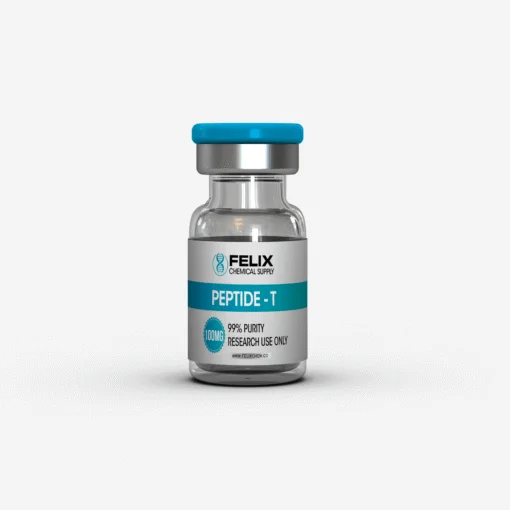
Peptide-T 100
Original price was: $449.00.$399.00Current price is: $399.00.
Buy Peptide-T 100mg (Tesamorelin / GHRH Analogue) — FDA-approved compound available as a research-grade 100mg bulk vial. ≥99% purity. Studied for visceral fat reduction, liver health, GH/IGF-1 elevation, cognitive function & metabolic research. Fast shipping USA, Canada, Germany, France & worldwide. Order now.
Buy Peptide-T 100mg (Tesamorelin) — The Only FDA-Approved GHRH Analogue That Targets Visceral Fat at the Source
Phase III clinical trials enrolling 816 HIV patients showed tesamorelin produced a 15–18% reduction in visceral adipose tissue in just 26 weeks — fat that is famously resistant to exercise, diet, and virtually every other intervention. A 2019 Lancet HIV trial confirmed a 37% reduction in liver fat alongside attenuated fibrosis progression. And a 2012 controlled trial showed improved executive function and verbal memory in older adults with mild cognitive impairment after 20 weeks. One peptide. Three organ systems. Clinical data behind all three.
That’s the level of evidence you’re working with when you research Peptide-T 100mg (Tesamorelin). Most research peptides earn their reputation from preclinical models and animal data. Tesamorelin earned its position from Phase III randomized controlled trials, FDA approval, and peer-reviewed publications in the New England Journal of Medicine, JAMA, and The Lancet. Researchers across the USA, Canada, Germany, France, and the UK reaching for a bulk 100mg supply today are tapping into one of the most clinically validated compounds in the entire GHRH research space.
The global peptide therapeutics market was estimated at $131.95 billion in 2025, projected to reach $334.95 billion by 2034 at a CAGR of 10.91% — and Tesamorelin, as the only FDA-approved synthetic GHRH analogue with visceral fat trial data, sits at the elite end of that market. Want to understand exactly what makes this compound so exceptional? Let’s go all the way in.
What Is Peptide-T 100mg (Tesamorelin)?
Tesamorelin is a synthetic 44-amino acid polypeptide analogue of human Growth Hormone-Releasing Hormone (GHRH), developed by Theratechnologies, Inc. and approved by the FDA in November 2010 as the first and only medication specifically indicated for reducing excess abdominal fat in HIV-infected patients with lipodystrophy. The peptide features enhanced stability and potency through N-terminal modification with a trans-3-hexenoic acid (hexenoyl moiety) group, providing greater resistance to enzymatic degradation than endogenous GHRH.
One important factor limiting the development of GHRH as a viable therapeutic option was its rapid degradation in vivo by the serum enzyme dipeptidylaminopeptidase 4 (DPP-4). Tesamorelin (previously known as TH9507) was engineered to be resistant to DPP-4 deactivation — and in preclinical studies, it was found to markedly increase plasma levels of GH and IGF-1 after once-daily dosing.
Unlike synthetic GH injected directly — a strategy associated with safety concerns and unpredictable effects — tesamorelin prompts the body’s own pituitary gland to release growth hormone in a pulsatile, physiologic pattern. That increase in GH subsequently raises levels of IGF-1, a hormone involved in cellular repair and metabolic regulation, while preserving normal hormonal feedback mechanisms.
The 100mg bulk vial format of Peptide-T makes it the premier choice for extended research timelines, multi-subject studies, and protocols that demand consistent batch quality across weeks or months of active investigation.
Peptide-T 100mg — Full Technical Specification
| Property | Detail |
|---|---|
| Product Name | Peptide-T 100mg |
| Active Compound | Tesamorelin (GHRH Analogue) |
| Vial Size | 100mg |
| Amino Acid Chain | 44 amino acids (identical to human GHRH1–44) |
| N-Terminal Modification | Trans-3-hexenoic acid (hexenoyl moiety) — DPP-4 resistance |
| FDA Brand Name | Egrifta® / Egrifta SV® / Egrifta WR® (F8 formulation, March 2025) |
| Molecular Class | GHRH Synthetic Analogue |
| Half-Life | ~30–40 minutes (short active window; once-daily dosing) |
| Form | Lyophilized powder (for reconstitution) |
| Reconstitution | Bacteriostatic water (BAC water) |
| FDA Approval Status | Approved (Egrifta® for HIV-associated lipodystrophy) |
| Storage (Lyophilized) | Refrigerate at 2–8°C |
| Storage (Reconstituted) | 2–8°C — use within 7–14 days |
| Administration | Subcutaneous injection (once daily) |
| Purity Standard | ≥99% (third-party HPLC & Mass Spec verified) |
| Intended Use | Research / Laboratory purposes only |
How Does Peptide-T 100mg (Tesamorelin) Work? The Full Mechanism
Tesamorelin mimics natural human GHRH by binding to GHRH receptors on anterior pituitary somatotroph cells, triggering pulsatile growth hormone secretion and consequent IGF-1 elevation. This cascade promotes lipolysis (fat breakdown), protein synthesis, and favorable metabolic shifts — particularly targeting visceral adipose tissue through GH-mediated selective fat mobilization pathways.
The mechanism is targeted lipolysis of visceral adipose tissue, restoration of normal fat distribution patterns, and improvement in metabolic parameters — all achieved through physiological GH stimulation rather than supraphysiological exogenous HGH administration.
Because tesamorelin’s half-life is approximately 30–40 minutes, it produces a GH pulse that is sharp and physiologically normal — mimicking the body’s natural pulsatile GH release pattern rather than creating a sustained hormonal elevation. This is precisely why consistent daily dosing is essential, and why bedtime injection is the preferred research timing — aligning the tesamorelin-induced GH pulse with the natural nocturnal GH surge that occurs during deep sleep.
In a phrase: Peptide-T (Tesamorelin) amplifies what your pituitary already knows how to do — it just does it faster, more consistently, and with targeting precision that direct GH replacement cannot achieve.
8 Research-Backed Benefits of Peptide-T 100mg (Tesamorelin)
1. Targeted Visceral Fat Reduction — The Defining Benefit
In a 12-month clinical trial published in 2010 involving 404 HIV-infected patients with excess abdominal fat, the group that received 2mg of tesamorelin per day saw an 18% decrease in visceral fat compared to placebo. Visceral fat — the type accumulating around the abdominal organs — is famously stubborn and cannot be burned selectively through exercise. It contributes most severely to diabetes, heart disease, and stroke. Yet tesamorelin appears to target it specifically.
A 2025 meta-analysis across five RCTs evaluated through July 2025 confirmed tesamorelin produced a significant reduction in visceral adipose tissue of MD = −27.71 cm² (95% CI [−38.37, −17.06]; P < 0.001) and trunk fat reduction of −1.18 kg compared to placebo — with strong GRADE evidence certainty.
2. Liver Fat Reduction & NAFLD Protection
Stanley et al. (2019) in JCEM showed tesamorelin 2mg daily for 12 months reduced liver fat by 2.9–4.1%, with 35% of participants achieving a hepatic fat fraction below 5% (considered normal). A 12-month trial showed attenuated fibrosis progression alongside decreased hepatic inflammatory gene expression and increased oxidative phosphorylation pathways — suggesting direct hepatoprotective mechanisms beyond simple fat reduction.
In a retrospective sub-analysis, tesamorelin reduced visceral adipose tissue by 8.3% after 12 months of treatment, compared to a 10.8% increase in VAT among placebo-treated patients — and achieved a 31% relative reduction in hepatic fat fraction compared to baseline (p=0.006).
3. Sustained IGF-1 Elevation
Across Phase III trials, tesamorelin produced mean IGF-1 increases of approximately 108 ng/mL versus minimal change with placebo. Critically, this elevation remained within normal physiological range rather than pushing into supraphysiological territory — preserving the body’s own feedback mechanisms while meaningfully amplifying anabolic and reparative IGF-1 signaling.
4. Cognitive Function Enhancement
A 2012 clinical trial examined the effects of tesamorelin on cognitive function in 152 adults with mild cognitive impairment or healthy aging. Subjects received either 1mg of tesamorelin or placebo over 20 weeks and were subsequently measured on executive function, verbal memory, and visual memory. The outcome: tesamorelin demonstrated “favorable effects on cognition in both adults with mild cognitive impairment and healthy older adults.”
Friedman et al. (2013) found tesamorelin improved executive function and verbal memory in older adults over 20 weeks — effects mediated by GH and IGF-1’s neurotrophic properties. This adds a neurological research dimension to Tesamorelin that goes far beyond its metabolic profile.
5. Body Recomposition & Lean Mass Support
Tesamorelin stimulates the pituitary gland to release growth hormone, which boosts metabolism, leading to better fat utilization and therefore reducing abdominal fat. Beyond visceral fat, tesamorelin research in body composition shows improvements in muscle density and quality among responders — making it a genuine dual-action recomposition compound for metabolic research.
6. Lipid Profile Improvement
Clinical trials demonstrated reduced triglycerides and improved fat distribution ratios with tesamorelin use. Reductions in LDL and non-HDL cholesterol have been observed in studies within 12 weeks of daily administration. These lipid improvements contribute to measurably reduced cardiovascular disease risk scores — confirmed in a 2025 subanalysis of Phase III study arms by Grinspoon et al. in Open Forum Infectious Diseases.
7. Sleep Quality Amplification
The largest natural GH pulse occurs during deep slow-wave sleep. Tesamorelin amplifies this nocturnal GH pulse, and researchers consistently report improved sleep quality as one of the first noticeable physiological responses — typically appearing within the first 1–2 weeks of daily administration at bedtime.
8. Cardiovascular Risk Reduction
Given that visceral adipose tissue is a direct driver of cardiovascular risk — and that tesamorelin selectively reduces it — researchers have documented measurable improvements in cardiovascular disease risk prediction scores in treatment arms across multiple Phase III studies. The VAMOS trial is now investigating tesamorelin’s impact on CVD, steatotic liver disease, and insulin resistance as primary endpoints.
Research Benefits Summary Table
| Benefit | Clinical Evidence | Magnitude |
|---|---|---|
| Visceral Fat Reduction | Phase III RCTs (n=816+), 2010–2025 | −15–18% VAT; −27.71 cm² (meta-analysis) |
| Liver Fat Reduction | Stanley et al. 2019, JCEM; Falutz et al. 2014 | −2.9–4.1% liver fat; 35% normalize |
| IGF-1 Elevation | Phase III across multiple trials | +108 ng/mL above placebo |
| Cognitive Function | Baker et al. 2012; Friedman et al. 2013 | Improved executive function & verbal memory |
| Lean Mass / Muscle Quality | Clinical observation across RCTs | Improved density among responders |
| Lipid Profile | Phase III subanalyses 2025 | Reduced LDL, non-HDL, triglycerides |
| Sleep Quality | Mechanistic + user-reported | Amplified nocturnal GH pulse |
| Cardiovascular Risk | Grinspoon et al. 2025, OFID | Improved CVD risk prediction scores |
How to Use Peptide-T 100mg (Tesamorelin) — Complete Research Protocol
How to Reconstitute Peptide-T 100mg
Reconstitute Tesamorelin by adding bacteriostatic water to the lyophilized powder. Inject slowly down the inner wall to avoid foaming, then gently swirl or roll the vial until the powder fully dissolves. Do not shake vigorously.
Step 1 — Gather Supplies
You need: Peptide-T 100mg vial, bacteriostatic water (BAC water), sterile 1mL insulin syringes, alcohol swabs, sharps disposal container, and a clean preparation surface.
Step 2 — Calculate Your Working Concentration
The 100mg bulk vial allows researchers to prepare multiple smaller working stocks:
| Working Stock Volume | BAC Water to Add to 100mg Vial | Resulting Concentration | Dose Volume per 2mg Research Dose |
|---|---|---|---|
| 10mL working stock | 10mL | 10mg/mL | 0.2mL (20 units on U-100 syringe) |
| 20mL working stock | 20mL | 5mg/mL | 0.4mL (40 units) |
| 30mL working stock | 30mL | 3.33mg/mL | 0.6mL (60 units) |
| 50mL working stock | 50mL | 2mg/mL | 1.0mL (100 units) |
For ease of daily dosing: a 3.33mg/mL concentration (30mL BAC water per 100mg) gives a clean 0.6mL draw per 2mg dose using standard insulin syringe markings.
Step 3 — Aliquot for Extended Use
Because reconstituted tesamorelin should be used within 7–14 days under refrigeration, the 100mg bulk format is best used by preparing aliquoted working stocks of 10–20mL at a time, stored in sterile multi-dose vials at 2–8°C and drawn from daily.
Step 4 — Reconstitute Gently
Swab stoppers. Inject BAC water slowly down the inner wall. Swirl — never shake. Allow 2–3 minutes for full dissolution. Solution should be clear and colorless.
Step 5 — Label and Store
Storage: Lyophilized: refrigerate at 2–8°C. After reconstitution, refrigerate at 2–8°C (35.6–46.4°F) and use within 7–14 days. Avoid freeze-thaw cycles. Always label with reconstitution date and concentration.
How to Dose Peptide-T 100mg (Tesamorelin)
The FDA-approved clinical dose is 2mg subcutaneously once daily, injected into the abdomen. This is the dose on which all Phase III trial data is built — the standard research reference protocol.
| Protocol | Daily Dose | Frequency | Duration | Research Goal |
|---|---|---|---|---|
| Clinical Standard (FDA Reference) | 2mg | Once daily | 6–12 months | Visceral fat / liver fat research |
| Cognitive Research Protocol | 1mg | Once daily at bedtime | 20 weeks | Cognitive function / GH axis |
| Low-Dose / Tolerability Phase | 1mg | Once daily | Weeks 1–2 | Assess IGF-1 response before escalation |
| 5-On-2-Off Cycle | 2mg | 5 days/week | 3 months active, 2 months off | Managed side-effect profile |
| Anti-Aging / Longevity Protocol | 1–2mg | Once daily (bedtime) | 3 months on / 2 months off | GH pulse + metabolic research |
How the 100mg Vial Maps to Research Timelines:
- At 2mg/day: 50 daily research doses = full 7-week daily protocol per 10mg working stock, or 50 days from the full 100mg vial
- At 1mg/day: 100 daily doses = ~14-week (3.5-month) single-subject daily protocol from one vial
- Multi-subject studies: the 100mg format supports simultaneous research across 25–50 subjects at standard daily doses — the only vial size that makes large-scale comparative research practical
How to Inject Peptide-T 100mg (Tesamorelin) — Step-by-Step
Step 1 — Timing Is Critical
Fasted injection is essential. Insulin blunts growth hormone release, so inject at least 3 hours after your last meal. The two most effective research timing windows are before bed (amplifies the natural nocturnal GH pulse — the preferred protocol) and first thing in the morning while still in the overnight fast.
Drowsiness after injection is a normal and expected response. Tesamorelin stimulates a GH pulse through the pituitary, and GH release is closely linked to sleep onset pathways. This is why bedtime injection is the preferred protocol — the drowsiness is the peptide working, not a side effect to fight.
Step 2 — Prep the Injection Site
Abdominal subcutaneous injection is the standard site for all clinical tesamorelin research. Clean the site with an alcohol swab. Allow to fully dry.
Step 3 — Draw the Dose
Using a fresh insulin syringe, draw the calculated volume from the refrigerated working stock vial. Tap to expel air bubbles.
Step 4 — Inject Subcutaneously
Pinch abdominal skin between fingers. Insert the needle at a 45–90° angle. Depress the plunger slowly and steadily. Hold for 5 seconds before withdrawing.
Step 5 — Rotate Injection Sites
Rotate across different quadrants of the abdominal wall to prevent skin irritation, lumps, or lipodystrophy at injection sites.
Step 6 — Monitor IGF-1 Levels
Because tesamorelin increases IGF-1, periodic monitoring is essential — dose adjustments may be necessary if levels rise above the upper limit for age. IGF-1 testing at baseline, 4 weeks, and 12 weeks provides the cleanest research data on compound response.
Best Stacks With Peptide-T 100mg (Tesamorelin)
Tesamorelin research stacks combine the compound with multiple complementary peptides that can optimize fat-burning or muscle-growth research protocols — including BPC-157, AOD-9604, and MOTS-C for enhanced metabolic and recomposition outcomes.
| Stack | Research Goal | Mechanistic Rationale |
|---|---|---|
| Peptide-T + Ipamorelin | GH axis amplification | GHRH (Tesamorelin) + GHRP (Ipamorelin) = synergistic GH pulse |
| Peptide-T + Peptide-C (CJC-1295) | Extended GH elevation | Dual GHRH approach — acute pulse + sustained background |
| Peptide-T + AOD-9604 | Enhanced fat loss | Targeted lipolysis from two complementary pathways |
| Peptide-T + MOTS-C | Metabolic + mitochondrial | Visceral fat + mitochondrial function research |
| Peptide-T + Peptide-SU (Semaglutide) | Visceral fat + obesity research | 2025 case series: combined tesamorelin + GLP-1 RA showed high treatment success |
| Peptide-T + BPC-157 | Recovery + body recomposition | Tissue repair amplified by GH elevation |
| Peptide-T + Peptide-R (TB-500) | Repair + recomposition | Systemic tissue healing + selective visceral fat reduction |
| Peptide-T + NAD+ | Anti-aging / longevity protocol | GH axis restoration + cellular energy metabolism |
A 2025 case series at ACTHIV demonstrated that the combination of tesamorelin + GLP-1 receptor agonist therapy was highly effective in reducing both excess visceral abdominal fat and obesity in a real-world setting — with tesamorelin addressing VAT specifically while the GLP-1 RA managed broader weight and metabolic control.
Peptide-T (Tesamorelin) vs. Other GHRH / GH Peptides
| Compound | Mechanism | Visceral Fat Data | FDA Approved | Half-Life | Liver Data | Cognitive Data |
|---|---|---|---|---|---|---|
| Peptide-T / Tesamorelin | GHRH analogue (44 AA + hexenoyl) | ✅ Phase III RCT — 15–18% | ✅ Yes (2010) | ~30–40 min | ✅ RCT-confirmed | ✅ RCT-confirmed |
| Sermorelin | GHRH fragment (29 AA) | ⚠️ Limited | ❌ No | ~10–12 min | ❌ Limited | ❌ Limited |
| CJC-1295 (No DAC) | GHRH analogue (30 AA) | ⚠️ Limited | ❌ No | ~30 min – 2 hrs | ❌ Limited | ❌ Limited |
| CJC-1295 (With DAC) | GHRH analogue + DAC | ⚠️ Limited | ❌ No | 6–8 days | ❌ Limited | ❌ Limited |
| Ipamorelin | GHRP / ghrelin mimetic | ❌ No direct data | ❌ No | ~2 hours | ❌ No | ❌ Limited |
| Synthetic HGH | Exogenous GH | ✅ General fat reduction | ✅ Some indications | ~3–4 hours | ⚠️ Risk profile | ❌ No direct data |
Tesamorelin’s competitive advantage is absolute in one specific domain: it is the only GHRH analogue with Phase III RCT data for visceral fat, liver fat, AND cognitive function simultaneously — all published in top-tier peer-reviewed journals. No other research peptide in this category comes close on that scorecard.
Side Effects
Tesamorelin has an established safety profile from over 15 years of FDA-monitored clinical use. Here is the complete research-documented picture:
Common Side Effects
| Side Effect | Frequency | Notes |
|---|---|---|
| Injection Site Reactions | Common | Redness, swelling, mild pain — rotate sites to manage |
| Arthralgia (Joint Pain) | Common | Reported in 13.3% of clinical trial subjects vs 5.3% placebo |
| Peripheral Edema (Fluid retention) | Common | Particularly at higher doses; 5-on-2-off cycling reduces incidence |
| Musculoskeletal Discomfort | Moderate | Myalgia and muscle stiffness reported |
| Drowsiness Post-Injection | Expected | GH-linked sleep pathway activation — a sign of mechanism in action |
| Nausea | Occasional | Typically transient |
| Headache | Occasional | Dose-related; typically resolves |
Serious Risks (Rare — for research reference)
| Risk | Notes |
|---|---|
| IGF-1 Elevation Above Physiological Range | Monitor IGF-1 at baseline, 4 weeks, 12 weeks |
| Insulin Resistance | GH can blunt insulin sensitivity; monitor glucose in metabolic models |
| Water Retention | Manageable with 5-on-2-off protocol |
| Active Malignancy Contraindication | Tesamorelin is contraindicated where active malignancy is present due to theoretical IGF-1-driven tumor activity concerns |
| Glucose Metabolism Effects | GH has major effects on glucose and lipid metabolism |
The long-term risk-benefit analysis of tesamorelin administration remains an active area of study — particularly regarding effects on glucose homeostasis and the transient nature of visceral fat reduction, which can return upon cessation of therapy.
⚠️ Peptide-T 100mg (Tesamorelin) is sold strictly for laboratory and research purposes only. All research protocols should be conducted under qualified professional oversight with periodic IGF-1 and metabolic monitoring.
FAQs About Peptide-T 100mg (Tesamorelin / GHRH Analogue)
1. What is Peptide-T 100mg (Tesamorelin) and what is it researched for?
Tesamorelin is a synthetic 44-amino-acid polypeptide analogue of human GHRH, FDA-approved as Egrifta® for reducing excess abdominal fat in HIV-infected patients with lipodystrophy. In research settings, it is primarily investigated for visceral fat reduction, liver fat (NAFLD) protection, GH and IGF-1 axis stimulation, cognitive function enhancement, body recomposition, and cardiometabolic risk improvement.
2. Why is the 100mg vial format the best choice for Tesamorelin research?
The Peptide-T 100mg bulk format is the only vial size that supports extended research timelines without mid-protocol batch switching. At the FDA-reference 2mg/day dose, 100mg provides 50 daily research doses — enough for a full 7-week single-subject protocol or a simultaneous multi-subject study at standard doses. It also delivers the best per-milligram cost efficiency across the entire product range, making it the professional choice for established research programs.
3. What did Phase III clinical trials show about Tesamorelin?
Phase III trials in HIV patients demonstrated a 15–18% reduction in visceral adipose tissue over 26 weeks at 2mg/day, with selective targeting of visceral — not subcutaneous — fat. A 2025 meta-analysis across five RCTs confirmed a −27.71 cm² mean visceral fat reduction (P<0.001). IGF-1 increased by approximately 108 ng/mL above placebo while remaining in the physiological range.
4. What dose of Tesamorelin is used in research protocols?
The FDA-approved clinical dose is 2mg subcutaneously once daily — this is the reference dose on which all Phase III data is built. Research cognitive protocols used 1mg daily at bedtime over 20 weeks. A 5-on-2-off cycling schedule (2mg for 5 days, rest 2) is widely used to manage joint aches and fluid retention while preserving the majority of metabolic benefits.
5. Does Tesamorelin reduce liver fat in research models?
Yes — and this may be its most clinically significant finding outside visceral fat. A randomized, double-blind, multicentre 12-month trial showed tesamorelin 2mg daily reduced liver fat by 2.9–4.1%, with 35% of participants achieving normal hepatic fat fraction below 5%. The 12-month trial also showed attenuated fibrosis progression and decreased hepatic inflammatory gene expression — suggesting direct hepatoprotective mechanisms beyond simple fat reduction.
6. Can Tesamorelin research show cognitive benefits?
Yes. The 2012 Baker et al. controlled trial in 152 adults over 20 weeks demonstrated “favorable effects on cognition in both adults with mild cognitive impairment and healthy older adults” using 1mg of tesamorelin at bedtime. The mechanism is mediated by GH and IGF-1’s neurotrophic properties — supporting executive function, verbal memory, and visual memory outcomes.
7. How does Tesamorelin differ from CJC-1295 or Sermorelin?
Tesamorelin is a 44-amino acid full-length GHRH analogue with N-terminal hexenoyl modification — structurally more complete than Sermorelin’s 29-AA fragment or CJC-1295’s 30-AA sequence. Its defining advantage is its clinical evidence base: Phase III RCT data for visceral fat, liver fat, and cognitive function published in NEJM, JAMA, and JCEM — no other GHRH research peptide has this level of trial validation across multiple organ systems.
8. What is the best time to inject Tesamorelin in research protocols?
Before bed is the preferred research injection timing. Tesamorelin’s GH pulse aligns with the natural nocturnal GH surge during deep sleep. Post-injection drowsiness — commonly observed — is the GH pulse activating sleep onset pathways, confirming the peptide is working. Fasted injection is essential: inject at least 3 hours after the last meal to prevent insulin-mediated GH blunting.
9. What stacks well with Peptide-T (Tesamorelin) in research?
Popular research stacks include tesamorelin with BPC-157, AOD-9604, MOTS-C, and peptide-C (CJC-1295) for GH-axis amplification. The 2025 ACTHIV case series demonstrated that combining tesamorelin with a GLP-1 receptor agonist (like Peptide-SU / Semaglutide) was highly effective in reducing both excess visceral abdominal fat and broader obesity simultaneously in a real-world research setting.
10. How should Peptide-T 100mg (Tesamorelin) be stored?
Lyophilized (unreconstituted): refrigerate at 2–8°C. Reconstituted solution: refrigerate at 2–8°C and use within 7–14 days. Avoid freeze-thaw cycles of reconstituted solution. For the 100mg bulk format, prepare aliquoted working stocks in sterile multi-dose vials of 10–20mL to maintain stability across the full research timeline without wasting product.
11. Does Tesamorelin research show cardiovascular benefits?
Yes. Clinical trials demonstrated reduced triglycerides, improved fat distribution ratios, and reductions in LDL and non-HDL cholesterol — all within 12 weeks of daily administration. A 2025 subanalysis of Phase III arms by Grinspoon et al. confirmed improved cardiovascular disease risk prediction scores with tesamorelin treatment. The VAMOS trial — now actively enrolling — is investigating CVD as a primary endpoint for the first time.
12. What is the new Egrifta WR® (F8) formulation approved in 2025?
The FDA approved Egrifta WR® (F8 formulation) in March 2025 — the same active tesamorelin molecule with three key practical improvements: 1.28mg daily dose (same therapeutic effect at lower dose due to F8 formulation), weekly multi-dose vial reconstitution rather than daily mixing, and less than half the injection volume of the original Egrifta SV®. For research-grade tesamorelin, the original 2mg daily protocol from Phase III data remains the standard research reference
Only logged in customers who have purchased this product may leave a review.
Related products


Reviews
There are no reviews yet.