
 Français
 Français
 Afrikaans
 English
 English
 English
 Español
 Italiano
 Nederlands
 Nederlands
 Norsk Nynorsk
 Português
 Português
 Português
 English

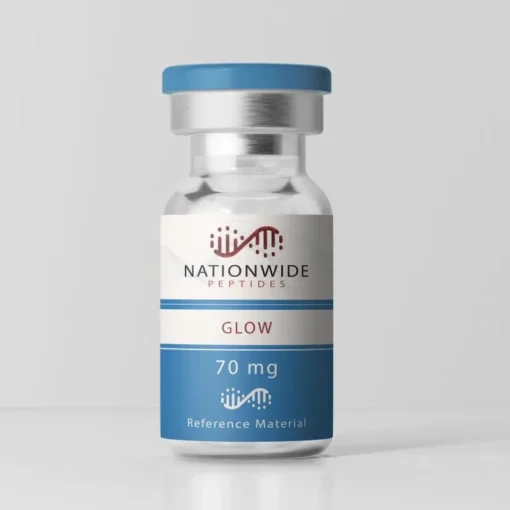
Glow | GHK-CU, TB-500, BPC-157 Blend
Original price was: $160.00.$120.00Current price is: $120.00.
Buy GLOW 10mg/70mg/10mg — premium 90mg three-peptide research blend: BPC-157 10mg + GHK-Cu 70mg + TB-500 10mg. High-concentration GHK-Cu formula for collagen synthesis, angiogenesis, tissue repair & skin rejuvenation. ≥99% purity. Fast shipping USA, Canada, Germany, France, UK & worldwide. Order now
Buy Glow | GHK-Cu, TB-500, BPC-157 — The Three-Peptide Regenerative Blend That Rebuilds You From the Inside Out
“GHK-Cu drives the look. Roughly 70% of what people notice — firmness, glow, wound healing — traces back to GHK-Cu’s collagen and matrix-remodeling effect. BPC-157 and TB-500 handle repair under the surface. They speed soft-tissue and gut healing while GHK-Cu remodels skin from the outside in. That’s why you don’t really see the skin payoff from GHK-Cu alone if BPC-157 isn’t quieting the inflammation underneath.” — PeptideDeck, 2026
That’s the GLOW protocol in its clearest formulation. Three peptides. Three stages. One injection. And a synergy that none of them achieves individually — no matter how good each one is on its own.
GLOW is a synergistic triple-peptide formulation combining GHK-Cu (Glycyl-L-Histidyl-L-Lysine-Copper), BPC-157 (Body Protection Compound-157), and TB-500 (Thymosin Beta-4) — three mechanistically complementary peptides that work across multiple biological repair pathways simultaneously, delivering synergistic effects that exceed what any individual peptide achieves alone. This multi-pathway approach makes it uniquely valuable for researchers studying comprehensive tissue regeneration where wound healing, collagen synthesis, and cellular migration need to occur together.
Most people reaching for the Glow GHK-Cu / TB-500 / BPC-157 blend for sale today fall into one of three camps: they’re recovering from an injury or surgery that conventional medicine is taking too long to fix; they’re serious about skin health and anti-aging at a cellular level rather than a topical one; or they’re athletes who understand that how well you repair between sessions is what separates long-term performance from early breakdown. GLOW speaks to all three.
The GLOW program is designed as a 4–6-week minimum treatment cycle, making it one of the most structured and time-committed peptide protocols available — a reflection of the fact that genuine tissue remodeling and collagen architecture cannot be rushed by a weekend of injections. The first subtle effects appear at 2–3 weeks. Visible skin improvements peak at 4–6 weeks. Full collagen remodeling builds over 8–12 weeks of consistent use.
What Is the Glow Blend (GHK-Cu / TB-500 / BPC-157)?
Glow is a comprehensive regenerative peptide blend combining three of the most clinically studied wellness peptides: BPC-157 — tissue repair and inflammation reduction; TB-500 — mobility enhancement and connective tissue healing; and GHK-Cu — anti-aging, skin tightening, and collagen synthesis. This unique combination delivers full-spectrum regenerative support, from the inside out — targeting muscle, tendon, skin, fascia, and blood vessels simultaneously.
The strategic combination of these three peptides creates a multi-pathway regenerative system: BPC-157 provides vascular support; TB-500 coordinates cellular migration and prevents fibrosis; while GHK-Cu offers antioxidant protection and reduces inflammatory damage. The synthesis of these three pathways produces effects in tissue repair models that exceed what any individual component achieves at equivalent doses.
Think of it this way: healing is a team sport. BPC-157 is the first responder at the local injury site. TB-500 is the logistics coordinator that moves repair cells from anywhere in the body to anywhere they’re needed. GHK-Cu is the structural engineer that rebuilds what TB-500 delivers the workers to. One injection. All three roles. Covered.
Glow Blend — Standard Reference Composition & Technical Specification
| Property | Detail |
|---|---|
| Product Name | Glow |
| Standard Composition | GHK-Cu 50mg + BPC-157 10mg + TB-500 10mg |
| Total Content per Vial | 70mg lyophilized blend |
| Blend Ratio | 5:1:1 (GHK-Cu : BPC-157 : TB-500) |
| GHK-Cu | 50mg — CAS: 89030-95-5 — MW: 401.91 g/mol — C₁₄H₂₁N₆O₄Cu |
| BPC-157 | 10mg — CAS: 137525-51-0 — MW: 1,419.56 g/mol — C₆₂H₉₈N₁₆O₂₂ |
| TB-500 | 10mg — CAS: 77591-33-4 — MW: 4,963.44 g/mol — C₂₁₂H₃₅₀N₅₆O₇₈S |
| Form | Lyophilized powder (filler-free) |
| Solution Appearance | Clear to faint blue (GHK-Cu copper ion — normal and expected) |
| Purity Standard | ≥99% per component (third-party HPLC + Mass Spec) |
| Reconstitution | Bacteriostatic water (BAC water) |
| Storage (Lyophilized) | 2–8°C; −20°C long-term; protect from light; shelf life 24 months |
| Storage (Reconstituted) | 2–8°C; use within 28–30 days; aliquot to prevent freeze-thaw |
| Administration | Subcutaneous injection (primary) |
| Third-Party Testing | COA provided per batch; HPLC purity + MS identity verified |
| Intended Use | Research / Laboratory purposes only |
Why the 5:1:1 Ratio (GHK-Cu Dominant)?
Most commercial Glow blends follow a 5:1:1 ratio of GHK-Cu to TB-500 to BPC-157. In a standard 70mg vial, this translates to approximately 50mg GHK-Cu, 10mg TB-500, and 10mg BPC-157. Why this specific ratio? Each peptide has different effective dosing thresholds. GHK-Cu demonstrates activity at higher absolute doses than the other two components. Research shows systemic effects require milligram-range dosing for GHK-Cu, while BPC-157 and TB-500 show activity at lower concentrations. The 5:1:1 ratio ensures each component reaches its effective threshold simultaneously when administered as a blend.
This isn’t an arbitrary formulation decision. It’s empirically derived from the dose-response profiles of each compound — and it’s the ratio that appears across the most clinically practiced Glow protocols precisely because researchers observed that matching the thresholds of all three simultaneously produced measurably better outcomes than equal-mass blending.
The Three Mechanisms — A Precision Map of How Glow Works
Stage 1 — TB-500 Moves the Cells
TB-500 upregulates actin, which lets stem cells, fibroblasts, and immune cells migrate to where repair is happening. Without that migration, healing stalls. TB-500 is a synthetic version of a 43-amino-acid segment of thymosin beta-4 — a 4.96 kDa actin-sequestering peptide that orchestrates cellular migration, angiogenesis, and inflammation control across multiple tissue types. Local photorelease of caged TB-500 causes directional cell turning in locomoting keratocytes — confirming the precision of its cell mobilization mechanism at the molecular level.
TB-500’s defining advantage within the Glow blend is systemic reach. It doesn’t require the injection to be near the injury. It circulates, finds damaged tissue throughout the body, and recruits repair cells from wherever they are to wherever they’re needed. No other compound in this blend can do that.
Stage 2 — BPC-157 Stabilizes the Site
BPC-157 promotes angiogenesis (new blood vessel growth), modulates nitric oxide and growth factors, and reduces inflammation — keeping the local repair environment optimal. It normalizes VEGFR2 expression without affecting VEGF-A levels — a targeted angiogenic mechanism unique to BPC-157 that no other compound in the Glow stack replicates. Downstream transcription factors show dramatic upregulation: c-Fos by 4.99-fold, c-Jun by 7.05-fold, and Egr-1 by 3.70-fold after BPC-157 administration.
BPC-157 promotes new blood vessel growth, boosts fibroblast activity, improves collagen formation, and reduces inflammatory signals. The result is faster healing of tendons, ligaments, muscles, nerves, and GI tissue — a breadth of tissue coverage that makes it the most versatile individual component in the Glow blend.
Stage 3 — GHK-Cu Builds the Matrix
Once cells are at the site and inflammation is calm, GHK-Cu triggers fibroblasts to lay down collagen, decorin, and glycosaminoglycans — the structural scaffolding that skin and tissue rebuild with. This is why you don’t see the skin payoff from GHK-Cu alone if BPC-157 isn’t quieting the inflammation underneath. The matrix can’t be built cleanly in an inflammatory environment. BPC-157 creates the conditions. GHK-Cu does the construction.
GHK-Cu delivers copper into cells, stimulates collagen and elastin, and provides antioxidant benefits. It improves skin firmness, tone, elasticity, and pigmentation — and supports wound and hair-follicle repair through gene expression reset affecting over 4,000 genes toward more youthful biological states.
10 Researched Benefits of the Glow Blend
1. Accelerated Tendon & Ligament Repair
TB-500 research demonstrated enhanced cellular migration and actin polymerization in tendon fibroblasts, while GHK-Cu studies showed increased collagen synthesis and improved tissue remodeling. Combined research suggests potential synergistic effects for comprehensive connective tissue repair. A 2025 systematic review in HSS Journal documented the emerging use of BPC-157 in orthopaedic sports medicine — confirming its tissue repair applications across tendon and soft tissue models.
2. Skin Firmness, Tone & Anti-Aging
GHK-Cu drives the look — roughly 70% of what users notice (firmness, glow, improved wound healing) traces back to GHK-Cu’s collagen and matrix-remodeling effect. GHK-Cu at 200 ng/mL at age 20, declining to 80 ng/mL by age 60 — a 60% depletion of the copper peptide responsible for skin collagen architecture. The Glow blend directly addresses this decline. Full collagen remodeling effects build over 8–12 weeks of consistent use.
3. Muscle Recovery & Satellite Cell Activation
Investigations in muscle injury models revealed complementary healing mechanisms: BPC-157 showed faster restoration of muscle architecture in crush injury models; TB-500 enhanced satellite cell activation and myofiber regeneration; GHK-Cu improved collagen content and reduced fibrosis formation. Combined mechanisms suggest enhanced functional recovery potential that exceeds any single-compound approach.
4. Triple-Mechanism Angiogenesis
The Glow blend achieves new blood vessel formation through three independent pathways simultaneously — BPC-157 through VEGFR2 receptor upregulation; GHK-Cu through VEGF ligand expression and chemoattraction of capillary endothelial cells; TB-500 through endothelial progenitor cell mobilization. No single peptide approaches this coverage. Triple-pathway angiogenesis means damaged tissue receives the oxygen, nutrients, and immune signaling it needs at the fastest possible rate.
5. Hair Follicle Regeneration
GHK-Cu has documented effects on hair follicle size and density — which is why some people on Glow notice hair improvements alongside skin changes. Research demonstrated that GHK-Cu increased hair follicle size and hair growth rates by 30–50%. TB-500’s wound healing studies confirmed dramatically enlarged hair follicle production near wound peripheries — tied to its stem cell recruitment mechanism. Two independent follicle-stimulating pathways, active simultaneously in every Glow injection.
6. Gut Health & GI Repair
BPC-157 supports intestinal healing, making Glow an excellent adjunct for those with leaky gut, IBD, or post-surgical GI recovery. BPC-157 has been studied extensively for GI mucosal repair through growth factor and nitric oxide signaling pathways — making the GI dimension of Glow one of its most clinically relevant and least publicized benefits.
7. Anti-Fibrotic — Clean Healing Without Scar Tissue
TB-500’s anti-fibrotic mechanism prevents the pathological scar tissue formation that characterizes incomplete or rushed wound healing. By coordinating cellular migration and suppressing myofibroblast differentiation — the cell type responsible for rigid, restrictive scar tissue — TB-500 ensures the structural repair GHK-Cu builds is pliable, functional, and long-lasting rather than contracted and fibrous.
8. Joint Pain & Inflammation Reduction
All three peptides have strong anti-inflammatory properties, helping reduce systemic inflammation, joint pain, and localized swelling. BPC-157 modulates nitric oxide and cytokines locally; TB-500 suppresses IL-6 and TNF-α systemically; GHK-Cu reduces inflammatory gene expression through antioxidant enzyme activation (SOD, catalase, glutathione). This triple anti-inflammatory mechanism operates without the need for conventional NSAIDs — and without their gastrointestinal side effects.
9. Bone Repair & Mineralization
Investigations in fracture and cartilage models demonstrated effects on bone repair processes, including improved callus formation and mineralization in animal studies. BPC-157 improved bone healing timelines through vascular support; TB-500 coordinated cell migration to fracture sites; GHK-Cu provided the collagen synthesis foundation for bone matrix formation.
10. Neurological Tissue Support
GHK-Cu is a copper-binding tripeptide with potent antioxidant, anti-inflammatory, and regenerative properties, shown to reduce amyloid plaques, enhance cognition, and support tissue remodeling through TGFβ1 modulation. TB-500 and BPC-157 contribute to endothelial repair and neurovascular guidance — making the Glow blend a research compound of interest in nerve crush injury, post-operative nerve healing, and neurodegeneration models.
Benefits at a Glance
| Benefit | Driving Compound(s) | Evidence Level |
|---|---|---|
| Tendon/Ligament Repair | BPC-157 + TB-500 | ✅ Multiple preclinical + emerging human |
| Skin Firmness/Collagen | GHK-Cu | ✅ Human clinical (collagen +70%) |
| Wrinkle Reduction | GHK-Cu | ✅ Clinical (−30% depth at 12 weeks) |
| Angiogenesis | All three (triple pathway) | ✅ Confirmed across all components |
| Muscle Recovery | BPC-157 + TB-500 + GHK-Cu | ✅ Preclinical |
| Hair Follicle Stimulation | GHK-Cu + TB-500 | ✅ +30–50% follicle size |
| GI/Gut Repair | BPC-157 (primary) | ✅ Extensive preclinical + human pilot |
| Anti-Fibrotic | TB-500 | ✅ Confirmed |
| Anti-Inflammatory | All three | ✅ Multi-pathway confirmed |
| Bone/Cartilage | All three | ✅ Animal models |
| Nerve Regeneration | GHK-Cu + BPC-157 + TB-500 | ✅ Preclinical + mechanistic |
How to Reconstitute Glow
The lyophilized powder in the Glow vial is entirely stable at −20°C until the moment of reconstitution. From that point forward, the clock starts — so get the math right on day one.
Step 1 — Gather Supplies
Glow vial (lyophilized), bacteriostatic water (BAC water), sterile 18G drawing needle, 30G insulin needle for injection, 1mL insulin syringes, alcohol swabs, sharps container, label marker.
Step 2 — Choose Working Concentration
Recommended reconstitution for the standard 70mg vial: add 3.0mL bacteriostatic water (23.3mg/mL total concentration). This delivers precise unit measurements for standard research doses.
| BAC Water | Total Conc | GHK-Cu/mL | BPC-157/mL | TB-500/mL |
|---|---|---|---|---|
| 2mL | 35mg/mL | 25mg/mL | 5mg/mL | 5mg/mL |
| 3mL | 23.3mg/mL | 16.67mg/mL | 3.33mg/mL | 3.33mg/mL |
| 4mL | 17.5mg/mL | 12.5mg/mL | 2.5mg/mL | 2.5mg/mL |
| 7mL | 10mg/mL | 7.14mg/mL | 1.43mg/mL | 1.43mg/mL |
Most practical: 2mL BAC water → 35mg/mL — clean syringe math at round unit numbers.
Step 3 — Reconstitute Gently
Swab the vial stopper. Inject BAC water slowly down the inner glass wall — never directly onto the lyophilized cake. Swirl gently 30–60 seconds. Never shake. The solution will develop a faint blue tint from GHK-Cu’s copper ion — this is expected and confirms the peptide is active and intact.
Step 4 — Label and Store
Write reconstitution date and concentration on the vial. Refrigerate at 2–8°C immediately. Use within 28–30 days. For extended research timelines, pre-draw individual doses into sterile 1mL syringes and store at −20°C to avoid freeze-thaw degradation.
How to Dose Glow — Research Protocol Reference
Standard research dosing: 2,330 mcg (2.33mg) total blend daily — providing approximately 1.70mg GHK-Cu, 0.33mg TB-500, and 0.33mg BPC-157 per injection. Schedule: daily subcutaneous injections for 4 weeks at consistent dose, followed by a 2–4 week rest period to assess progress before another cycle.
Community loading protocol: 10 units on a U-100 insulin syringe (= 3.5mg total blend at 35mg/mL): ~2.5mg GHK-Cu + 500mcg BPC-157 + 500mcg TB-500 — 5x/week during loading, reducing to 3x/week for maintenance. Standard cycle: 8–12 weeks on, 4–8 weeks off.
Glow Research Dosing Table (at 35mg/mL — 2mL reconstitution)
| Syringe Units | Volume | Total Blend | GHK-Cu | BPC-157 | TB-500 |
|---|---|---|---|---|---|
| 3 units | 0.03mL | ~1.05mg | ~750mcg | ~150mcg | ~150mcg |
| 5 units | 0.05mL | ~1.75mg | ~1.25mg | ~250mcg | ~250mcg |
| 6.65 units | 0.0665mL | ~2.33mg | ~1.67mg | ~333mcg | ~333mcg |
| 10 units | 0.10mL | ~3.5mg | ~2.5mg | ~500mcg | ~500mcg |
| 12 units | 0.12mL | ~4.2mg | ~3.0mg | ~600mcg | ~600mcg |
The 10-unit protocol (0.10mL at 35mg/mL = 3.5mg total) is the most widely documented Glow research dose — clean, easy to measure, and delivering each compound at or above its individually documented effective research threshold.
Protocol Summary
| Phase | Dose | Frequency | Duration |
|---|---|---|---|
| Loading | 3.5mg (10u) | 5x/week | 4–8 weeks |
| Maintenance | 3.5mg (10u) | 3x/week | 4–8 weeks |
| Skin Focus | 2.33mg (6.65u) | Daily | 8–12 weeks |
| Post-Surgery | 3.5mg (10u) | Daily | 6–12 weeks |
| Cycle Off | None | Rest | 4–8 weeks |
How to Inject Glow — Step by Step
Step 1 — Timing
Evening injection aligns GHK-Cu’s collagen synthesis with the body’s overnight repair window, BPC-157’s tissue signaling with sleep-phase cellular activity, and TB-500’s systemic migration with overnight circulatory patterns.
Step 2 — Site Selection
Subcutaneous fat: abdomen (2 inches minimum from the navel), front thigh, or outer upper arm. TB-500’s systemic mechanism means injection proximity to the injury site is not required — it will circulate and find damaged tissue regardless. Rotate every injection.
Step 3 — Prep
Swab site with alcohol. Allow to dry fully. Draw calculated volume from reconstituted Glow vial using a fresh 30G insulin needle. Expel air bubbles.
Step 4 — Inject Slowly
Pinch skin. Insert at 45°. Depress plunger steadily over 10–15 seconds. The GHK-Cu copper ion occasionally produces mild local warmth — slow injection minimizes this completely. Hold 3–5 seconds before withdrawing.
Step 5 — Dispose
Fresh needle into sharps container after every injection. Return reconstituted vial to 2–8°C refrigeration.
Glow Week-by-Week Research Timeline
“The single biggest mistake people make on Glow is quitting at week 3. The first visible skin changes show up after collagen turnover catches up to the dosing — usually 21 to 30 days in.” — PeptideDeck, 2026
| Week | Primary Observations | Primary Driver |
|---|---|---|
| Days 1–7 | Reduced local pain; faster healing at active injury sites | BPC-157 (nitric oxide + VEGFR2) |
| Week 2 | Improved joint mobility; GI comfort; systemic inflammation beginning to reduce | BPC-157 + TB-500 |
| Weeks 2–3 | Cell migration peaks; stem cells recruited to sites | TB-500 (systemic) |
| Week 3 | First subtle skin texture change; new collagen beginning | GHK-Cu (early matrix) |
| Weeks 4–6 | Visible skin improvement; firmness and tone; wrinkle depth reducing | GHK-Cu (accelerating) |
| Weeks 6–8 | Significant wound healing progress; joint pain substantially reduced | All three (cascade synergy) |
| Weeks 8–12 | Full collagen architecture: ~30% wrinkle depth reduction; hair density improvement | GHK-Cu (remodeling complete) |
| 12+ weeks | Sustained gene expression reset; long-term structural maintenance | GHK-Cu (4,000+ genes) |
Glow vs. KLOW — The Key Difference
| Feature | Glow (3 Peptides) | KLOW (4 Peptides) |
|---|---|---|
| GHK-Cu | 50mg | 50mg |
| BPC-157 | 10mg | 10mg |
| TB-500 | 10mg | 10mg |
| KPV | ❌ Not included | ✅ 10mg — NF-κB inflammation control |
| Total Mass | 70mg | 80mg |
| Inflammation Phase | Secondary (BPC-157 + TB-500 only) | Dedicated (KPV + secondary) |
| Gut / IBD Focus | BPC-157 moderate | KPV + BPC-157 strong |
| Structural Repair & Skin | ✅ Full | ✅ Full |
| Simplicity | ✅ Simpler (3 compounds) | 4-compound complexity |
| Choose Glow when | Skin, structural repair, standard recovery | Add KPV for inflammation-heavy conditions |
| Glow + standalone KPV | ✅ Equals KLOW flexibly | Alternative: dose KPV separately |
Advanced Stacking — Glow + Other Research Compounds
| Stack | Goal | Why It Works |
|---|---|---|
| Glow + NAD+ | Anti-aging / longevity | Cellular energy + DNA repair alongside collagen remodeling |
| Glow + MK-677 (Ibutamoren) | Recovery amplification | GH/IGF-1 overnight enhancement of tissue repair |
| Glow + Peptide-C (CJC-1295) | GH axis + structural repair | GHRH-driven GH pulsatility amplifies collagen signaling |
| Glow + MK-2866 (Ostarine) | Recomp + skin/tissue | Muscle preservation + collagen repair simultaneous |
| Glow + Peptide-T (Tesamorelin) | Anti-aging + visceral fat | GH pulsatility + tissue repair + skin collagen |
| Glow + GLP-1 (Peptide-SU / Mounjaro) | Weight loss tissue preservation | Prevents skin loosening + connective tissue loss during fat reduction |
| Glow + Epitalon | Longevity protocol | Telomerase activation + tissue regeneration cascade |
| Glow + KPV (standalone) | Inflammatory conditions | Adds NF-κB control without switching to KLOW |
Possible Side Effects of Glow
Peptide therapy is generally well-tolerated when administered under proper medical supervision. The Glow blend has an excellent safety profile at standard research doses.
| Side Effect | Component | Frequency | Notes |
|---|---|---|---|
| Faint blue vial solution | GHK-Cu | Always | Expected — copper ion confirms peptide intact |
| Mild injection site warmth | GHK-Cu | Occasional | Inject slowly; rotates away |
| Local redness | GHK-Cu at site | Occasional | Transient; diminishes with site rotation |
| Mild nausea | BPC-157 (rare) | Rare | Reduce injection volume |
| Fatigue (first few days) | TB-500 (systemic activation) | Occasional | Days 3–5; self-resolving |
| Joint aching (first week) | TB-500 (repair activation) | Rare | Indicates systemic activity; resolves |
Contraindications
| Contraindication | Reason |
|---|---|
| Wilson’s Disease | GHK-Cu delivers bioavailable copper — absolute contraindication |
| Active Cancer / Solid Tumors | GHK-Cu angiogenesis; discuss with oncologist |
| Pregnancy / Breastfeeding | Insufficient safety data across all three compounds |
| Competitive Sport (WADA) | TB-500 — Section S2 prohibited at all times |
| Copper Allergy | Patch test before systemic use |
FAQs About Glow (GHK-Cu / TB-500 / BPC-157 Blend)
1. What is the Glow peptide blend and what is it researched for?
Glow is a three-peptide research blend combining BPC-157, TB-500, and GHK-Cu in a single lyophilized vial. It is researched for comprehensive tissue regeneration across wound healing, collagen synthesis, angiogenesis, skin rejuvenation, musculoskeletal repair, anti-aging, hair follicle stimulation, and gastrointestinal healing — using three mechanistically complementary pathways simultaneously.
2. What does each peptide do in the Glow blend?
TB-500 moves the cells — upregulating actin to drive stem cells, fibroblasts, and immune cells to repair sites throughout the body. BPC-157 stabilizes the site — promoting angiogenesis, modulating nitric oxide and growth factors, and reducing inflammation. GHK-Cu builds the matrix — triggering fibroblasts to lay down collagen, decorin, and glycosaminoglycans once cells are present and inflammation is controlled. Three sequential stages. One injection.
3. What is the standard composition of the Glow blend?
The standard Glow blend follows a 5:1:1 ratio: GHK-Cu at 5 parts, TB-500 at 1 part, and BPC-157 at 1 part. In the standard 70mg vial, this equals GHK-Cu 50mg + BPC-157 10mg + TB-500 10mg. The ratio is designed to ensure all three components reach their effective dosing thresholds simultaneously when administered together.
4. When should I expect to see results from Glow?
The first subtle effects — faster healing and a change in skin texture — typically appear within 2–3 weeks. Visible skin improvements are most noticeable at weeks 4–6. Full collagen remodeling effects build over 8–12 weeks of consistent use. The most common mistake in Glow research is discontinuing at week 3 before collagen turnover has caught up to the dosing protocol — the most significant skin changes appear between weeks 3 and 6.
5. How should Glow be reconstituted?
Add 2–3mL of bacteriostatic water to the 70mg vial. At 2mL: 35mg/mL concentration. At 3mL: 23.3mg/mL. Inject BAC water slowly down the inner vial wall — never onto the lyophilized cake. Swirl gently. The solution will appear faintly blue due to GHK-Cu’s copper ion — this is expected and confirms active peptide. Refrigerate at 2–8°C and use within 28–30 days.
6. What is the recommended Glow research dosing schedule?
Standard protocol: 2.33mg total blend daily (approximately 1.70mg GHK-Cu + 0.33mg BPC-157 + 0.33mg TB-500). Loading protocol: 3.5mg five times per week; maintenance: 3.5mg three times per week. Minimum cycle: 4–6 weeks — with typical research cycles running 8–12 weeks on, 4–8 weeks off.
7. Does Glow require PCT after a cycle?
No. None of the three components — GHK-Cu, BPC-157, or TB-500 — interact with androgen receptors, the hypothalamic-pituitary-gonadal axis, or testosterone production. No post-cycle therapy is required. This makes Glow uniquely straightforward compared to SARM or anabolic steroid protocols.
8. Can Glow help with gut and gastrointestinal healing?
Yes — BPC-157 supports intestinal healing, making Glow an excellent adjunct for leaky gut, IBD, or post-surgical GI recovery. BPC-157 has been studied extensively for GI mucosal repair through growth factor and nitric oxide signaling pathways. This is one of the most clinically relevant but least publicized applications of the Glow blend — the same BPC-157 that heals tendons and stimulates angiogenesis also repairs the intestinal lining with the same mechanistic precision.
9. How is Glow different from KLOW?
Glow contains three peptides (GHK-Cu 50mg + BPC-157 10mg + TB-500 10mg). KLOW adds a fourth compound — KPV 10mg — which provides dedicated NF-κB inflammation control that none of the three Glow compounds specifically delivers. Glow is the tissue repair and collagen-focused baseline stack. KLOW adds systemic inflammation management for conditions where chronic inflammatory signaling is a primary research concern (IBD, autoimmune, chronic pain, post-surgical inflammatory cascades).
10. Can Glow be used for hair regrowth research?
Yes — GHK-Cu has documented effects on hair follicle size and density — with research showing +30–50% follicle enlargement. Some researchers on Glow report hair improvements alongside skin changes. TB-500 adds a complementary mechanism through stem cell recruitment to wound peripheries — the same mechanism that dramatically enlarges hair follicle production near healing wounds in animal studies.
11. What stacks best with the Glow blend?
For longevity: Glow + NAD+ + Epitalon. For GH-amplified overnight repair: Glow + MK-677 or CJC-1295/Ipamorelin. For body recomposition: Glow + MK-2866 (Ostarine) + GLP-1. For inflammation-heavy conditions: Glow + standalone KPV (effectively replicates KLOW). For comprehensive anti-aging: Glow + Tesamorelin (Peptide-T) + NAD+. Each stack maintains mechanistic complementarity — no compound in these combinations shares a receptor target with the three Glow peptides.
12. Who is Glow contraindicated for?
Wilson’s Disease (copper metabolism disorder — GHK-Cu is absolute contraindication), active cancer or solid tumors (GHK-Cu angiogenesis — consult oncologist), pregnancy and breastfeeding (insufficient safety data), and competitive athletes under WADA anti-doping jurisdiction (TB-500 is Section S2 prohibited at all times). Copper allergy warrants topical patch testing before systemic use.
Only logged in customers who have purchased this product may leave a review.
Related products

NATIONWIDE PEPTIDES

NATIONWIDE PEPTIDES
Reviews
There are no reviews yet.