
 Français
 Français
 Afrikaans
 English
 English
 English
 Español
 Italiano
 Nederlands
 Nederlands
 Norsk Nynorsk
 Português
 Português
 Português
 English


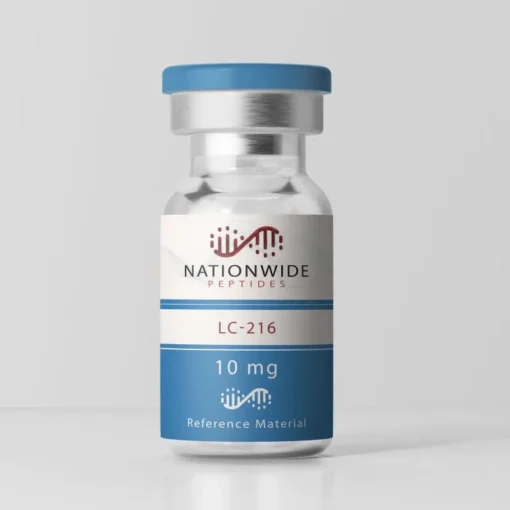
LC-216 Peptide
Original price was: $90.00.$74.00Current price is: $74.00.
LC-216 – Educational For sale
What Is LC-216?
LC-216 is a research formulation commonly marketed by peptide and research suppliers. Despite often being listed alongside peptides, LC-216 is generally described as a multi-ingredient metabolic blend rather than a single peptide compound.
Available product descriptions indicate that LC-216 may contain a combination of lipotropic compounds, amino acid derivatives, and vitamin cofactors that are being studied for their roles in metabolic processes, cellular energy production, and nutrient utilization.
Because formulations can vary between manufacturers, researchers should always review the specific ingredient profile provided by the supplier.
Composition Commonly Reported in LC-216 Formulations
Depending on the manufacturer, LC-216 products may contain ingredients such as:
- L-Carnitine
- L-Arginine
- Methionine
- Choline
- Inositol
- Vitamin B5 (Pantothenic Acid)
- Vitamin B6
- Vitamin B12
The exact formulation may differ among vendors.
Why These Ingredients Are Studied
Researchers have investigated these compounds because of their involvement in:
- Cellular energy production
- Fatty acid transport
- Mitochondrial function
- Nutrient metabolism
- Liver metabolic pathways
- Methylation processes
Research Areas of Interest
Cellular Energy Production
L-Carnitine has been extensively studied for its role in transporting long-chain fatty acids into mitochondria, where they can be utilized for energy production.
Lipid Metabolism
Choline, methionine, and inositol are often classified as lipotropic nutrients due to their involvement in fat transport and metabolic pathways.
Nutritional Biochemistry
B-complex vitamins included in some formulations are essential cofactors in numerous biochemical reactions related to energy metabolism and cellular maintenance.
Amino Acid Function
Certain ingredients found in LC-216 formulations may contribute to nitric oxide pathways, protein metabolism, and cellular signaling mechanisms.
Potential Considerations
When evaluating any research formulation, several factors should be considered:
Ingredient Verification
Researchers should confirm ingredient concentrations and formulation details directly from the manufacturer.
Product Variability
Different suppliers may use the same product name while offering different ingredient profiles.
Research Limitations
Many marketed claims regarding metabolic formulations may exceed currently available scientific evidence. Findings should be interpreted cautiously and within the context of published research.
Frequently Asked Questions About LC-216
Is LC-216 a peptide?
Available information suggests LC-216 is generally a metabolic blend rather than a true peptide molecule.
What ingredients are commonly found in LC-216?
Many formulations contain L-Carnitine, choline, methionine, inositol, and B-complex vitamins.
What is LC-216 being studied for?
Researchers investigate its role in metabolic pathways, energy production, and nutrient utilization.
Is LC-216 FDA approved?
LC-216 is generally not marketed as an FDA-approved pharmaceutical drug.
Does every LC-216 product contain the same ingredients?
No. Formulations may differ among manufacturers.
Why is L-Carnitine included?
L-Carnitine is studied for its involvement in fatty acid transport and mitochondrial energy production.
What are lipotropic compounds?
Lipotropic compounds are nutrients involved in lipid transport and metabolic processes.
Is LC-216 considered a medication?
It is typically marketed as a research formulation rather than a pharmaceutical medication.
Are there published studies on every LC-216 formulation?
Research is generally available on individual ingredients, but not necessarily on every proprietary blend marketed under the LC-216 name.
Where can researchers verify product composition?
The manufacturer’s certificate of analysis, ingredient panel, and product documentation are typically the best sources.
Only logged in customers who have purchased this product may leave a review.
Related products
NATIONWIDE PEPTIDES


NATIONWIDE PEPTIDES

NATIONWIDE PEPTIDES
NATIONWIDE PEPTIDES

Reviews
There are no reviews yet.